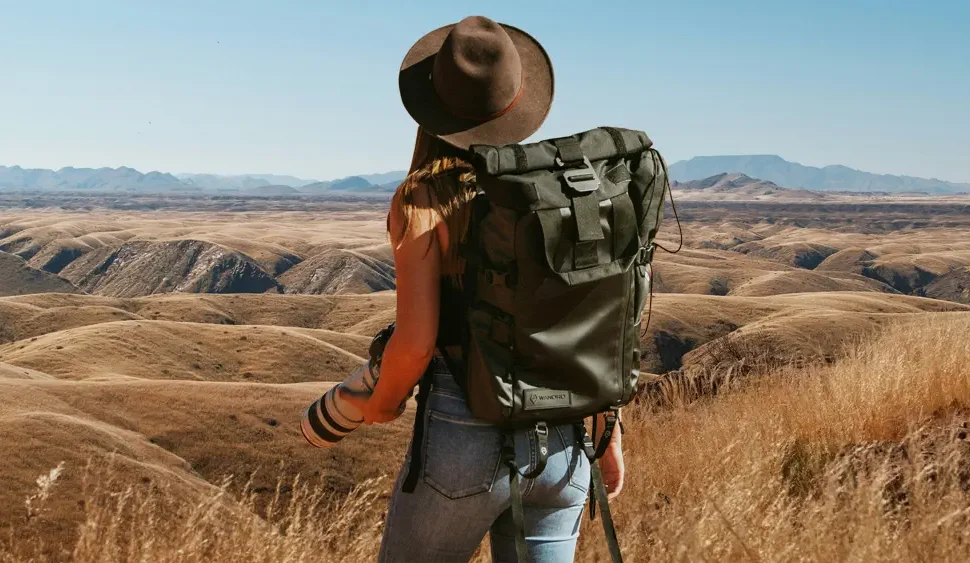
Namibia birding works best as a private club trip that links the Walvis Bay lagoon, the Namib gravel plains, the granite inselbergs of Spitzkoppe and the Erongo Mountains, and Etosha National Park. That route gives a group most of the country’s near-endemics, including Herero chat, Rockrunner and Monteiro’s hornbill, plus flamingos by the tens of thousands.
The challenge for an organiser is different from a game safari. You need slow stops, room for telescopes, an early breakfast every day and a guide who knows the calls. We plan these trips through our club and society safaris service, and this guide covers the route, seasons, vehicles, rooming and costs for a bird club in Namibia.

Quick Facts
- Species: Roughly 650 to 680 recorded, depending on which national list you use
- Endemics: One true endemic, the Damara red-billed hornbill, plus around 30 near-endemics
- Core route: Walvis Bay and Sandwich Harbour, Spitzkoppe, the Erongo Mountains and Etosha
- Best months: November to April for migrants and breeding; May to September for cooler days
- Ideal length: 10 to 12 days; 14 to 16 days to add the Zambezi Region
- Group size: 6 to 12 birders, split across vehicles of six or seven
- Park fees: N$280 per international adult per day at Etosha and Namib-Naukluft (checked November 2026)
Why Is Namibia Birding So Rewarding for a Club?
Namibia birding is rewarding because the country holds a cluster of dry-country specials found almost nowhere else, all reachable on good gravel roads within one trip. A club can work the Atlantic coast, desert plains, granite hills and a huge saline pan in under two weeks, with very few other visitors in the way.

Ready to go? Book your customized safari instantly on WhatsApp — we'll take it from there.

Instantly on
The headline figures explain the appeal. Published national checklists put Namibia’s total at roughly 650 to 680 species, and one widely used list counts a single true endemic, the Damara red-billed hornbill, alongside about 30 near-endemics shared mainly with Angola and South Africa. Most of the near-endemics that define Namibia birding sit along the escarpment that runs between the coast and the interior.
For a group, the bigger Namibia birding advantage is space. Lodges in the Erongo and around Spitzkoppe are small, roads are quiet, and you can stop a vehicle beside a koppie for twenty minutes without holding anyone up. That suits a club whose members have different target lists and want time to get the telescope on a bird.
Which Namibia birding specials can a group expect?
A well-timed Namibia birding route should give a club a strong chance at Herero chat, Rockrunner, Hartlaub’s spurfowl, Monteiro’s hornbill, Damara red-billed hornbill, white-tailed shrike, Carp’s tit, bare-cheeked babbler and violet wood-hoopoe in the Erongo and escarpment country. On the coast and gravel plains, target dune lark, Gray’s lark and Rüppell’s korhaan.
Rüppell’s parrot is another Namibia birding prize, though it moves around and is never guaranteed. Tell us your club’s must-see list before we fix the route, because a few of these birds depend on a specific valley or lodge.
Which Route Works for a Club, From the Coast to the Escarpment?
The Namibia birding route that works for most clubs starts in Windhoek, drives west to Swakopmund and Walvis Bay for two or three nights, then turns inland to Spitzkoppe and the Erongo Mountains before heading north to Etosha. It keeps driving days to about four or five hours and puts the best habitat early in the trip.

| Stop | Nights | Habitat | Key birds |
|---|---|---|---|
| Walvis Bay and Swakopmund | 2 to 3 | Lagoon, saltworks, beach and gravel plains | Flamingos, chestnut-banded plover, Damara tern, dune lark, Gray’s lark |
| Spitzkoppe | 1 to 2 | Granite inselbergs and dry scrub | Herero chat, white-tailed shrike, raptors |
| Erongo Mountains | 2 to 3 | Dry mountains, rocky slopes and riverine scrub | Hartlaub’s spurfowl, Rockrunner, Monteiro’s hornbill, Carp’s tit |
| Etosha National Park | 3 to 4 | Saline pan, grassland, mopane and waterholes | Kori bustard, secretarybird, raptors, larks, pan flamingos after rain |
| Zambezi Region (optional) | 3 to 4 | Rivers, floodplains and woodland | Kingfishers, bee-eaters, weavers and other wetland species |
Walvis Bay and Sandwich Harbour
The Walvis Bay wetland is the most important coastal site in the country. The Ramsar Sites Information Service entry for Walvis Bay records its listing as a Wetland of International Importance in 1995, covering 12,600 hectares and holding between 37,000 and 79,000 waterbirds. A recent winter count there logged just over 87,000 birds, about 51,000 of them flamingos.
A club can bird the lagoon edge on foot, scan the saltworks pans for chestnut-banded plover and add a 4×4 trip south to Sandwich Harbour, where dunes run straight into the sea. Our 5 day Southern Skeleton Coast tour is based in Swakopmund and already includes the Walvis Bay cruise and Sandwich Harbour, so it adapts well as the coastal leg of a Namibia birding route.
Spitzkoppe and the Erongo Mountains
Spitzkoppe and the Erongo Mountains are the heart of Namibia birding for most clubs. Herero chat is the bird everyone wants around the Spitzkoppe boulders, while the Erongo’s rocky slopes and dry riverbeds hold Hartlaub’s spurfowl, Rockrunner and Monteiro’s hornbill. Plan at least two dawns in the Erongo, since the spurfowl call most reliably at first light.
These hills are also good Namibia birding country for raptors and owls, and some Erongo lodges have private trails a group can walk with the guide. Stay three nights if members want photographs as well as ticks.
What Does Etosha Add to a Birding Trip?
Etosha adds open-country birds, raptors and big game to Namibia birding, and the animals keep non-birders happy. The park records around 340 bird species, and its waterholes concentrate birds as well as mammals, so a group can sit at one spot and watch sandgrouse, doves, raptors and elephants come and go.

Kori bustard, secretarybird, northern black korhaan and a good range of larks are typical on the grasslands. Etosha Pan itself fills only after good rains, and in those years flamingos move inland to breed before returning to the coast. That makes the wet season a gamble that sometimes pays off spectacularly.
Split the stay between at least two camps, for example Okaukuejo in the south-west and Namutoni in the east, so you cover different habitats. Our Etosha safari guide explains the waterholes and camps, and the 7 day Namibia family safari shows how we pace six nights in and around the park, a template that works for unhurried Namibia birding too.
Is the Zambezi Region worth the extra days?
The Zambezi Region, the old Caprivi Strip in the north-east, is worth adding for a club that wants a long list. Its rivers and floodplains hold wetland species the dry west lacks, such as malachite kingfisher, blue-cheeked bee-eater and southern brown-throated weaver. It is a long drive from Etosha, so allow three or four nights there.
When Is the Best Time for Namibia Birding?
The best time for Namibia birding is November to April, the southern summer, when migrants arrive, many residents breed and waders gather on the coast. May to September suits clubs that prefer cool mornings and easier travel, and it is still productive, especially at Walvis Bay and Etosha’s waterholes.

| Months | Conditions | Birding highlights |
|---|---|---|
| November to January | Hot inland, first rains, coast mild | Migrants arrive, breeding begins, Palearctic waders at Walvis Bay |
| February to April | Main rains inland, green landscapes | Peak breeding plumage, possible flamingos on Etosha Pan after good rains |
| May to August | Dry, cool to cold mornings, clear skies | Easy viewing at waterholes, big flamingo flocks at the coast, residents only |
| September to October | Dry and increasingly hot | Raptors and waterhole action at Etosha; October is very hot, so plan early starts |
Coastal fog affects Namibia birding in the mornings year-round, so schedule the lagoon for mid-morning when the light improves. For weather, rain and road conditions by month, our best time to visit Namibia guide goes into more detail.
How Should a Bird Club Set Up Vehicles, Scopes and Rooms?
A bird club should travel in vehicles of six or seven with a dedicated birding guide in each, everyone sitting by a window, and twin-share rooms booked in small lodges. For 12 birders that means two vehicles running to the same plan, with a quick swap of passengers each day so nobody always sits at the back.
Telescopes matter more for Namibia birding than on most safaris, because the coast and pans are wide and the birds distant. Ask members to bring their own scopes and light tripods, and we will plan vehicles with space to carry them. Pop-up roof vehicles are good on Etosha drives, while the Erongo and Spitzkoppe are best birded on foot.
Rooming is the next decision. Most lodges price per person sharing, so pair members early and decide who will pay the single supplement. Our page on how to organise a group safari covers headcounts, deposits and rooming lists step by step.
Why choose a private club trip over a scheduled birding tour?
A private Namibia birding trip lets your club set the pace, the target list and the breakfast time. On a scheduled tour you share a vehicle with strangers who may want different birds; with your own guide, you can wait an hour for a spurfowl, skip a lodge walk for a lie-in, or add a night where the birding is good.
How Much Does a Club Birding Trip in Namibia Cost?
A guided club birding trip in Namibia usually costs less per night than Botswana because most travel is by road and lodges are mid-sized. As a rough guide, budget about USD 300 to 550 per person per day sharing in mid-range lodges with a private guide and vehicle, all estimates rather than quotes.
| Style | What you get | Estimate per person per day |
|---|---|---|
| Guided camping | Camping or simple chalets, guide, vehicle and most meals | About USD 200 to 300 (estimate) |
| Mid-range lodges | En-suite rooms, private birding guide, vehicle, most meals | About USD 300 to 550 (estimate) |
| Upmarket lodges | Small luxury lodges, private reserves, extra activities | About USD 600 to 1,000+ (estimate) |
The Southern Skeleton Coast tour above is a useful benchmark, priced from USD 4,200 per adult on its trip page. Fixed costs include park fees of N$280 per international adult per day at Etosha and Namib-Naukluft (checked November 2026), so confirm current fees before you budget. Add international flights to Windhoek, tips, insurance and drinks.
Group size helps a Namibia birding budget: for every six paying travellers, the seventh place is free. Each member can pay separately and arrive on different flights. A deposit of 30 to 40% holds the booking, with the balance due 2 to 4 weeks before travel.
Planning Namibia birding for your club?
See how our club and society safaris work: private vehicles and guides, routes built around your target list, and one group quote with separate payments.
If your club is weighing up countries, compare Namibia birding with Botswana birding for groups, which focuses on the Okavango wetlands, or birding in Uganda with your club for the shoebill and Albertine Rift endemics. Our birding safaris page lists trips in all six countries, and our Namibia safari packages cover the wider country.
Insider Tips
- Share the target list: Send us the club’s top 20 birds before we fix lodges; a few specials depend on one valley
- Start at dawn: Spurfowl and chats are most active at first light, so book lodges with early breakfasts
- Pack for cold and heat: Coastal mornings are cool and foggy, inland afternoons can top 35°C in summer
- Bring scopes: Walvis Bay and Etosha reward a telescope; plan space for tripods in each vehicle
- Keep a daily log: A guide-led evening checklist keeps everyone’s list straight across two vehicles
- Book early: Small Erongo and Spitzkoppe lodges have few rooms, so a group of 12 needs 9 to 12 months’ notice
Let us plan your club’s birding trip
Tell us your dates, group size and target birds, and our Nairobi team will send a free tailor-made itinerary and group quote, with separate payments for every traveller.
Ideas for clubs, families and friends in five other countries are on our Africa group safaris page.
Frequently Asked Questions
When is the best time for Namibia birding with a group?
The best time for Namibia birding with a group is November to April, when migrants have arrived, many residents breed and the coast holds Palearctic waders. May to September is cooler and easier for older members, with dry-season raptors at Etosha and big flamingo flocks at Walvis Bay. October can be very hot inland, so plan shorter outings.
How many days does a Namibia birding trip need?
A Namibia birding trip for a club needs about 10 to 12 days to cover Walvis Bay, the Namib gravel plains, Spitzkoppe, the Erongo Mountains and Etosha without rushing. Add four or five days for the Zambezi Region in the north-east. Shorter trips of six or seven days work if you drop Etosha or the far north.
Can non-birders join a club birding trip in Namibia?
Yes. Non-birding partners usually enjoy Namibia because the same route passes dunes, granite peaks, rock art, seals and the big game of Etosha. We often split the group across two vehicles, one for slow birding stops and one for general sightseeing, then bring everyone together at the lodge each evening.
Is Namibia safe for a birding group?
Namibia is one of the more relaxed African countries for a guided birding group. The main risks are long gravel drives, heat and sun, not crime, which is why we use professional drivers rather than self-drive. In towns such as Swakopmund and Windhoek, keep cameras and scopes out of sight and use arranged transfers.
Do we need a visa to go birding in Namibia?
Most non-African visitors, including UK, US and EU passport holders, now need a visa for Namibia, available online or on arrival. The Namibian government sets the fee and the rules, so every traveller should check the current requirements for their own passport before booking flights, and allow time for an online application.
Final Thoughts
Namibia birding suits a club that likes wide landscapes and hard-won specials: a lagoon full of flamingos, a chat on a granite boulder, a spurfowl calling at dawn. Give it 10 to 12 days, travel in vehicles of six or seven, and pick your season by the birds your members want most.
Send us your group size, preferred month and target list, and we will reply with a route, lodge options and a clear price per person.
Which month gives your club the most Namibian specials?
Chat with a Divulge Adventures safari consultant on WhatsApp for honest advice, a quick answer and a quote built around you.