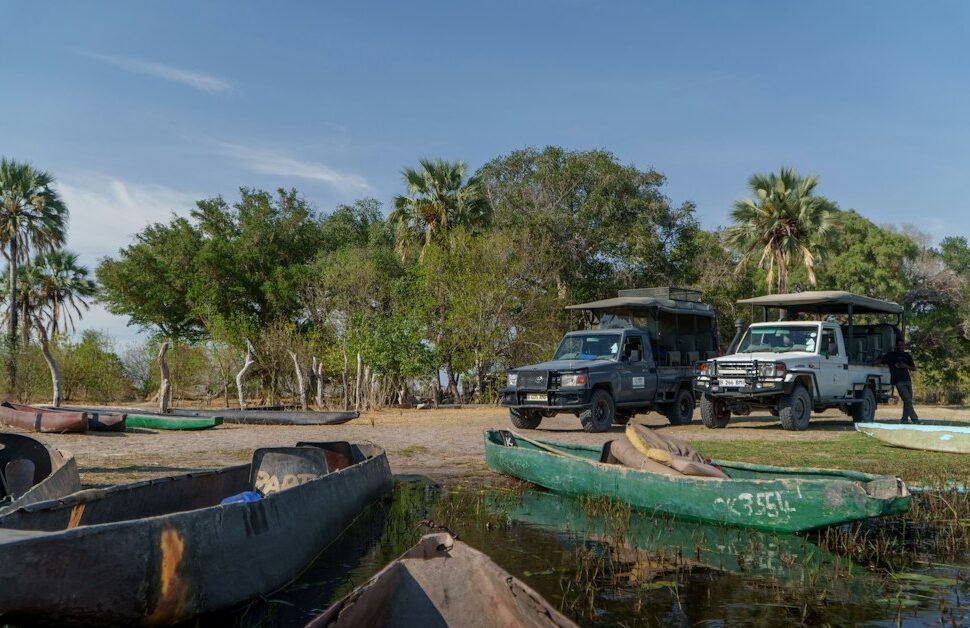
A Rwenzori trek is a seven to ten day walk through Uganda’s Mountains of the Moon, usually on the Central Circuit, with an optional glacier climb to Margherita Peak (5,109 m). Groups do best with ten or fewer per team, a guide for each small rope party and a summit plan agreed early.
Organising one for a hiking club, a charity team or a group of friends is harder than booking it for two. Hut space, porter numbers, rope teams and mixed fitness all multiply with every extra name. This guide walks a group organiser through routes, day-by-day timings, costs and training, and links our safaris and climbs for clubs and societies so you can see how we set these trips up.
Quick Facts
- Park: Rwenzori Mountains National Park, western Uganda, about 996 km² on the border with the DR Congo
- Highest point: Margherita Peak on Mount Stanley, 5,109 m, the third-highest summit in Africa
- Typical length: A Rwenzori trek on the Central Circuit takes 7 days, plus a travel day each way from Entebbe or Kampala
- Driest windows: Roughly December to February and June to August (rain is still likely)
- Park entry: US$35 per foreign non-resident per 24 hours (UWA tariff, checked November 2026)
- Best team size: 4 to 10 people per departure; larger groups split into two teams
- Gateway town: Kasese, about 25 km from the park and roughly 437 km by road from Kampala
What Makes a Rwenzori Trek Different for a Group?
A Rwenzori trek is wetter, muddier and more technical near the top than any other big East African walk. Groups move at the pace of the slowest member through bog, roots and rain, so planning has to absorb bad days rather than assume good ones.

Ready to go? Book your customized safari instantly on WhatsApp — we'll take it from there.

Instantly on
The range has been a UNESCO World Heritage Site since 1994, and the park was gazetted in 1991. Its fame comes from what grows here: moss-hung forest, bamboo, heather, then the giant groundsels and lobelias of the alpine bogs. On the upper slopes you reach glacial lakes, snowfields and the ice of the Stanley Plateau.
The catch, for a group, is that the trail rarely lets you spread out. Boardwalks cross some of the Bigo and Bujuku bogs, but much of the path is ankle-deep mud, tree roots and slick rock. A party of twelve walking in single file can stretch over an hour from front to back, which matters for lunch stops, hut arrival and safety.
Compared with a group climb on Kilimanjaro, the Rwenzori is lower but harder underfoot, quieter and far less crowded. If your club has already done Kilimanjaro or Mount Kenya, a Rwenzori trek is the natural next objective.
Which Route Suits Your Group: Central Circuit or Kilembe?
The Central Circuit suits most groups. It starts from Nyakalengija near Kasese, loops through the heart of the range and is the shortest way to Margherita Peak. The Kilembe Trail climbs from the southern side, takes longer and suits groups who want extra days, fewer people and a gentler gradient early on.
The Central Circuit
The Central Circuit is the classic Rwenzori trek. It climbs the Mubuku and Bujuku valleys to Elena Hut below the glaciers, then returns over Freshfield Pass past the twin lakes at Kitandara. Groups who do not want to summit can still walk the full loop, crossing the high pass between Bujuku and Kitandara, which gives non-climbers a real high point and keeps the party together on most days.
The Kilembe Trail
The Kilembe Trail starts near the old copper-mining town of Kilembe, south-west of Kasese. It is the longer approach, normally sold with a minimum of seven days, and spreads the climb across more nights, which helps acclimatisation. Most groups still find the Central Circuit fits their leave better.

Every Rwenzori trek, on either route, runs through licensed mountaineering concessions working under the Uganda Wildlife Authority. We arrange guides, porters and huts through them, so your group deals with one planner in Nairobi.
How Many Days Does a Rwenzori Climb Take?
A Rwenzori trek to Margherita Peak takes seven days on the mountain on the Central Circuit, plus a day’s travel each way, so most groups budget nine or ten days from Entebbe. Adding a spare weather day is wise for a party, because one sick member or a stormy summit morning can otherwise end the attempt for everyone.
A Rwenzori trek day by day on the Central Circuit
The plan below follows the shape of our 10-day Rwenzori Margherita Peak climb. Altitudes and walking times are approximate and vary with mud, weather and the group’s pace.
| Day | Route | What the group should expect |
|---|---|---|
| 1 | Entebbe or Kampala to Kasese | Long drive west via Fort Portal; overnight near the trailhead |
| 2 | Nyakalengija to Nyabitaba (about 2,650 m) | Forest walk of around 4 to 6 hours; first gear check on the trail |
| 3 | Nyabitaba to John Matte (about 3,400 m) | Long day of 7 hours or more through bamboo and heather |
| 4 | John Matte to Bujuku (about 3,960 m) | Bigo bogs, boardwalks and mud; 5 to 6 hours; cold night by the lake |
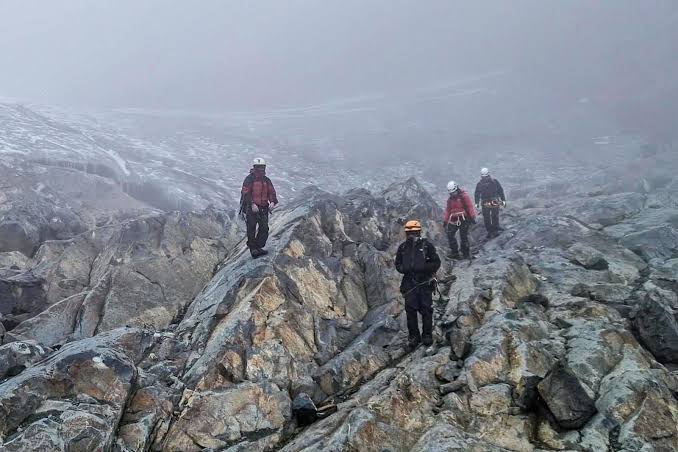
| 5 | Bujuku to Elena Hut (about 4,540 m) | Short but steep; crampon and harness briefing in the afternoon |
| 6 | Margherita Peak (5,109 m), then Kitandara | Pre-dawn start, roped glacier travel; 8 to 10 hours or more |
| 7 | Kitandara to Guy Yeoman (about 3,260 m) | Over Freshfield Pass and down through bogs; 6 to 7 hours |
| 8 | Guy Yeoman to Nyakalengija | Long descent to the trailhead and a hot shower in Kasese |
| 9 | Kasese to Entebbe or onward | Drive back, or continue to a safari in Queen Elizabeth or Bwindi |
For a Rwenzori trek with mixed abilities, day 6 is the pinch point. Summit climbers leave Elena in the dark with their rope teams, while anyone not summiting can rest, then cross to Kitandara with a guide and meet the climbers there. That split keeps everyone on one itinerary without forcing a reluctant member onto the ice.
Rope Teams, Porters and Rooming on the Mountain
A group Rwenzori trek runs on three things: enough guides for small rope teams on summit day, enough porters to carry food and kit for everyone, and enough sleeping space at each camp. Getting the ratios right is the organiser’s main job, and it is where shared trips with strangers often fall short.
Guides and rope teams
On the glacier each guide leads a small rope team, usually two or three climbers. A group of nine summit climbers therefore needs three or four guides on the ice, plus a guide who stays with anyone turning back. We confirm these numbers in writing before departure so nobody is left waiting at Elena for a free rope.
Porters and personal loads
Porters on a Rwenzori trek carry food, fuel, cooking kit and each trekker’s main bag, with loads limited to protect them. Plan on a personal duffel of roughly 12 to 15 kg, carried in a waterproof liner, and a daypack you carry yourself with rain gear, water, snacks and a warm layer.
Huts, tents and rooming
The camps on a Rwenzori trek are simple huts with bunks, plus space for tents. Huts are shared, unheated and can be cramped, so large groups may sleep partly in tents. Down in Kasese and Entebbe, we book twin rooms by default and can arrange single rooms at a supplement for members who prefer them.
How Much Does a Rwenzori Group Trek Cost?
A Rwenzori trek price is built mostly from per-person costs, such as park entry, guides, porters and huts, so a big group saves less than on a vehicle safari. Savings come from shared transfers, shared rooms and a single planner. We quote every group personally because dates, numbers and the summit split change the total.
Park entry alone runs to about US$245 per foreign non-resident for seven days, using the Uganda Wildlife Authority rate of US$35 per 24 hours in both its revised conservation tariff and the one before it (checked November 2026). Confirm current fees before you book, as UWA revises its tariff from time to time.
| Cost item | How it is charged | Effect of a bigger group |
|---|---|---|
| Park entry | US$35 per person per 24 hours for foreign non-residents (checked November 2026) | No saving: paid per head, per day |
| Guides, porters and huts | Charged per climber by the licensed mountaineering services | Mostly per head; extra guides needed for rope teams |
| Vehicle and driver | Per vehicle, for the Entebbe to Kasese transfers | Falls per person as seats fill |
| Lodges in Kasese and Entebbe | Per room, before and after the climb | Twin sharing keeps it lower |
| Technical gear hire | Per person (crampons, harness, helmet, ice axe) | No saving; hire locally |
| Tips for crew | Per trekker, at the end of the climb | Pooled by the group for fairness |
The fairest way to split a Rwenzori trek is to separate shared costs (vehicle, cook, the extra guide for anyone turning back) from personal ones (park fees, porters, gear hire). Members then see what they pay for, and non-summiters are not charged for glacier guiding.
Take your club to the Mountains of the Moon
See how we plan private trips for hiking clubs, camera clubs and societies, with guide ratios, rooming and costs set around your members.
How Should a Group Train and Stay Safe?
A group should train for twelve weeks or more, focusing on long days on steep, uneven ground with a loaded pack. On the mountain, safety comes from a clear turnaround time, honest health checks at every camp and insurance that covers high-altitude trekking and evacuation for every member.

Fitness for mud, not just height
Hill walking in wet weather is the best preparation for a Rwenzori trek. Back-to-back weekend days of six to eight hours, ideally in boots or wellingtons on muddy ground, build the leg strength and patience the bogs demand. Stair work and loaded step-ups help members who live in flat cities.
Altitude and health
Elena Hut sits above 4,500 m, high enough for altitude sickness to affect anyone. Members should see a travel clinic about altitude medicine, malaria tablets for the lowlands and the yellow fever certificate Uganda asks for on arrival (check current entry rules before you fly). Anyone with headache, vomiting or confusion goes down with a guide, whatever the group’s plans.
Insurance and evacuation
Standard travel policies often exclude trekking above 4,000 m or glacier travel. Ask every member for a policy that names both, and read our notes on travel insurance for safaris and climbs. Rescue on a Rwenzori trek means being carried down by guides and porters, so time and evacuation cover both matter.
Insider Tips for Organisers
- Wellies over boots: Most guides wear rubber boots in the bogs; many trekkers hire or bring a pair and keep boots for the summit
- Pack in dry bags: Line every duffel and daypack; wet sleeping bags end trips faster than tired legs
- Set the summit split early: Agree before you fly who aims for Margherita and who walks the circuit
- Book a spare day: One weather day protects the whole group’s summit chance
- Pool the tips: Collect crew tips centrally so every porter is thanked fairly
- Name a deputy: A second organiser on the trail handles the slower half of the group
Let us plan your group’s Rwenzori climb
Tell us how many are coming, who wants to summit and your dates, and our Nairobi team will send a tailor-made itinerary and group quote.
Why Is a Private Group Better Than Joining Strangers?
A private Rwenzori trek lets your group set the pace, the summit plan and the rooming, instead of fitting around strangers with different goals. It also lets you add a gorilla trek or a wildlife safari afterwards, so the climb becomes the centrepiece of a full club holiday rather than a single expedition week.
On a shared Rwenzori trek, one fast pair can push the pace on bog days and one unwell stranger can end your summit attempt. With your own party, you choose the turnaround time together, keep friends on the same rope and decide in advance who walks the circuit without summiting.
Many clubs finish with gorillas in Bwindi or chimpanzees in Kibale after a Rwenzori trek. Our 9-day Uganda gorilla safari for clubs pairs well with the climb, and our guide to group gorilla trekking in Uganda explains how permits work for parties bigger than eight. For a gentler add-on, Queen Elizabeth sits right beside Kasese; see our round-up of the best national parks in Uganda.
When you have a rough headcount and dates, our step-by-step page on how to organise a group safari shows what we need from you, and the wider group safaris section covers other trips for clubs, charities and friends. For other peaks, browse our mountain climbing packages.
Frequently Asked Questions
How many people can go on a Rwenzori trek together?
A Rwenzori trek has no fixed group ceiling we can quote, but practical limits come from hut space, porter numbers and rope teams on the glacier. Parties of four to ten move well together. Larger clubs usually split into two teams starting a day apart, which keeps camps comfortable and summit-day rope teams small.
Is the Rwenzori harder than Kilimanjaro?
The Rwenzori is generally rated harder than Kilimanjaro for most walkers. Kilimanjaro is higher, but its paths are drier and non-technical. The Rwenzori adds daily mud and bog, steady rain, steep slippery roots and a glacier summit that needs crampons, a harness and a rope. Groups who have done Kilimanjaro still find the Rwenzori a fresh challenge.
Do we need climbing experience for Margherita Peak?
Margherita Peak does not require previous mountaineering experience, but it does involve roped glacier travel and short rock steps near the top. Guides teach crampon and harness basics on the mountain. Anyone uneasy with exposure can stop at Elena Hut or walk the circuit without summiting, which is why we plan both options inside one group.
What is the best month for a Rwenzori group trek?
The best months for a Rwenzori trek are the drier windows of roughly December to February and June to August. Rain still falls in those months, so mud and wet kit are certain. Groups with fixed holidays can trek at other times, but should expect deeper bogs, slower days and more cloud over the peaks.
How far ahead should a club book a Rwenzori trek?
A club should start planning a Rwenzori trek six to nine months ahead, and earlier for December or the July and August holidays. That leaves time to secure hut space, confirm guides and porters for the whole party, arrange gear hire, and give members a proper training block. Flights to Entebbe also price better when booked early.
Final Thoughts
A Rwenzori trek rewards groups that plan for mud, rain and a split summit day: small rope teams, enough porters, a spare weather day and members who trained on wet hills. Get those right and your club walks through one of Africa’s strangest landscapes together, with the option of standing on Margherita Peak.
If you are weighing it against Kilimanjaro, our notes on a charity Kilimanjaro climb show how the two compare for fundraising groups. Then send us your numbers and dates, and we will sketch a plan.
Wondering if your whole club could reach Margherita Peak?
Chat with a Divulge Adventures safari consultant on WhatsApp for honest advice, a quick answer and a quote built around you.