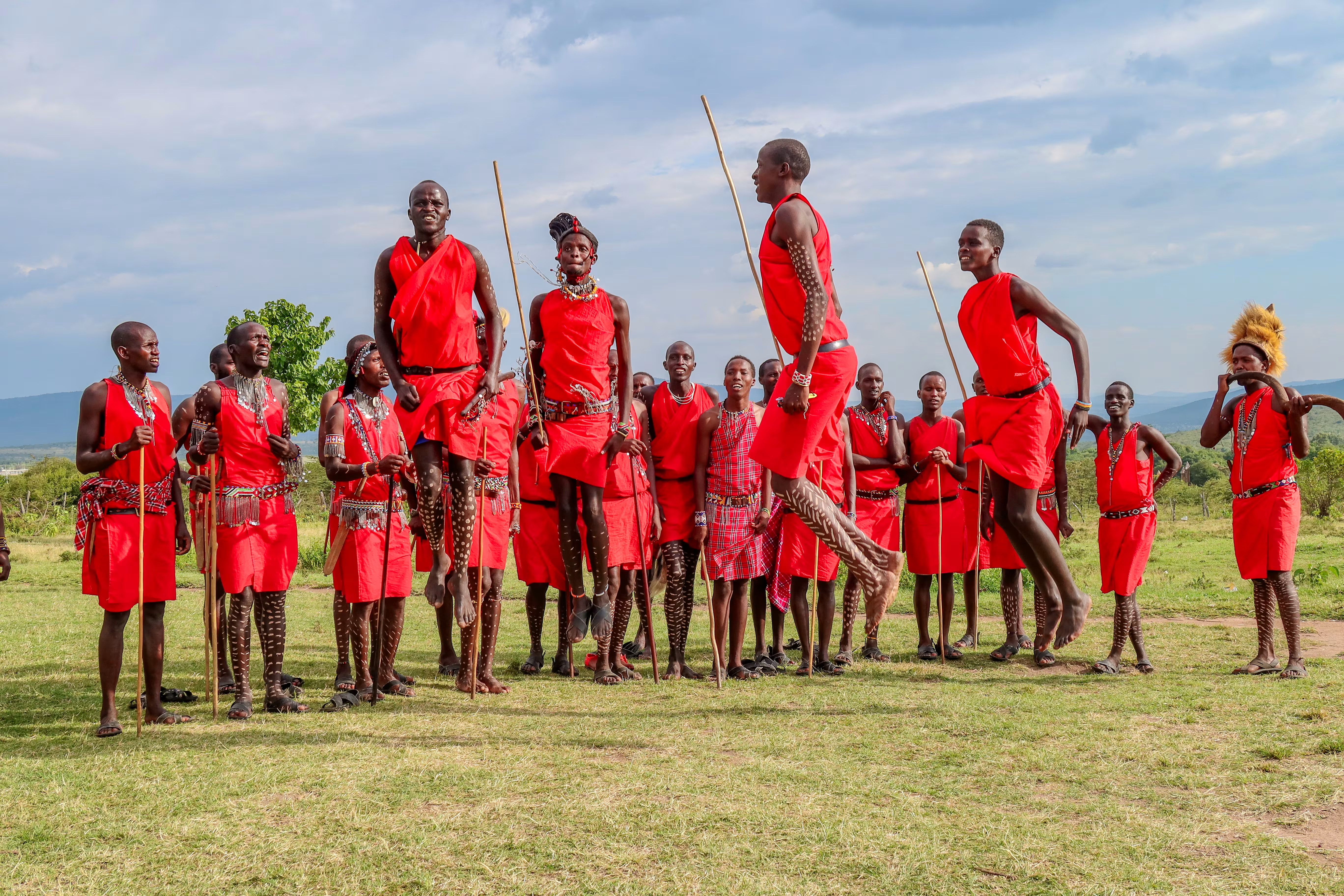
A church group trip to Kenya usually works best over 10 to 12 days: about a week of fellowship and service alongside a Kenyan partner congregation, a Sunday spent worshipping in Nairobi, then three or four nights on safari in the Masai Mara, Amboseli or the Rift Valley lakes, travelling in private vehicles with your own guides.
The hard part for a pastor or mission coordinator is rarely the wildlife. It is fitting a congregation with mixed ages, budgets and fitness into one plan, keeping community visits respectful, and handling the money fairly. This guide covers the itinerary, worship, service, vehicles, rooms, costs and paperwork, based on how we put together private safaris for clubs, societies and church groups from our base in Nairobi.

Quick Facts
- Typical length: 10 to 12 days, with 3 or 4 of them on safari
- Group size: Works well from about 8 to 40 people; larger churches split into teams
- Vehicles: One pop-up roof 4×4 for every six or seven travellers on game drives; a coach for city and service days
- Mara reserve fee: US$100 per adult per day from January to June, US$200 from July to December (checked November 2026)
- Entry: Every traveller needs an approved Kenya eTA before flying
- Volunteering: Hands-on placements need prior approval from Kenya’s Director of Immigration Services, arranged with your host organisation
- Best months: Late June to October and January to February, when roads and game viewing are at their best
What Does a Church Group Trip to Kenya Usually Include?
A church group trip to Kenya usually includes three parts: time with a Kenyan partner church or community, shared worship, and a short safari to rest and celebrate at the end. The balance depends on your purpose, whether that is a mission week, a fellowship exchange or a pilgrimage-style visit to Kenya’s Christian heritage.
Most churches already have a link in Kenya, such as a sister parish, a school they support or a partner diocese. On that kind of church group trip the local partner leads the service days, and we handle the airport, transport, rooms, meals, safety briefings and the safari. With no partner yet, ask your denomination or mission board for an established Kenyan contact.
Ready to go? Book your customized safari instantly on WhatsApp — we'll take it from there.

Instantly on
Kenya suits a church group trip for practical reasons too. English is widely spoken, Nairobi has a large international airport, and most Kenyans identify as Christian, so Sunday worship, shared meals and conversation come naturally.
Why a private church group trip beats joining a public tour
A private church group trip keeps your people together: one vehicle team, one schedule and one set of rules. You can open the day with devotions, pray before game drives without feeling self-conscious, and change plans if the partner church invites you to a wedding or a choir service. On a shared tour with strangers, none of that is possible.
Privacy also matters for safeguarding. On a church group trip with young people, leaders decide who rides in each vehicle and who sleeps in each room, and our guides follow that list.
How Should You Split Service Days and Safari Days?
Most church groups do best with the service or fellowship week first and the safari at the end. The team arrives fresh for the community programme, and the safari becomes a time to rest, reflect and debrief together before flying home, instead of a distraction in the middle of the main purpose.
The sample plan below is a starting point for a 12-day church group trip. A smaller group can shorten the service week; a group visiting a partner far from Nairobi, for example in western Kenya or at the coast, may need an extra travel day.
| Days | Where | What happens |
|---|---|---|
| Day 1 | Nairobi | Airport meet-and-greet, transfer to a guesthouse or hotel, team briefing and rest |
| Day 2 | Nairobi | Orientation with your partner church, cultural briefing, short visit to the Giraffe Centre or Nairobi National Park |
| Days 3-7 | Partner community | Fellowship, shared worship, the programme your host plans (teaching exchange, youth events, building support) |
| Day 8 | Nairobi | Sunday service with a Nairobi congregation, afternoon rest and packing for safari |
| Days 9-11 | Lake Naivasha, Lake Nakuru, Masai Mara | Boat ride, rhino and flamingo country, then two nights of game drives in the Mara |
| Day 12 | Nairobi | Drive back, closing team devotion and evening flight home |
The safari part of this plan follows the route of our 4-day Hell’s Gate, Naivasha, Nakuru and Masai Mara safari, which we can rebuild around your group’s size and budget.
Where Can a Church Group Worship and Learn About Kenya’s Christian History?
Nairobi is the easiest place for a church group to worship on a Sunday, with services in English across every major tradition. For history, the Rabai mission near Mombasa is where Christian mission work in Kenya began in 1846, and it now has a museum run by the National Museums of Kenya.

All Saints Cathedral, the Anglican cathedral beside Uhuru Park in central Nairobi, holds several Sunday morning services, and its published service sheets show English services at 9.30am and 11.30am. Times change with the church calendar, so check the cathedral’s current sheet the week before. On a church group trip, worshipping with your partner church is often more memorable: a long service with several choirs is a gift, so be ready to greet the congregation or sing.
The Rabai Museum sits about 25 km north-west of Mombasa, roughly half an hour’s drive. The mission station there was founded by the missionary Johann Ludwig Krapf of the Church Mission Society, and the Krapf Memorial Museum tells the story of those early years (checked November 2026). A coast extension pairs it well with a few days of rest on the beach.
For a church group trip that crosses borders, our guide to the Namugongo Martyrs’ Day pilgrimage explains how groups combine Uganda’s June gathering with a safari.
How Do You Plan Community Visits That Respect Your Hosts?
Respectful community visits are led by your Kenyan hosts, not by your schedule. Let the partner church decide what help is useful, keep groups small in homes and classrooms, ask before taking photos, and never visit children’s homes as a tourist activity. Those principles protect people and keep the relationship healthy long after you fly home.
The question of children’s homes matters more in Kenya now than ever. Under its care reform strategy, which follows the Children Act 2022, the government plans to move children out of institutions and into family-based care, with the aim of phasing out children’s homes by 2032 (reported February 2026). Short visits by foreign groups do not fit that direction. If your congregation wants to support children, ask your partner how to help families and local schools instead.
Hands-on volunteering also has a legal side. The Kenya High Commission in London states that anyone planning to volunteer or take a placement must work with the host organisation to get the right authorisation from the Director of Immigration Services before starting (checked November 2026). Fellowship, worship and visits are different from formal placements, so discuss the plan with your host early and confirm on the High Commission’s visa page.
Gifts on a church group trip need the same care. Donated clothes handed out from a bus can embarrass people and undercut local traders, while a planned contribution to a project your partner already runs does more good. For visits to traditional communities on safari, our guide to Maasai village visits explains how to go as a respectful guest.
Vehicles, Rooming and Group Size for Church Groups
On safari, a church group needs one pop-up roof 4×4 for every six or seven travellers, so that everyone has a window seat and a view through the roof. On city and service days a single coach or minibus is cheaper and keeps the team together. Rooms are usually twins and triples, allocated by the group leader.

A church group trip of 20 people usually needs three or four safari vehicles, each with its own driver guide. The vehicles share sightings by radio, so nobody misses the lion another team found.
Rooming is where a church group trip most often runs into friction. Sort it before you travel: who shares with whom, which young people need an adult in the next room, and who needs a ground-floor room or a single. Mission guesthouses in Nairobi and many towns are simple, clean and good value; on safari, mid-range lodges and tented camps can usually hold a large group if you book early, while small camps may need the group split between two properties.
Group size shapes the church group trip too. Under about 12 people, intimate camps and small churches are easy; between 12 and 40, plan two or three teams on service days, each with a leader and a local host.
Which Kenya Safari Suits a Church Group?
The Masai Mara is the first choice for most church groups because it gives the best chance of big cats in a short time, and the Great Migration fills its plains from about July to October. Amboseli adds elephants beneath Kilimanjaro, while the Rift Valley lakes give a gentler, cheaper safari with shorter drives from Nairobi.

For a church group trip with a three or four day safari, the lakes-and-Mara loop in the table above is the most popular. Groups with five or six days often choose Amboseli and the Mara instead, as on our 6-day Best of Amboseli and Masai Mara safari. If time is very short, a morning game drive in Nairobi National Park on the first or last day still shows rhinos and giraffes against the city skyline.
Timing matters for both the safari and the service week. The long rains usually fall from about March to May and the short rains around November, when some roads in rural areas turn to mud. Our guide to the best time to visit Kenya breaks this down month by month, which helps if your church group trip must fit school holidays.
How Much Does a Church Group Trip to Kenya Cost?
A church group trip to Kenya typically costs about US$2,000 to US$4,000 per person on the ground for 10 to 12 days, before international flights (our estimate). Simple guesthouses during the service week keep costs down; the safari days and the Masai Mara’s park fees take the largest share of the budget.

As a rough guide, service and fellowship days in guesthouses with a coach cost around US$80 to US$150 per person per day, depending on how far your partner is from Nairobi. Safari days at mid-range lodges with private 4x4s run about US$300 to US$500 per person per day, and more in high season. These are our estimates for planning, and we price each group from its own dates and rooms.
Park fees are fixed and worth knowing. Kenya Wildlife Service charges non-resident adults US$80 for Nairobi National Park, US$90 for Amboseli and Lake Nakuru and US$50 for Hell’s Gate (fees in force since 1 October 2025, checked November 2026). The Masai Mara reserve charges US$100 a day from January to June and US$200 from July to December. Our Kenya park fees guide lists the rest; confirm every figure before you set your budget.
Group pricing works in your favour as vehicles fill. Four people in a safari vehicle pay more each than six or seven, so a leader can often lower the cost per person by adjusting numbers to whole vehicles. Many churches fundraise for part of a church group trip; if you do, keep the safari portion clearly separate in your budget so donors know where their gifts go.
Bring your congregation to Kenya
See how we plan private safaris for clubs, societies and church groups: vehicles sized to your team, rooms set by your leaders and one clear quote for the whole party.
Paperwork, Health and Safety for a Church Group
Every member of a church group needs a passport valid for at least six months and an approved Kenya eTA before boarding the flight. Each traveller should also see a travel clinic six to eight weeks ahead, and the whole team needs travel insurance that covers medical evacuation.
The official Kenya eTA application page says approval typically takes about three working days (checked November 2026). Leaders should keep a copy of every approval; one missing eTA at check-in can hold up a whole church group trip. Our Kenya eTA guide walks through the form step by step.
Health advice varies by person, which is why a clinic visit beats a group email. Our pages on Kenya safari vaccinations and yellow fever requirements are a good place to start. For peace of mind in remote areas, look at travel insurance and Flying Doctors cover before you go.
Day-to-day safety on a church group trip is mostly common sense: keep valuables out of sight, travel in your vehicles after dark and follow the guide on game drives. Our article on whether Kenya is safe for safari covers the questions parents of young travellers usually ask.
Insider Tips
- Book a year out: Large groups need many rooms on the same nights, especially in the Mara from July to October
- Brief the team on dress: Modest clothes for church and homes; neutral colours for game drives
- Learn a few Swahili greetings: “Habari” and “asante” open doors in every congregation
- Plan a rest day: A quiet afternoon between the service week and the safari stops people burning out
- Agree photo rules early: Ask before photographing people, and never post images of children without permission
- Name vehicle captains: One person per car counts heads and passes on changes
Let us plan your church group trip
Tell us your dates, group size and where your partner church is, and our Nairobi team will send a free tailor-made group itinerary and quote.
Frequently Asked Questions
How long should a church group trip to Kenya be?
A church group trip to Kenya is usually 10 to 12 days on the ground. That allows about a week with your partner church, a Sunday in Nairobi and three or four nights on safari. Groups short of time can manage eight days, while a coast extension to the Rabai mission adds two or three.
Can a church group volunteer in Kenya on an eTA?
Fellowship, worship and visiting a partner church are normal parts of a church group trip, but formal volunteering or placements need more. The Kenya High Commission in London says volunteers must work with their host organisation to get authorisation from the Director of Immigration Services before starting. Confirm what your programme counts as with your host and the official visa pages early.
Is it appropriate for a church group to visit an orphanage in Kenya?
No, a church group should not visit children’s homes as a tourist activity. Kenya’s care reform strategy aims to move children into family-based care and phase out children’s homes by 2032, and short visits by foreign groups do not support that. Ask your partner church how to help families, schools or community projects instead.
How many safari vehicles does a church group need?
A church group needs one pop-up roof 4×4 for every six or seven travellers, so a team of 20 usually travels in three or four vehicles with a driver guide in each. That keeps a window seat for everyone. On city and service days, a single coach or minibus is cheaper and keeps the whole group together.
When is the best time for a church group trip to Kenya?
The best time for a church group trip to Kenya is late June to October or January to February, when roads are dry and game viewing is good. July to October brings the Great Migration to the Masai Mara but also higher park fees and busier lodges. The long rains from about March to May can make rural roads difficult.
Final Thoughts
A good church group trip to Kenya puts the relationship with your Kenyan hosts first, then gives the team a few unhurried days on safari to rest and give thanks together. Get the itinerary order, vehicles, rooms and paperwork right, and the rest falls into place.
If your congregation is starting to talk about Kenya, send us your rough dates and numbers. We will suggest a route, explain the costs honestly and help you shape the trip around your congregation. You can also read how we run a Kenya school trip, since many youth groups follow a similar plan, or browse all our Africa group safaris and how to organise a group safari.
Wondering how to fit a service week and a safari into one trip?
Chat with a Divulge Adventures safari consultant on WhatsApp for honest advice, a quick answer and a quote built around you.