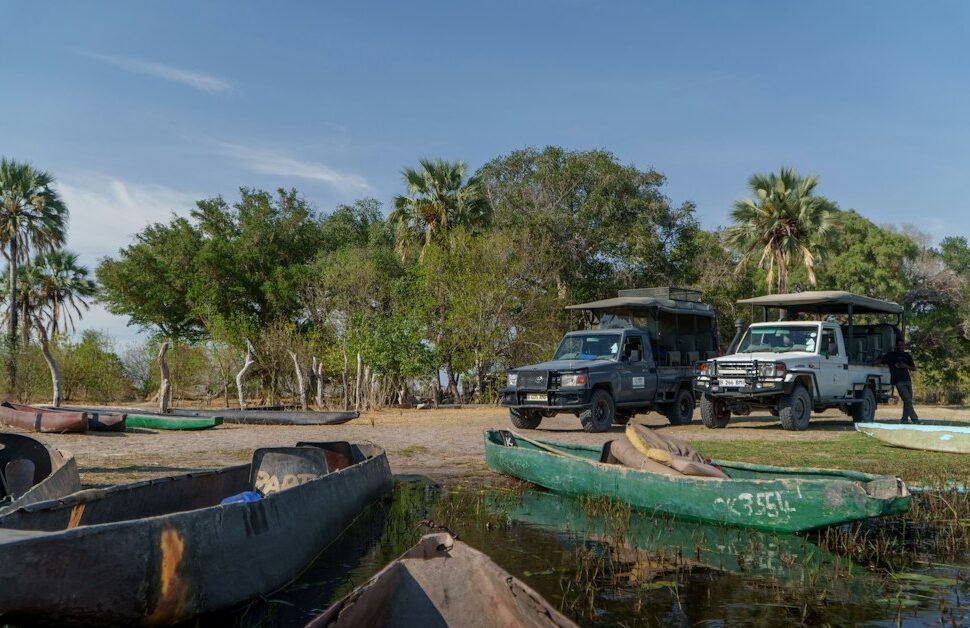
A women’s safari in Botswana works best as a private group trip of 6 to 12 women staying in small tented camps, with a week split between the Chobe riverfront and the Okavango Delta. You get your own vehicle and guide, quiet water safaris by mokoro, long sundowners and some of the darkest night skies in southern Africa.
If you are the friend who said “let’s do Africa together”, you now have to choose camps, sort rooms and keep everyone happy on the budget. This guide covers the route, safety, rooming, costs and timing for a women’s group, and how our special occasion group safaris take the planning off your shoulders.

Quick Facts
- Group size: 6 to 12 women fits one or two safari vehicles and most small camps
- Ideal length: 7 nights; 5 at the shortest, 10 to add the salt pans
- Best months: June to October for game viewing; November to March for green scenery and lower rates
- Gateways: Kasane for Chobe, Maun for the Okavango Delta and Moremi
- Camp sizes: Often 8 to 12 tents, so a group can sometimes take a whole camp
- Luggage: About 20 kg per person in soft bags on light aircraft
- Group offer: For every six paying travellers, the seventh place is free
Why Does Botswana Suit a Women’s Group So Well?
Botswana suits a women’s group because it is built around small, unfenced camps in very low-density wilderness. Tourism here is deliberately low-volume, with many camps in private concessions, so you rarely share a sighting with more than one or two other vehicles, and evenings belong to your group rather than a crowded lodge bar.
That small scale shapes a women’s safari in Botswana. A camp of 8 to 12 tents with eight friends in it feels like a private house party in the bush: one long dinner table, staff who know your names, and drives shaped around what the group wants that day.
Ready to go? Book your customized safari instantly on WhatsApp — we'll take it from there.

Instantly on
Botswana also has a growing number of women working as guides. Chobe Game Lodge, inside Chobe National Park near Kasane, employed its first woman guide in 2004 and was reported in 2022 to run a guiding team made up entirely of women. If your group would like a woman guide on a women’s safari in Botswana, we can ask camps about it when we build the itinerary.
Is a women’s safari in Botswana safe?
A women’s safari in Botswana is a low-risk trip when it is run as a guided group. The camps are hours from the nearest town, there are no strangers wandering through, and a staff member walks you to your tent after dark because animals move freely through camp. The rules you will hear on arrival (stay in the vehicle, never walk alone at night, keep tent zips closed) are about elephants and hippos, not people.
In Maun and Kasane, take normal small-town care: keep valuables out of sight and use the transfers we arrange. If someone in the group is travelling alone for the first time, our guide to safari as a solo woman answers the questions that usually come up.
Which Route Works Best for a Women’s Safari in Botswana?
The route that works best for most women’s groups is Chobe first, then one or two camps in the Okavango or Moremi area, finishing in Maun. It starts gently with boat cruises among elephants, then moves into the quieter delta, and the light-aircraft hops between areas are short.

| Route | Nights | Best for |
|---|---|---|
| Chobe riverfront + Moremi + Khwai | 6 to 7 | A first safari: boat cruises, big game, then quieter concessions |
| Chobe + Okavango water camp | 6 to 7 | Groups who want mokoro trips and island walks as much as game drives |
| Moremi, Khwai and Savuti mobile camping | 6 | Adventurous friends happy with dome tents, bush showers and campfires |
| Okavango + Makgadikgadi or Boteti | 8 to 10 | A second trip, or groups who want salt pans, meerkats and huge skies |
Chobe riverfront
The Chobe riverfront near Kasane is famous for elephant herds drinking in the dry season, and a boat cruise is a gentle first outing on a women’s safari in Botswana. Kasane is also a short road transfer, with a border crossing, from Victoria Falls, so many groups add a night there at the start.
Okavango Delta and Moremi
The Okavango Delta is a UNESCO World Heritage Site, and the UNESCO listing for the Okavango Delta explains why: a vast inland delta that floods each year in the dry season. Water camps offer mokoro trips, while land camps around Moremi Game Reserve focus on predators. Our mokoro trip guide for groups explains how the poled canoes work with a party of friends.
Khwai and the salt pans
The Khwai Concession, on the edge of Moremi, allows night drives and guided walks that the national parks do not, a good second camp on a women’s safari in Botswana. Groups with ten nights can add the Makgadikgadi or Boteti area, where the 5 day Boteti tented safari gives a very different landscape of open pans and river channels.
Wilderness, Wine and Stars: What a Women’s Group Will Remember
Most women’s groups remember the slow moments more than the checklist: a sundowner on a sandbank, a silent mokoro glide past reed frogs, or a night lying out under the Milky Way. Build those into every camp rather than filling each day with back-to-back drives.

A typical day on a women’s safari in Botswana starts with coffee by the fire at first light, a morning activity, then brunch and a long rest through the heat. The afternoon outing ends with drinks at sunset, and many camps include house wine and beer in the rate.
Stargazing is a highlight of any women’s safari in Botswana. With almost no artificial light for hundreds of kilometres, the night sky is extraordinary, and some camps have star beds or sleep-out decks for one night in the open. Ask early, because sleep-out decks hold only a few beds.
Other ideas for a women’s safari in Botswana include a lantern-lit bush dinner, a photography morning with the guide or a quiet pool afternoon. Our 7 day Botswana celebration safari shows how we fit celebration dinners and bush sundowners into a Chobe, Moremi and Khwai route.
How Should a Women’s Group Handle Rooms, Vehicles and Flights?
The simplest set-up is twin-share tents, one safari vehicle for every six to seven women, and scheduled or charter light aircraft between camps. Decide the rooming list before you ask for quotes, because single supplements change the price more than anything else.
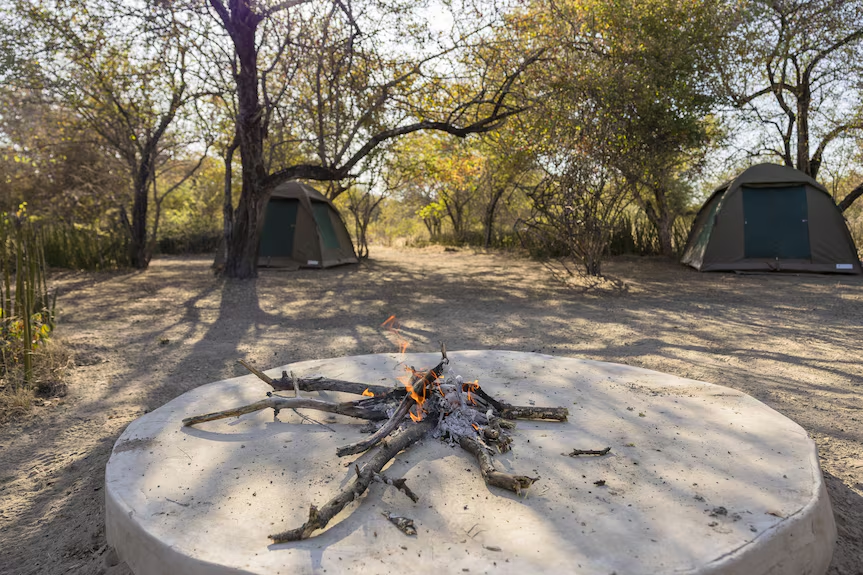
Rooming is the first thing to settle on a women’s safari in Botswana. Camps price per person sharing, so most groups pair friends and let one or two people pay the single supplement. With eight to twelve women, a small camp of 8 to 12 tents can sometimes be booked for the whole group; larger groups split between two nearby camps of the same standard.
Light aircraft link Kasane, Maun and the delta camps, and flights are usually under an hour. The luggage limit is about 20 kg per person in soft bags, so pack in duffels rather than hard suitcases. Bigger groups can take a private charter so everyone flies together.
Payments worry most organisers. With our group bookings, each traveller can pay separately and arrive on different flights. A deposit of 30 to 40% holds the booking and the balance is due 2 to 4 weeks before travel. Our page on how to organise a group safari walks through headcounts, deposits and rooming lists step by step.
Why travel as a private group rather than joining a scheduled tour?
A private women’s safari in Botswana keeps the pace, the vehicle and the conversation yours. On a scheduled tour you share seats with strangers on a fixed plan; with your own vehicle the guide stops for photos, skips a drive for a lie-in and plans the celebration around you.
How Much Does a Women’s Safari in Botswana Cost?
A women’s safari in Botswana costs more per night than East Africa because most camps are fly-in and low-volume. As a rough guide, budget from about USD 4,800 per person for a week of guided mobile camping, and considerably more for permanent tented camps in the delta.
Our 7 day Moremi, Khwai and Savuti safari is a good benchmark: it is priced from USD 4,774 per adult on its trip page, with park fees, meals, activities and a guide included. Permanent camps cost more, especially from July to October. The table shows estimated bands per person per night sharing, from typical published camp rates, not quotes.
| Style | What you get | Estimate per person per night |
|---|---|---|
| Guided mobile camping | Dome tents, bush showers, private guide and vehicle, all meals | About USD 650 to 800 (see the trip price above) |
| Mid-range tented camp | En-suite tents, two activities a day, most drinks | About USD 500 to 900 (estimate) |
| Premium delta camp | Small luxury camp, private concession, fly-in | About USD 1,200 to 2,500+ in high season (estimate) |
Park entry fees are a small share of the total but worth knowing. Botswana’s non-resident daily park entry fee was P380, and in February 2026 the government consulted on raising it to P500, according to the Botswana Daily News report on the fee review. Later reports said the increase was put on hold, so we confirm the current rate in every quote (checked November 2026).
Group size helps the budget of a women’s safari in Botswana: for every six paying travellers, the seventh place is free. Add international flights to Maun or Kasane, usually via Johannesburg, plus tips, insurance and drinks outside the camp’s inclusions.
Planning a women’s safari in Botswana for your friends?
See how our special occasion group safaris work: private vehicles, small camps, celebration dinners and one group quote with separate payments.
When Should a Women’s Group Go to Botswana?
June to September is the easiest window for a first women’s group: cool mornings, warm days, dry roads and animals concentrated around water. October is hot but superb for game, while November to March brings green scenery, baby animals and lower rates.

| Months | Conditions | Suits a group that wants |
|---|---|---|
| April to May | Rains ending, green and mild | Fewer vehicles and good value before the high season |
| June to August | Dry and cool, cold early mornings, delta floodwater high | Classic game viewing and mokoro trips on full channels |
| September to October | Hot and dry, very hot by October | The best predator and elephant sightings, if heat is fine |
| November to March | Rainy season, lush, afternoon storms | Lower rates, baby animals and birdlife; some tracks close |
For a month-by-month look at water levels, rates and wildlife, read our guide to the best time to visit Botswana. Northern Botswana is a malaria area, so see a travel clinic well before you fly.
If the group is torn between countries, our post on a women’s trip to Namibia covers the desert alternative, and the Botswana safari guide covers the main regions.
Insider Tips
- Book early: Small camps fill 9 to 12 months ahead for July to October, and a group needs several tents on the same nights
- Settle rooming first: Agree who shares before asking for quotes; single tents change the price most
- Pack soft: One soft duffel of about 20 kg each, with neutral colours for walks and mokoro trips
- Layers matter: June and July mornings are cold on open vehicles; bring a warm jacket, hat and gloves
- Name a lead: One organiser talks to us; everyone else pays and books flights separately
- Ask for the extras: Star beds, bush dinners and village visits need advance notice
Let us plan your group safari
Tell us your dates, group size and budget, and our Nairobi team will send a free tailor-made itinerary and group quote, with separate payments for every traveller.
More ideas for a women’s safari in Botswana, plus trips for clubs and families in five other countries, are on our Africa group safaris page.
Frequently Asked Questions
Is a women’s safari in Botswana safe for a group of friends?
Yes, a women’s safari in Botswana is one of the calmer ways for friends to travel in Africa. Camps are small and remote, guides run every activity and staff escort guests to their tents after dark. The real risks are wildlife and heat, so follow camp rules and check your government’s travel advice.
How many nights does a women’s safari in Botswana need?
Seven nights is the sweet spot for most women’s groups: two or three nights on the Chobe riverfront, then two camps in the Okavango or Moremi area. Five nights works if time is short, but every light-aircraft hop costs half a day. Ten nights lets you add the Makgadikgadi salt pans.
Can women travelling alone join a group safari in Botswana?
A solo woman can travel with friends of friends, a club or a book group, and that is often cheaper than a private trip for one because the vehicle and guide are shared. Single rooms carry a supplement at most camps, so many groups pair travellers in twin tents. Tell us early who is happy to share and we will plan the rooming list around it.
When is the best time for a women’s safari in Botswana?
June to September suits most first-time groups, with cool mornings, dry roads and animals gathered at water. October is the hottest month but excellent for game. November to March is the green season: lush scenery, baby animals, migrant birds and lower camp rates, with afternoon storms and some flooded or closed tracks in the wettest weeks.
Do we need a visa for a women’s safari in Botswana?
Many nationalities, including most European and North American passport holders, can visit Botswana without a visa for a holiday, but the rules depend on each traveller’s passport. Ask every woman in the group to check her own entitlement with the Botswana government or her embassy before booking flights, and carry a passport with at least six months of validity and blank pages.
Final Thoughts
A women’s safari in Botswana rewards groups that keep it small and slow: one week, two or three camps, shared tents and long evenings under the stars. Settle the rooming list and dates first, and the rest of your women’s safari in Botswana falls into place.
Send us your group size and preferred month, and we will come back with a route, camp options and a clear price per person.
Wondering which Botswana camps suit your group of friends?
Chat with a Divulge Adventures safari consultant on WhatsApp for honest advice, a quick answer and a quote built around you.
Planning a trip? Explore our Botswana safari packages or get a free, tailor-made quote.