

A Namibia motorbike tour for a riding club is usually a 10 to 14 day loop of about 2,000 km from Windhoek, mostly on gravel, through the Namib dunes, the coast at Swakopmund and the rock country of Damaraland. Motorbikes are not allowed inside Namibia’s national parks, so a support vehicle carries riders into Sossusvlei and Etosha.
That one rule catches out more club organisers than the gravel does. This guide covers how a Namibia motorbike tour works for a group: a realistic route with distances, the park days off the bike, ride groups and support crew, licences and safety, and how costs are shared. It also explains how our club safaris fit the riding around lodges, transfers and wildlife days, so your organiser is not left juggling five suppliers.
Quick Facts
- Typical length: 10 to 14 days, with 8 to 10 riding days
- Distance: Roughly 2,000 km or more on the classic Windhoek, Sossusvlei, Swakopmund, Damaraland and Etosha loop
- Road surface: Mostly gravel, with tar on the main routes; traffic drives on the left
- Speed limits: 120 km/h on tar and 100 km/h on gravel by law; 80 km/h is the sensible gravel pace
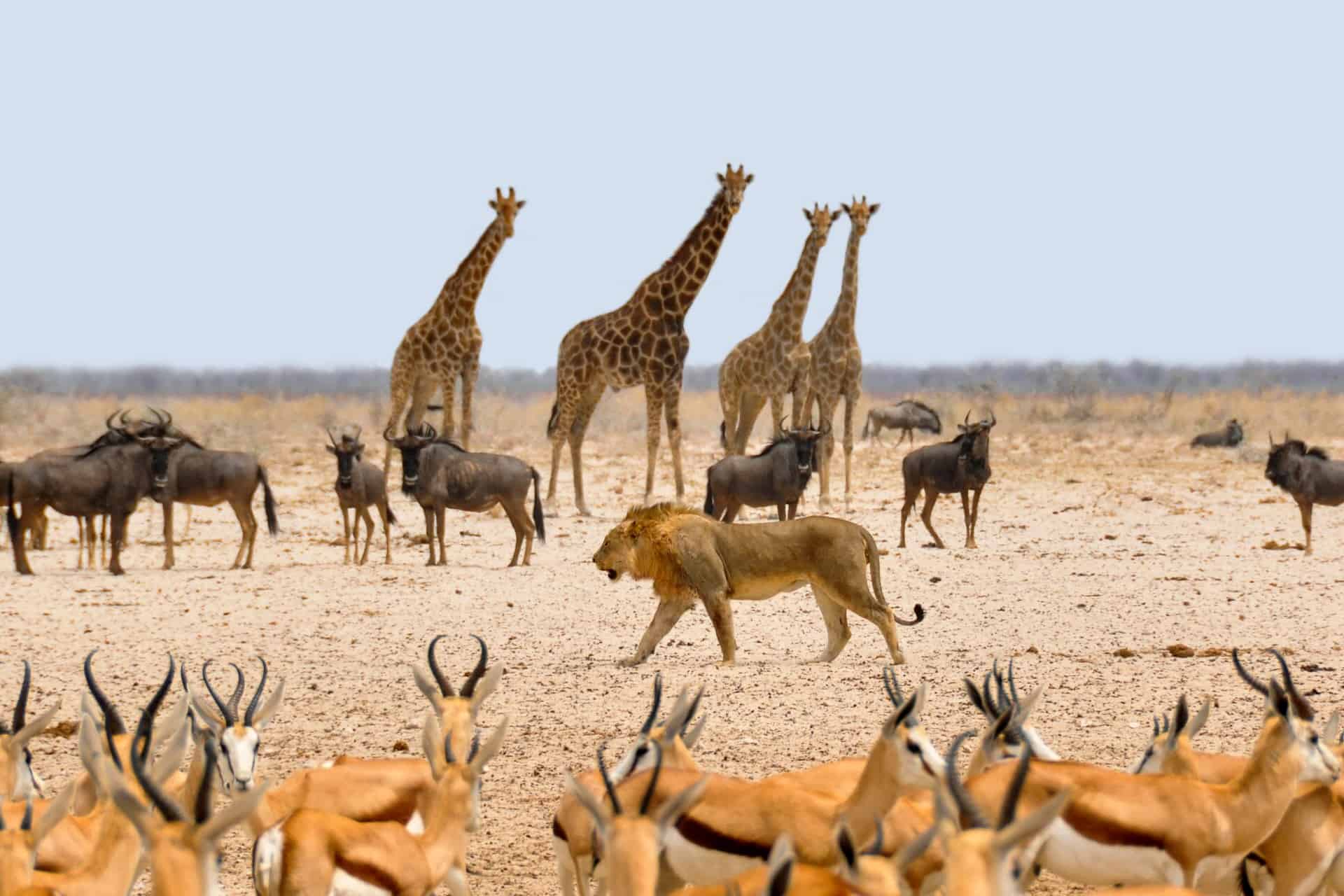
- National parks: Motorcycles are prohibited in all of them, so park days happen in a vehicle
- Best riding months: April to September, with cooler days and dry roads
- Group bonus: On our group trips, the seventh place is free for every six paying travellers
What Is a Namibia Motorbike Tour Like for a Riding Club?
A Namibia motorbike tour is long days on empty gravel, big mountain passes and very little traffic, broken up by lodge nights and a few days off the bike for the dunes and Etosha’s waterholes. It suits confident riders who enjoy loose surfaces more than sport riders looking for twisty tar.
Namibia is big and thinly populated, and on a Namibia motorbike tour the roads between the sights are the main event. The C and D gravel roads are graded rather than sealed, so a single day can move from hard-packed and fast to corrugated, sandy or stony. Fuel stations can be well over 100 km apart in the south and west, which is why a club ride here needs more planning than a European tour with a fuel station in every village.
Ready to go? Book your customized safari instantly on WhatsApp — we'll take it from there.

Instantly on
For a group, the format matters as much as the route. Most clubs choose a guided Namibia motorbike tour with a lead rider, a sweep rider and a support vehicle. A self-guided ride between pre-booked lodges suits small, experienced groups, but leaves every decision to the riders when a tyre goes flat 80 km from the next farm.
Who in your club will enjoy it, and who will not
Riders who already handle gravel, sand and long days in the saddle love a Namibia motorbike tour. Members who have only ridden on tar should take an off-road course first, and non-riding partners can travel in the support vehicle.
Which Route Works Best for a Club Ride in Namibia?
The best first route for a club is a clockwise loop from Windhoek: south-west to the dunes at Sesriem, north to Swakopmund on the coast, inland to Damaraland and then to the edge of Etosha before returning to Windhoek. It packs desert, ocean, passes and wildlife into about two weeks without silly daily distances.

The legs below are the backbone most groups use. Distances are approximate road distances; actual times on a motorbike depend on road conditions, photo stops and how fast your slowest rider is comfortable going on gravel.
| Leg | Approximate distance | What the riding is like |
|---|---|---|
| Windhoek to Sesriem (Sossusvlei gate) | About 320-370 km | Tar out of town, then gravel over the Spreetshoogte or Remhoogte passes |
| Sesriem to Swakopmund | About 300 km | Long gravel day via Solitaire and the Kuiseb and Gaub passes |
| Swakopmund to Damaraland | About 350 km | Coast road north, then inland on gravel towards Twyfelfontein |
| Damaraland to Okaukuejo (Etosha) | About 360 km | Gravel to Kamanjab, then mostly tar; bikes park at a lodge outside the gate |
| Etosha to Windhoek | About 440 km | Mostly tar via Outjo and Otjiwarongo; the easiest day of the loop |
A sample 12-day Namibia motorbike tour
Day 1 is arrival in Windhoek, bike handover and a short shakedown ride. Days 2 and 3 cover the passes to Sesriem, with a full day off the bike on day 3 for Sossusvlei and Deadvlei in the support vehicle. Days 4 to 6 take you to Swakopmund with a rest day by the sea, and days 7 and 8 ride north into Damaraland. Days 9 to 11 are for Etosha, with two game-drive days in a vehicle, and day 12 rides back to Windhoek to return the bikes.
With only ten days, drop the Swakopmund rest day and one Etosha day. A longer Namibia motorbike tour can add the Fish River Canyon in the south or remote Kaokoland in the north-west for experienced riders.
Can You Ride a Motorbike Into Etosha or Sossusvlei?
No. Namibia’s Ministry of Environment, Forestry and Tourism states that motorcycles are prohibited in all of the country’s national parks, and so is travelling on an open vehicle or open loading bay. Riders park their bikes at a lodge and visit Sossusvlei, Deadvlei and Etosha in an enclosed vehicle.

The rule is listed in the ministry’s official guidance on park entry permits, alongside bans on leaving marked roads and getting out of your vehicle. The same page notes that no permit is needed to travel the main public road through Namib-Naukluft Park, which is how the route above crosses the desert between Sesriem and the coast. Check that guidance again before you travel, because rules at individual gates can be applied strictly.
In practice, this suits a Namibia motorbike tour well. A dawn trip into the dunes or a day at Etosha’s waterholes rests tired wrists and backs, and a vehicle handles the deep sand road to Sossusvlei. Etosha’s daily conservation fee for international adults rose to N$280 per person from 1 April 2026 (checked November 2026); please confirm current fees before booking.
Planning the park days on a Namibia motorbike tour
For Sossusvlei, stay at a lodge near Sesriem so the vehicle can be at the gate when it opens. For Etosha, book a lodge near Andersson Gate or one of the rest camps inside the park, and plan two full days of game drives. Our guide to driving Namibia as a group convoy covers Etosha’s own driving rules, which also apply to the support vehicle.
How Do Ride Groups, Support Vehicles and Rooming Work?
A club ride in Namibia works best with groups of six to ten bikes per lead rider, a sweep rider at the back and one support vehicle for every group. Larger clubs split into two ride groups that leave 20 to 30 minutes apart and meet at the same lodge each night.

Dust is the reason for the gaps. On gravel, a bike close behind another rides blind, so riders keep well apart and regroup at junctions and fuel stops. The sweep stays behind the slowest rider, so nobody on a Namibia motorbike tour is ever alone on the road.
What the support vehicle carries
The support vehicle carries luggage, water, a first-aid kit, tyres, tubes, spares and a satellite communication option for stretches with no signal. It also carries non-riders and anyone who wants a day off, so the club stays together.
Rooming and lodges for a riding group
Most Namibian lodges have twin and double rooms, so clubs share in pairs, with single rooms at a supplement. Lodges in Damaraland and near Sesriem can be small, so a group of 16 may need two properties in peak months. For a Namibia motorbike tour we book lodges with secure bike parking and early breakfasts.
Our 6 day Namibia culture tour for clubs through Erongo, Damaraland and Kaokoland shows the country your riders will cross, and suits members who would rather travel by vehicle.
Planning a ride for your motorcycle club?
See how our club safaris work: private vehicles, lodges booked around your route, park days with local guides and one Nairobi team handling the whole trip.
When Is the Best Time to Ride Namibia?
The best time for a motorbike trip in Namibia is April to September, when days are dry and warm rather than hot and the gravel is at its most predictable. May to August is the coolest stretch, with crisp, sometimes near-freezing desert mornings, so riders need proper layers under their jackets.
October and November get very hot inland, and a day in riding gear at desert temperatures is draining. From about December to March, afternoon storms build over the central and northern regions, and dry riverbeds crossing gravel roads can flood suddenly. The coast stays cool all year, often with morning fog, so plan a Namibia motorbike tour for the dry months.
Wildlife viewing also peaks in the dry months at Etosha’s waterholes. Our month-by-month guide to the best time to visit Namibia covers each region’s weather.
Licences, Entry Rules and Safety on Namibian Gravel
Riders need a full motorcycle licence from home, and an International Driving Permit is strongly recommended, as rental companies and police may ask for one. British, American and most European visitors also need a Namibian visa, available on arrival or online in advance.
According to the UK government’s Namibia entry requirements, the visa on arrival or e-visa costs N$1,600 for travellers over 11, and passports need at least six months’ validity on arrival and three blank pages (checked November 2026). Other nationalities should check their own government’s advice before booking.
Riding rules that keep a club safe
Ride on the left, keep to 120 km/h on tar and 100 km/h on gravel, and treat 80 km/h as the real ceiling on loose surfaces. Never ride after dark, when kudu, oryx and livestock wander onto roads. Take blind crests slowly, because oncoming vehicles throw up dust and stones.
Full protective gear and a hydration pack are essential on a Namibia motorbike tour. Check that your travel cover includes motorbike riding at your engine size and medical evacuation; our travel insurance page explains what to look for.
How Is a Namibia Motorbike Tour Priced for a Group?
The price of a Namibia motorbike tour for a group is built from shared costs, which fall per person as the group grows, and individual costs, which do not. Shared costs include guides, the support vehicle and its fuel; individual costs include bike hire, rooms, park fees and visas.
| Cost item | Paid per | What changes it |
|---|---|---|
| Motorbike hire | Per rider | Model and engine size, number of days, insurance excess |
| Lead rider, sweep and support crew | Shared by the group | Number of ride groups and trip length |
| Support vehicle and fuel | Shared by the group | Total distance and number of vehicles |
| Lodges and meals | Per person | Lodge style, season, sharing or single rooms |
| Park fees and game drives | Per person | Number of days in Etosha and Sossusvlei |
| Visa, flights and insurance | Per person | Nationality, departure city, cover level |
Because crew and support vehicle are shared, eight to twelve riders get much better value than four. On our group trips the seventh place is free for every six paying travellers, confirmed in the quote. We can include bike hire from a Namibian rental specialist, or plan your Namibia motorbike tour around a company your club already uses.
Why a private club trip beats joining a scheduled ride
A scheduled tour puts your members beside strangers with different skills and fixed dates. A private Namibia motorbike tour lets your club set the pace, choose rest days and bring non-riding partners. Our page on how to organise a group safari walks you through collecting names, deposits and rooming lists.
Insider Tips for Club Organisers
- Survey skills early: Ask every rider about gravel and sand experience before you set the daily distances
- Book a skills day: An off-road course at home six to eight weeks before departure pays off on the first sandy patch
- Start early: Be on the road soon after breakfast so long legs finish well before sunset
- Plan fuel: Fill up at every station on remote stretches, even when the tank is half full
- Respect the parks: Budget two vehicle days for Etosha and one for Sossusvlei; bikes stay at the lodge
- Pack light: Soft bags travel in the support vehicle, but lodge rooms and vehicle space are limited
Our Namibia safari tips and Swakopmund adventure activities for groups help fill the coast rest day. You can also browse all of our Namibia safari packages and the wider range of group safaris we plan from Nairobi.
Let us plan your safari
Tell us your dates, budget and dream sightings, and our Nairobi team will send you a free tailor-made itinerary and quote.
Frequently Asked Questions
Can you ride a motorbike in Etosha National Park?
No, motorbikes cannot be ridden in Etosha National Park. Namibia’s Ministry of Environment, Forestry and Tourism prohibits motorcycles in all national parks, including Etosha and the Sossusvlei area of Namib-Naukluft. Riders on a Namibia motorbike tour leave their bikes at a lodge near the gate and spend their park days on game drives in an enclosed vehicle.
How long should a Namibia motorbike tour be?
A Namibia motorbike tour for a club works best over 10 to 14 days, with 8 to 10 riding days and rest days for Sossusvlei, Swakopmund and Etosha. The classic loop from Windhoek covers roughly 2,000 km, so shorter trips mean long, tiring gravel days and less time to enjoy the dunes, the coast and the wildlife.
Do I need off-road experience for a Namibia motorbike tour?
Yes, some gravel experience is strongly advised for a Namibia motorbike tour, because most roads outside the main tar routes are graded gravel with corrugations, sand patches and loose stones. Riders who have only ridden on tar should take an off-road skills course before the trip, and anyone unsure can switch to the support vehicle on harder days.
What is the best month for a motorbike trip in Namibia?
The best months for a motorbike trip in Namibia are April to September, when the weather is dry and daytime temperatures are comfortable for riding in full gear. May to August brings cold desert mornings, so pack thermal layers. October and November are very hot inland, and summer storms from about December to March can flood riverbeds.
Can non-riders join a Namibia motorbike tour?
Yes, non-riders can join a Namibia motorbike tour by travelling in the support vehicle with the luggage and crew. They share every lodge, meal and park day with the group, and they join the riders on the vehicle trips into Sossusvlei and Etosha. It is a good way for partners to come along without riding.
Final Thoughts
A Namibia motorbike tour rewards clubs that plan around the country’s two big realities: long gravel days with fuel far apart, and national parks that bikes cannot enter. Build a loop of around two weeks, ride in the dry months, and give Sossusvlei and Etosha their own vehicle days.
Send us your club’s dates, group size and riding experience, and we will shape the route, lodges and support crew into one quote your members can say yes to.
Wondering if your riders are ready for Namibian gravel?
Chat with a Divulge Adventures safari consultant on WhatsApp for honest advice, a quick answer and a quote built around you.


