A Kenya and Tanzania safari links the two halves of the Serengeti-Mara ecosystem in one trip: the Masai Mara and Amboseli on the Kenyan side, the Serengeti and Ngorongoro Crater in Tanzania. Most itineraries run 9 to 12 days and cross at the Namanga or Isebania border, or fly between Nairobi and Kilimanjaro in about an hour.
The parks themselves are the easy part. What trips people up is the joining: there is no open tourist road from the Mara straight into the Serengeti, each country has its own visa, insurance and vehicle rules, and the migration is only in one place at a time. This guide shows you how the crossings work, which route suits your dates and budget, and what a two-country trip realistically costs.
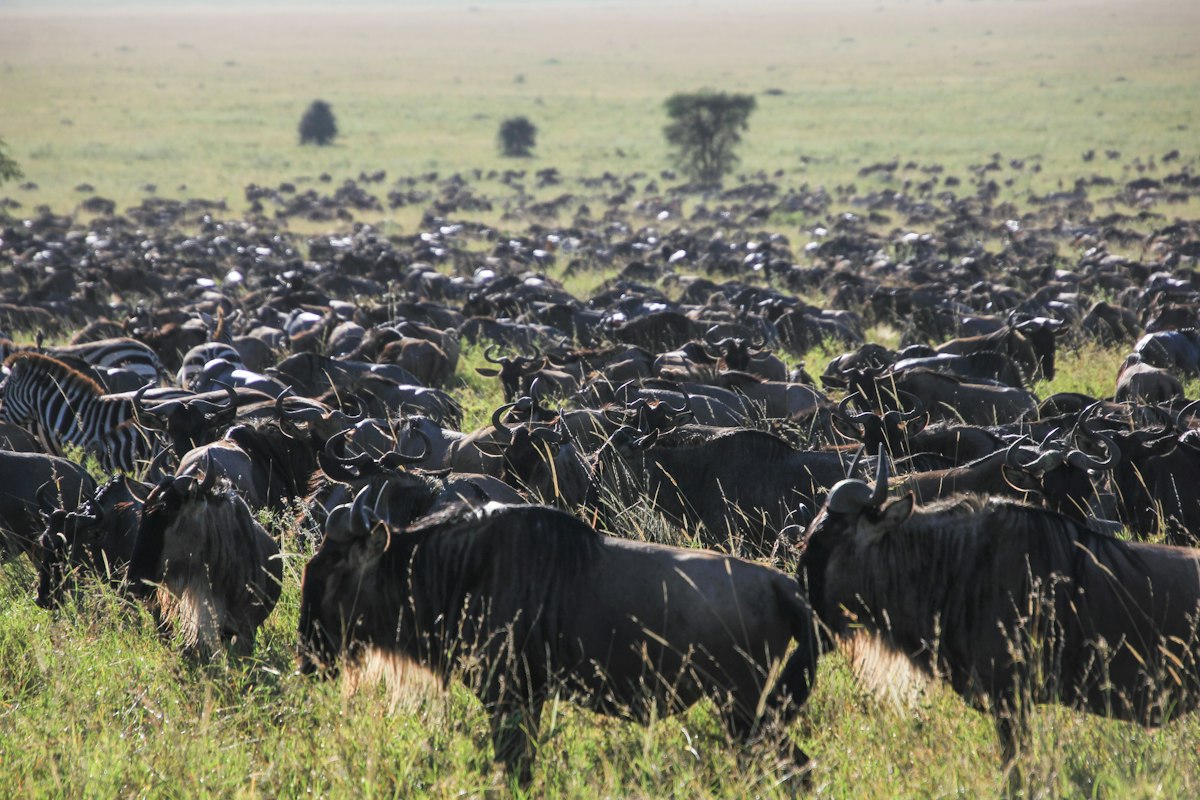
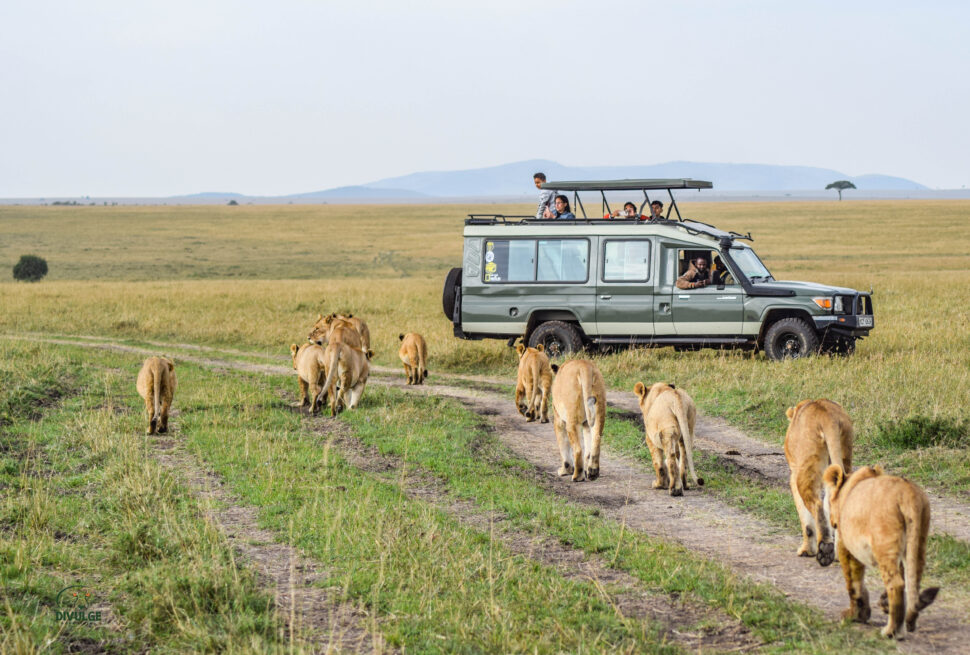
Photo: Divulge Adventures
Quick Facts
- Classic pairing: Masai Mara and Amboseli in Kenya with the Serengeti, Ngorongoro Crater and Tarangire in Tanzania
- Ideal length: 10-12 days by road; 8-9 days if you fly between the countries
- Main road borders: Namanga (Nairobi to Arusha) and Isebania (Mara side to the western Serengeti)
- Fastest link: Nairobi to Kilimanjaro International Airport, a flight of about one hour
- Documents: Kenya eTA plus a separate Tanzania visa; the East Africa Tourist Visa does not include Tanzania
- Health: A yellow fever certificate is required to enter Tanzania from Kenya
- Peak season: July to October, when the herds cross the Mara River in both countries
Can You Combine Kenya and Tanzania on One Safari?
Yes, and it is one of the most rewarding ways to see East Africa. A Kenya and Tanzania safari gives you the Masai Mara’s big cats, Amboseli’s elephants under Kilimanjaro, the endless Serengeti plains and the Ngorongoro Crater, where black rhino are seen far more often than in most parks.
Ready to go? Book your customized safari instantly on WhatsApp — we'll take it from there.
 Book
Instantly on
The two countries complement each other rather than repeat. Kenya is quick to reach from Nairobi, has private conservancies that cap vehicle numbers around the Mara, and pairs neatly with the coast. Tanzania has sheer scale: the Serengeti is several times the size of the Masai Mara, and the northern circuit adds the crater and Tarangire’s baobab country. If you are torn between the two Kenyan headliners, our comparison of the Masai Mara and Amboseli explains what each adds.
The trade-off is time. Each border crossing eats into a day and doubles the paperwork, so a Kenya and Tanzania safari only makes sense if you have at least nine days. With a week or less, we usually advise choosing one country and doing it properly.
How Do You Cross Between Kenya and Tanzania on Safari?
You cross either by road at the Namanga or Isebania border posts, or by air between Nairobi and Kilimanjaro or Arusha. There is no tourist crossing directly between the Masai Mara and the Serengeti: the old Bologonja route through the shared park boundary has stayed closed to tourist traffic, so every route goes around the edge of the ecosystem.

Photo by Aron Marinelli on Unsplash
One rule shapes every road-based Kenya and Tanzania safari: Kenyan and Tanzanian safari vehicles generally operate only in their own country’s parks. In practice your Kenyan driver-guide brings you to the border, you walk through immigration on both sides, and a Tanzanian guide and vehicle meet you on the far side. A good operator times this so nobody waits long, but allow one to two hours for the formalities.
Namanga: the easy eastern crossing
Namanga sits on the main tarred road between Nairobi and Arusha, and it is a one-stop border post, so Kenyan and Tanzanian officials work under one roof. The whole Nairobi to Arusha drive takes about five to six hours. Namanga is also the natural crossing if you pair Amboseli with Tarangire, because both parks lie close to this road.
Isebania: the western route from the Mara
Isebania, opposite Sirari on the Tanzanian side, is the crossing for travellers who want to go from the Mara to the Serengeti without going back through Nairobi. On our 12-day Kenya and Tanzania safari the Mara to Isebania leg takes about four hours and the drive on to the central Serengeti another four, so it is a full travel day on rough roads with game viewing only at the end.
Flying between Nairobi and Kilimanjaro
The fastest link is a scheduled flight from Nairobi to Kilimanjaro International Airport, which takes about an hour, with several departures most days. From Kilimanjaro or Arusha, light aircraft reach Serengeti airstrips in one to two hours. Seasonal air-and-road connections via Migori on the Kenyan side and Tarime in Tanzania have also run at peak times, but they are not guaranteed every year. Our fly-in safari packages show how flights replace the long drives.
When Is the Best Time for a Kenya and Tanzania Safari?
The best time for a Kenya and Tanzania safari is July to October, when the wildebeest cross the Mara River in both the Masai Mara and the northern Serengeti. For calving, aim for February in the southern Serengeti. January and June also work well, at slightly lower prices.
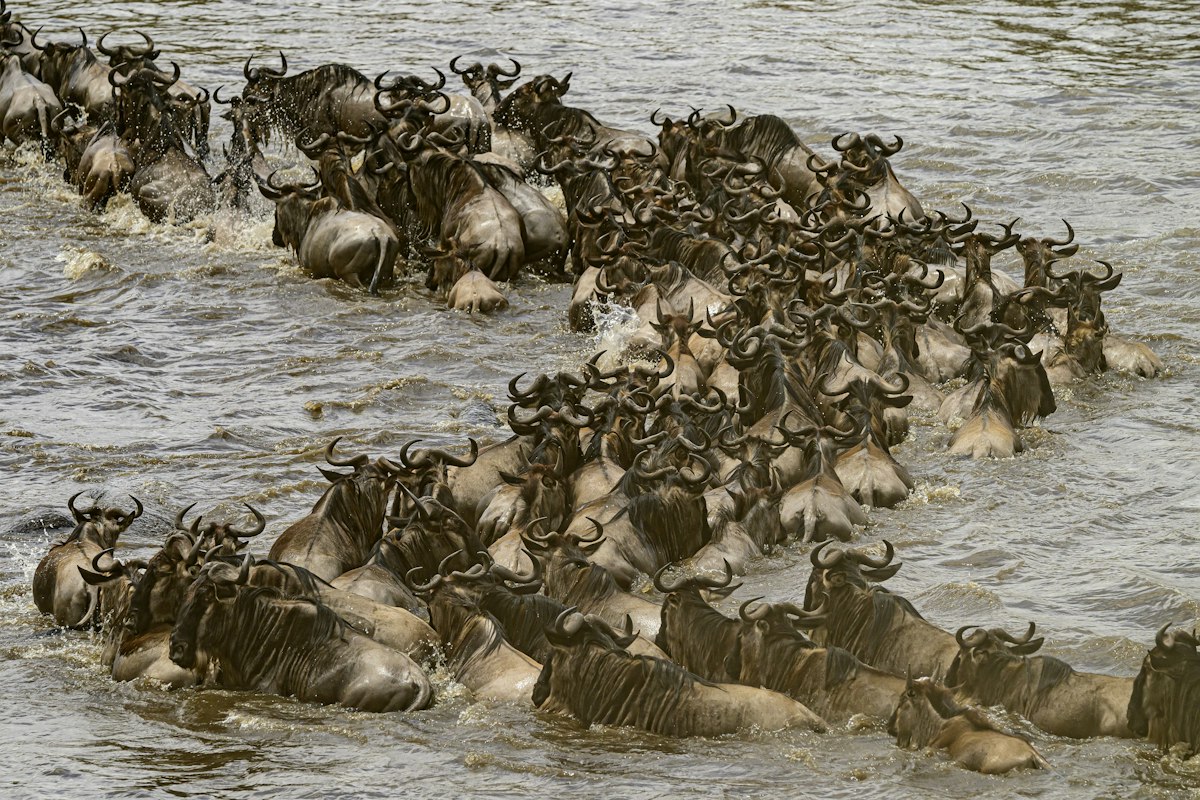
Photo: Divulge Adventures
Because the herds move in a loose clockwise loop, the “right” order of countries changes with the month. The table below shows where we would base you. For more detail on each stage, see our great migration month by month guide.
| Months | Where the herds usually are | How to order the trip |
|---|---|---|
| January-March | Southern Serengeti and Ndutu (calving peaks in February) | Spend more nights in Tanzania; use the Mara for resident big cats |
| April-May | Central and western Serengeti, long rains | Quietest and cheapest; some camps close, roads can be muddy |
| June | Western Corridor, Grumeti River crossings | Western Serengeti plus the Mara for resident game |
| July-October | Masai Mara and northern Serengeti, Mara River crossings | Both sides are excellent; Mara fees and camp rates are at their highest |
| November-December | Herds moving back south through the Serengeti, short rains | Weight the trip towards Tanzania; green landscapes and fewer vehicles |
One honest caveat: the herds follow rain, not calendars. Crossings in a given week are never certain, which is why we build a Kenya and Tanzania safari around flexible game drives rather than one promised river spectacle.
Three Routes That Join the Two Countries
Most successful trips follow one of three routes: a road loop through both borders, a Kenya-then-Tanzania route via Namanga, or a fly-in version that cuts the long drives. Which suits you depends on how much time you have and whether you would rather spend money on flights or on extra days.

Photo by Mwandwe Chileshe on Unsplash
| Route | Typical length | Best for |
|---|---|---|
| Road loop via Isebania and Namanga | 11-12 days | First-timers who want the Mara, Serengeti, crater and Amboseli without flights |
| Kenya first, then Namanga to Arusha | 9-11 days | Travellers flying home from Kilimanjaro, or adding Zanzibar at the end |
| Fly-in combination | 8-9 days | Shorter holidays and anyone who dislikes long road transfers |
The classic Kenya and Tanzania safari loop (11-12 days)
This is the route of our 12 Days Magical Kenya and Tanzania Safari: Nairobi to Lake Naivasha and Lake Nakuru, two nights in the Masai Mara, across at Isebania to two nights in the central Serengeti, then Ngorongoro Crater, Tarangire, back over at Namanga for two nights in Amboseli and on to Nairobi. Every transfer is by road, so you see the countryside and avoid internal flight costs, but expect three or four long driving days.
Kenya first, then the northern circuit
Start with three nights in the Mara and two in Amboseli, then drive from Amboseli or Nairobi through Namanga to Arusha. From there the Tanzania northern circuit runs Tarangire, Ngorongoro and the Serengeti. Fly home from Kilimanjaro, or hop to the coast for our Zanzibar beach extension. This version of a Kenya and Tanzania safari avoids the rough Isebania road entirely.
The fly-in version
Fly from Nairobi’s Wilson Airport to the Mara for three nights, return to Nairobi, take the one-hour flight to Kilimanjaro, then fly on to the Serengeti and drive out via the crater. A fly-in Kenya and Tanzania safari costs more per day, but you gain at least two full days of game viewing. It suits honeymooners and anyone with 8 or 9 days.
Keen birders have another option: our 15-day Kenya and Tanzania birding safari crosses near Amboseli and works through every park on the northern circuit, adding species found only on the Tanzanian side.
How Much Does a Kenya and Tanzania Safari Cost?
A 10-day Kenya and Tanzania safari typically costs about US$3,500 to US$5,000 per person on a budget, US$5,500 to US$9,000 mid-range and US$10,000 to US$20,000 or more in luxury camps. These are our estimates per person sharing, excluding international flights.
Photo: Divulge Adventures
Park fees are the one fixed cost of a Kenya and Tanzania safari that you can check yourself. The table shows the main entry fees per non-resident adult. Kenyan figures come from our Kenya park fees guide and Tanzanian ones from our Tanzania park fees guide, all checked October 2026, and both authorities do change them, so confirm before booking.
| Park | Fee per adult | Notes (checked October 2026) |
|---|---|---|
| Masai Mara National Reserve | US$100 per day (Jan-Jun); US$200 (Jul-Dec) | Conservancies charge their own fees through your camp |
| Amboseli National Park | US$90 per 24 hours | Kenya Wildlife Service, paid cashless |
| Serengeti National Park | US$82.60 per 24 hours (high season) | Includes VAT; camps inside the park add a concession fee |
| Ngorongoro Conservation Area | US$70.80 per 24 hours | Plus a US$295 crater descent fee per vehicle |
| Tarangire National Park | US$59 per 24 hours (high season) | Includes VAT |
Add documents and insurance to your Kenya and Tanzania safari budget: the Kenya eTA from US$30, a Tanzania visa from US$50 for most nationalities, and each country’s mandatory inbound travel insurance at US$44 per visitor (all checked October 2026). Two border crossings also mean two sets of guide tips, so budget roughly US$10 to US$20 per person per day for tipping.
See the Mara, the Serengeti and the crater on one trip
Browse our Tanzania safaris, including private 4×4 itineraries that start in Nairobi and join the Masai Mara with the northern circuit, then tailor the days to your dates.
Visas, Insurance and Yellow Fever for Two Countries
On a Kenya and Tanzania safari most visitors need a Kenya eTA and a separate Tanzania visa, plus each country’s inbound travel insurance and a yellow fever certificate to enter Tanzania from Kenya. The East Africa Tourist Visa does not help here, because it covers only Kenya, Uganda and Rwanda.
The good news for round trips from Nairobi is that, according to Kenyan embassy guidance, a Kenya eTA remains valid for re-entry if you only leave for another East African Community state such as Tanzania (checked October 2026). Apply through the official Kenya eTA website and read our Kenya eTA guide; for the Tanzanian side, our Tanzania visa guide covers the eVisa and the new insurance rule.
Yellow fever is the document most often forgotten on a Kenya and Tanzania safari. Tanzania asks for a certificate from travellers arriving from a yellow fever risk country, and Kenya is on that list, so get vaccinated at least 10 days before you cross. Our page on yellow fever requirements for Kenya and Tanzania explains who needs one. For park rules on the Tanzanian side, Tanzania National Parks publishes current regulations.
Insider Tips
- Plan the border first: Choose your crossing before your lodges; it decides the order of the whole trip
- Carry US dollars in small notes: Useful for tips and incidentals in both countries; notes printed before 2009 are often refused
- Keep documents together: eTA, Tanzania visa, both insurance certificates and the yellow fever card in one folder for the border
- Pack soft bags: Light aircraft usually limit you to about 15 kg in soft-sided luggage
- Fly home from the far end: An open-jaw ticket into Nairobi and out of Kilimanjaro saves a full travel day
- Use the crossing day: Book a lodge with a late game drive so the border day still ends with wildlife
Let us plan your safari
Tell us your dates, budget and dream sightings, and our Nairobi team will send you a free tailor-made itinerary and quote.
Frequently Asked Questions
Can you do Kenya and Tanzania on the same safari?
Yes. A Kenya and Tanzania safari is one of the most popular combinations in East Africa. Most trips pair the Masai Mara and Amboseli with the Serengeti and Ngorongoro Crater, crossing at Namanga or Isebania, or flying from Nairobi to Kilimanjaro. Allow at least 9 to 10 days.
Can you drive straight from the Masai Mara into the Serengeti?
No. The two parks share a border, but there is no open tourist crossing between them, so you cannot drive straight from the Masai Mara into the Serengeti. Road routes go around via the Isebania border, which takes most of a day, while many travellers fly via Nairobi and Kilimanjaro instead. Expect to change vehicle and guide at the border.
How many days do you need for a Kenya and Tanzania safari?
A Kenya and Tanzania safari needs about 10 to 12 days by road and 8 to 9 days if you fly between the countries. That allows two or three nights in the Masai Mara, two or three in the Serengeti and a Ngorongoro Crater descent. With 14 days you can add Amboseli or Tarangire, or finish with a few nights on a Zanzibar beach.
Do I need two visas for a Kenya and Tanzania safari?
Yes, you need entry documents for both countries on a Kenya and Tanzania safari. Most visitors need a Kenya eTA and a separate Tanzania visa, because the East Africa Tourist Visa does not cover Tanzania. Both countries also now require their own inbound travel insurance, and a yellow fever certificate is needed to enter Tanzania from Kenya.
What is the best month for a Kenya and Tanzania safari?
The best month for a Kenya and Tanzania safari depends on the migration. From July to October the herds cross the Mara River in both countries, which is the classic peak. February is the best month for calving in the southern Serengeti. January, February, June and the first half of July balance wildlife, weather and slightly lower prices well.
Final Thoughts
A Kenya and Tanzania safari is worth the extra planning: two countries, the full migration story and a wider range of landscapes than either gives alone. Settle the border and the month first, allow at least nine days, and the rest falls into place.
If you are still choosing your Kenyan half, our Kenya safari packages are a good place to start.
Not sure whether to drive or fly between Kenya and Tanzania?
Chat with a Divulge Adventures safari consultant on WhatsApp for honest advice, a quick answer and a quote built around you.