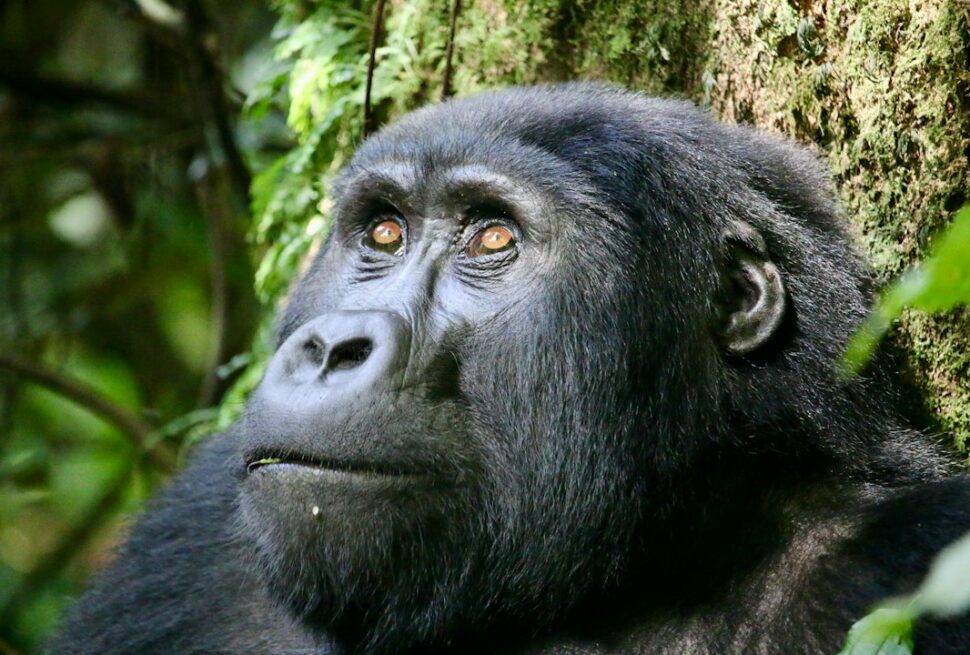
Gorilla trekking in Rwanda means hiking into the bamboo and montane forest of Volcanoes National Park with a ranger to spend one hour with a habituated mountain gorilla family. A permit costs US$1,500 per person (checked October 2026), groups are capped at eight visitors, and trekkers must be at least 15.
The trouble is that most of what you read online is either outdated or written to sell you a package in the first paragraph. This guide sets out how the trek day works, what it really costs, the best months to go, how fit you need to be, how Rwanda compares with Uganda, and how to fit the gorillas into a wider East Africa safari, so you can plan with confidence.

Quick Facts
- Where: Volcanoes National Park, north-west Rwanda, on the Virunga volcano range
- Permit: US$1,500 per foreign visitor; a 30% low-season discount applies November to May when combined with two nights in Akagera or Nyungwe (checked October 2026)
- Group size: maximum eight trekkers per gorilla family, 12 habituated families for visitors, 96 permits a day
- Minimum age: 15 years
- Time with the gorillas: one hour, strictly enforced
- Trek length: 30 minutes to four hours or more each way, at roughly 2,500-4,000 m altitude
- Getting there: about 105 km and two to three hours by road from Kigali; Nairobi to Kigali is a direct flight of roughly 1.5-1.75 hours
What Is Gorilla Trekking in Rwanda Actually Like?
Gorilla trekking in Rwanda is a guided forest hike that ends with one quiet, close-range hour beside a wild mountain gorilla family. You walk through farmland, bamboo and nettle-covered slopes with a ranger guide, while trackers who left at dawn radio your group with the family’s location.
Mountain gorillas live only in two forest blocks: the Virunga Massif, shared by Rwanda, Uganda and the Democratic Republic of Congo, and Bwindi Impenetrable National Park in Uganda with the neighbouring Sarambwe reserve. The most recent published surveys counted 1,063 mountain gorillas in total, with 604 in the Virunga Massif and 459 in Bwindi-Sarambwe. The species is still classed as endangered, which is why visits are tightly limited.
Ready to go? Book your customized safari instantly on WhatsApp — we'll take it from there.

Instantly on
The magic is in the detail. A silverback stripping bamboo a few metres away, juveniles tumbling down a slope, a mother grooming her infant. Rangers keep the group calm and close, and the hour passes faster than you expect.
A typical day of gorilla trekking in Rwanda
Every day of gorilla trekking in Rwanda follows a fixed rhythm set by the Rwanda Development Board (RDB). Knowing it in advance helps you pack, pace yourself and enjoy the encounter rather than worry about logistics.
- Before 07:00: arrive at the park headquarters in Kinigi with your passport and permit. Toilets and hot drinks are available, and traditional dance performances often welcome visitors.
- 07:00 briefing: rangers assign each group of up to eight to a gorilla family, partly based on fitness, then brief everyone on the rules.
- Drive to the trailhead: your driver-guide takes you to the start point for your family, often 20-60 minutes away on rough roads.
- The hike: from 30 minutes to four hours or more, depending on where the family slept and moved.
- The hour: bags, sticks and food are left with porters a short distance away, and you approach with only your camera.
- Return: the walk back often takes as long as the walk in. Most groups are back at their lodge by early to mid-afternoon.
Which gorilla family will you visit?
Rwanda has 12 gorilla families habituated for tourism in Volcanoes National Park, and a few others habituated only for research. You cannot choose a family when you buy a permit for gorilla trekking in Rwanda. Allocation happens at the morning briefing, and a ranger will usually try to match slower walkers with families that are closer to the park edge, so tell your guide honestly if you want an easier hike.
How Much Does Gorilla Trekking in Rwanda Cost?
Gorilla trekking in Rwanda costs US$1,500 per person for the permit alone (checked October 2026 on the RDB booking portal). Add accommodation, a private vehicle and guide, and park transfers, and a realistic three-day trip from Kigali runs from about US$1,850 to over US$8,000 per person, depending on your lodge.
The permit for gorilla trekking in Rwanda covers park entry, your ranger guide, the trackers and one hour with a gorilla family. It does not include porters, tips, transport or lodging. Fees change, so always confirm the current price before booking.
Discounts and resident rates
The RDB offers a 30% low-season discount on gorilla permits from November to May, but only when you combine the trek with a stay in Akagera or Nyungwe National Park: either two nights in one of those parks with one paid activity, or one consecutive night in each. One discounted permit is allowed per qualifying stay. On a US$1,500 permit, the saving is US$450 (checked October 2026).
Lower promotional rates exist for East African and Rwandan citizens (US$200) and for other African citizens and foreign residents in Africa (US$500), with the official portal noting that these promotional rates did not apply from June to October 2026. Check the exact eligibility documents on the RDB mountain gorilla tracking page before you book.
Estimated three-day trip cost by budget tier
The table below shows estimated per-person costs of gorilla trekking in Rwanda on a three-day, two-night trip from Kigali, sharing a room, with one gorilla permit. Lodge figures are typical published rate bands, not quotes.
| Cost item | Budget (estimate) | Mid-range (estimate) | Luxury (estimate) |
|---|---|---|---|
| Gorilla permit | US$1,500 | US$1,500 | US$1,500 |
| Two nights near the park | US$150-350 | US$500-1,000 | US$2,500-6,000+ |
| Private vehicle, driver-guide and fuel | US$150-250 (two sharing) | US$150-250 (two sharing) | US$150-250 (two sharing) |
| Porter and tips | US$50-80 | US$50-100 | US$80-150 |
| Rough total per person | US$1,850-2,200 | US$2,200-2,850 | US$4,250-8,000+ |
Two people sharing a vehicle cut the transport cost per head in half, which is why couples and small groups get better value than solo travellers. For a sense of how this compares with a savannah safari, our guide to Kenya safari costs by budget breaks down park fees and lodge tiers the same way.
Is gorilla trekking in Rwanda worth the permit price?
For most travellers, yes. The price funds ranger patrols, veterinary care and a share of park revenue for neighbouring communities, and the strict caps mean you never share a family with a crowd. If the permit is out of reach, Uganda’s Bwindi is the main lower-cost alternative, covered below.
When Is the Best Time for Gorilla Trekking in Rwanda?
The best time for gorilla trekking in Rwanda is the long dry season from June to mid-September, when trails are firmer and drier. Mid-December to mid-February is a shorter, drier spell that also works well. Gorillas can be tracked all year, and the rainy months bring greener forest and the low-season permit discount.
According to Visit Rwanda, the rainy seasons run from mid-February to May and from mid-September to mid-December. The Virunga mountains are the coolest part of the country, so expect chilly early mornings at Kinigi whatever the month.
| Months | Season | Trekking conditions | Permit and booking notes |
|---|---|---|---|
| Mid-December to mid-February | Short dry spell | Good footing, some showers, popular over Christmas | Low-season discount possible with an Akagera or Nyungwe stay; book early for the holidays |
| Mid-February to May | Long rains | Muddy, slippery slopes; lush forest; fewer visitors | Easiest months to find permits; low-season discount applies |
| June to mid-September | Long dry season | Firmest trails, clearer views of the volcanoes | Peak demand; book permits several months ahead |
| Mid-September to mid-December | Short rains | Afternoon showers, wet undergrowth, good photography light | Shoulder season; discount from November with a qualifying stay |
Dry season or green season?
Choose the dry season if you want the easiest walking or you are pairing Rwanda with the Great Migration in Kenya, which is usually in the Masai Mara from about July to October. Our Great Migration month-by-month guide explains the herd movements. Choose the rainy months if a lower permit price and quieter lodges matter more than dry boots.
How to Plan Gorilla Trekking in Rwanda: Travel, Visas and Health
Planning gorilla trekking in Rwanda starts with the permit, because only 96 are issued a day and dry-season dates sell out first. Once you hold a permit date, build flights, visas, health preparation and lodging around it, with at least one night near Volcanoes National Park before the trek.
Permits for gorilla trekking in Rwanda are sold through the government’s Irembo platform and the RDB booking portal, or through a licensed tour operator. Your passport details must match the permit exactly, and RDB warns that incorrect documents can mean refused entry even with a paid permit.
Getting to Volcanoes National Park
International flights land at Kigali International Airport. From Kigali, Volcanoes National Park is about 105 km by road, a two to three hour drive on a winding, paved route through Musanze town to the park headquarters at Kinigi. There is no public transport from Musanze to Kinigi, so you need a private vehicle or arranged transfer.
From Kenya, Kenya Airways and RwandAir fly nonstop from Nairobi to Kigali, a flight of roughly an hour and a half to an hour and three quarters. That makes it easy to add gorilla trekking in Rwanda to a Kenya safari.
Visas and entry rules
Rwanda has offered a visa on arrival to citizens of every country since January 2018. Citizens of African Union, Commonwealth and La Francophonie member states have the visa fee waived for a 30-day visit (checked October 2026 on the Rwanda Directorate General of Immigration and Emigration site). Other nationalities pay a fee. Confirm your own rules before you travel.
Health: yellow fever and malaria
Rwanda requires a yellow fever vaccination certificate from travellers over one year old arriving from countries with risk of yellow fever transmission, which includes Kenya, according to the UK’s NaTHNaC travel health guidance (checked October 2026). If you are flying in from a Kenya safari, carry your certificate. Our yellow fever requirements page covers the Kenya side.
NaTHNaC also rates malaria risk in Rwanda as high, so see a travel clinic six to eight weeks before departure. Rangers may refuse entry to anyone with a cold, flu or other contagious illness, because gorillas catch human respiratory infections, so comprehensive travel insurance that covers a missed trek is wise.
How many days do you need for gorilla trekking in Rwanda?
Three days and two nights is the comfortable minimum for gorilla trekking in Rwanda. A same-day return from Kigali is possible with a very early start, but it is long and tiring. Four or five days lets you add golden monkeys, a volcano hike or Lake Kivu.
| Day | Three-day plan | Five-day plan |
|---|---|---|
| 1 | Arrive Kigali, drive to Musanze or Kinigi | Arrive Kigali, city visit, overnight Kigali |
| 2 | Gorilla trek, afternoon at leisure | Drive to Volcanoes National Park, village or cave visit |
| 3 | Optional golden monkey trek, return to Kigali | Gorilla trek |
| 4 | – | Golden monkeys or Dian Fossey’s tomb hike |
| 5 | – | Return to Kigali for your flight, or continue to Lake Kivu |
Plan your Rwanda gorilla trek with Divulge Adventures
We secure your gorilla permit, arrange private transfers from Kigali and match you with a lodge near Volcanoes National Park that fits your budget, as a stand-alone trip or added to a Kenya safari.
How Hard Is Gorilla Trekking in Rwanda?
Gorilla trekking in Rwanda is moderate for most people with average fitness, but it can be demanding. Trails are steep, muddy and overgrown, and you walk at roughly 2,500-4,000 m, where thinner air makes climbs feel harder. A short hike lasts 30 minutes each way; a long one can take four hours or more.
Rangers set a gentle pace and stop often. Walking sticks are usually available at the start, and local porters can be hired at the trailhead for a modest fee to carry your daypack and give you a hand on steep or slippery sections. Hiring one is also a direct way to support families living around the park.
The best preparation for gorilla trekking in Rwanda is regular uphill walking or stair climbing in the weeks before your trip. If you have health concerns, ask your doctor about exertion at altitude and tell your guide at the briefing so you are placed with a closer family.
The rules at the gorillas
The RDB visitor guidelines exist to protect the gorillas from stress and disease. Rangers enforce them firmly throughout gorilla trekking in Rwanda, so it helps to know them before the briefing.
- Distance: stay at least 7 metres from the gorillas, even if a curious youngster approaches.
- Behaviour: keep your voice low, avoid sudden movements and never eat, drink, smoke or spit near the family.
- Coughing: cover your mouth and turn away; stay behind if you feel unwell.
- If a gorilla charges: stand still, look away and follow your ranger’s instructions.
- Photography: no flash. Phones and cameras are fine with flash switched off.
What if you do not see the gorillas?
Sightings during gorilla trekking in Rwanda are very likely because trackers locate the family before you set out, but nothing in the wild is guaranteed. According to the RDB, visitors who track all day without making contact are refunded 75% of the permit fee, and those unable to track because of gorilla movement are offered another chance or a full refund. Late arrival and missed flights are not refunded.
Gorilla Trekking in Rwanda or Uganda: Which Should You Choose?
Rwanda suits travellers short on time who want quick access and polished lodges; Uganda suits those on a tighter budget who are happy with longer drives. Both offer the same species, the same one-hour visit and the same eight-person cap, so the experience with the gorillas is very similar.
| Factor | Rwanda (Volcanoes National Park) | Uganda (Bwindi and Mgahinga) |
|---|---|---|
| Permit (foreign visitor) | US$1,500 (checked October 2026) | US$800 under the UWA July 2024 to June 2026 tariff; confirm the current rate |
| Access | Two to three hours by road from Kigali | Long drives from Entebbe or Kampala, or a domestic flight; many visitors drive in from Kigali |
| Terrain | Volcano slopes and bamboo, high altitude | Dense, steep rainforest; UWA quotes treks of two to seven hours including the hour with the gorillas |
| Best for | Short trips, add-ons to a Kenya safari, luxury travellers | Longer primate safaris with chimpanzees and savannah parks |
If Uganda appeals, our guide to the best national parks in Uganda covers Bwindi alongside Kibale and Queen Elizabeth, and our 4-day Bwindi gorilla trekking safari shows how a short Uganda trip fits together.
What Else Can You Do Around Volcanoes National Park?
Volcanoes National Park offers much more than gorillas. Golden monkey tracking, the hike to Dian Fossey’s grave, volcano climbs and village visits fill a second or third day, and the park’s evergreen and bamboo forest holds around 200 bird species.
Golden monkey tracking
Golden monkeys are a rare, bright-coated primate found in the Virungas’ bamboo zone. The permit is US$100 per adult, the minimum age is 12, and trekkers report at the park at 07:00 like gorilla groups (checked October 2026). The walk is usually gentler than a gorilla trek, which makes it a good warm-up the day before.
Dian Fossey’s tomb and the volcano hikes
The American primatologist Dian Fossey studied the Virunga gorillas for nearly two decades and is buried beside her research camp on the saddle between Karisimbi and Bisoke. Visit Rwanda describes a drive of about 30 minutes from park headquarters followed by a two to three hour hike. Fitter hikers can climb Bisoke to its crater lake or tackle Karisimbi, at 4,507 m the highest of the five Virunga volcanoes.
Combining gorillas with a Kenya safari
The short flight from Nairobi makes gorilla trekking in Rwanda a natural finale to a Kenyan savannah safari. A popular shape is five or six days in the Masai Mara or Amboseli, then a flight to Kigali for three days with the gorillas. Browse our Kenya safari packages for the first half of that trip.
Insider Tips
- Book the permit first: lock in your gorilla date, then build flights and lodges around it, especially for June to September
- Sleep close to Kinigi: staying near the park headquarters avoids a pre-dawn drive from Kigali on trek day
- Dress for nettles: long trousers tucked into socks or gaiters, a long-sleeved top and gardening gloves for grabbing vegetation
- Waterproof everything: a light rain jacket and a dry bag for your camera, even in the dry season
- Hire a porter: it makes steep sections easier and puts money straight into local households
- Pack small cash: US dollars or Rwandan francs for porter fees and tips
- Turn the flash off: set your camera before you reach the family so you do not miss the first minutes
Let us plan your safari
Tell us your dates, budget and dream sightings, and our Nairobi team will send you a free tailor-made itinerary and quote.
Frequently Asked Questions
How much is a gorilla permit in Rwanda?
A gorilla permit in Rwanda costs US$1,500 per person for foreign visitors (checked October 2026). It covers park entry, the ranger guide, trackers and one hour with a gorilla family. From November to May, a 30% discount applies if you also stay two nights in Akagera or Nyungwe. Confirm the current price with the RDB.
What is the minimum age for gorilla trekking in Rwanda?
The minimum age for gorilla trekking in Rwanda is 15 years, and rangers check passports at the morning briefing. Younger children cannot join the trek, but families can still visit Volcanoes National Park together, because golden monkey tracking accepts children from 12 years and gentle nature walks and village visits suit younger ages.
How long is the gorilla trek in Rwanda?
The gorilla trek in Rwanda takes anywhere from 30 minutes to four hours or more each way, plus one hour with the gorillas. The length depends on where your assigned family is that morning. Most visitors are back at their lodge by early to mid-afternoon, and rangers try to give slower walkers a family closer to the park edge.
Can I do gorilla trekking in Rwanda as a day trip from Kigali?
Gorilla trekking in Rwanda is possible as a day trip from Kigali, but it means leaving around 4am to reach Kinigi for the 07:00 briefing, then a long drive back after the trek. Volcanoes National Park is about 105 km from Kigali, two to three hours by road, so most travellers prefer at least one night near the park.
Is gorilla trekking in Rwanda safe?
Gorilla trekking in Rwanda is considered safe for visitors. Habituated families are used to people, armed rangers and trackers accompany every group, and strict rules on distance and behaviour keep encounters calm. The main risks are slips on muddy slopes and the effort of hiking at altitude, so wear good boots and use a walking stick and a porter.
Final Thoughts
Gorilla trekking in Rwanda is expensive, tightly regulated and sometimes muddy, and that is exactly why it feels so special. Plan around a permit date, go in the dry season if you want easier trails or the rainy months for a discount, and give yourself at least two nights near Volcanoes National Park.
If you would like the permit, transfers and lodge handled in one go, or want to pair the gorillas with a Kenya safari, our Nairobi team can put together a tailor-made plan for your dates.
Wondering if your dates still have gorilla permits?
Chat with a Divulge Adventures safari consultant on WhatsApp for honest advice, a quick answer and a quote built around you.