The Ultimate Mara Triangle Safari Guide for Eco-Luxury Travelers in 2026
The western edge of Kenya’s legendary Masai Mara is home to one of Africa’s most protected and scenic wilderness areas the Mara Triangle. For travelers seeking a deeper connection to nature, fewer crowds, and exceptional wildlife encounters, this Mara Triangle safari guide offers everything you need to know before planning your journey into this remarkable ecosystem.
Bordered by the Mara River to the east and the towering Oloololo Escarpment to the northwest, the Mara Triangle forms a critical section of the greater Serengeti-Mara ecosystem. Unlike some busier sections of the reserve, this region is internationally recognized for its strong conservation practices, controlled tourism, and outstanding wildlife management. The result is a safari destination that balances luxury travel with long-term ecological sustainability.
From dramatic wildebeest river crossings to predator-rich plains and community-led conservation programs, the Mara Triangle delivers one of the most authentic safari experiences in East Africa.
Geographic Definition of the Mara Triangle
The Mara Triangle occupies the western portion of the Masai Mara National Reserve in southwestern Kenya. It is geographically enclosed by three major natural boundaries: the Mara River, the Tanzania border, and the Oloololo Escarpment.
Ready to go? Book your customized safari instantly on WhatsApp — we'll take it from there.
 Book
BookInstantly on
Covering approximately 510 square kilometers, the region acts as a strategic wildlife corridor linking Kenya’s Masai Mara with Tanzania’s Serengeti National Park. This interconnected landscape allows millions of migratory animals to move freely between the two ecosystems each year.
One of the defining features of the Triangle is its varied topography. Open savannah plains dominate much of the reserve, but visitors also encounter riverine forests, seasonal wetlands, rocky outcrops, and escarpment viewpoints. These diverse habitats support a rich concentration of wildlife throughout the year.
Compared to other parts of the Masai Mara, the Mara Triangle maintains stricter vehicle regulations and lower tourist density. This makes it particularly attractive for travelers searching for a quieter and more immersive safari environment.
Ecological Importance in the Serengeti-Mara Ecosystem
The Mara Triangle plays a vital ecological role within the larger Serengeti-Mara ecosystem, one of the world’s last remaining large-scale wildlife migration systems.
Every year, over 1.5 million wildebeest, accompanied by zebras and gazelles, migrate between Tanzania and Kenya in search of fresh grazing. The Triangle provides critical grazing lands, water access, and predator habitats during this movement.
Its river systems are equally important. The Mara River serves as a year-round water source for wildlife and supports aquatic species such as hippos and Nile crocodiles. During the dry season, the river becomes a lifeline for thousands of animals concentrated along its banks.
The region’s conservation-focused management model has also helped preserve fragile habitats from over-tourism. Strict off-road driving policies, regulated visitor numbers, and anti-poaching measures contribute significantly to maintaining ecological balance. Because of these efforts, the Triangle remains one of the healthiest wildlife ecosystems in East Africa.
The Great Migration Gateway
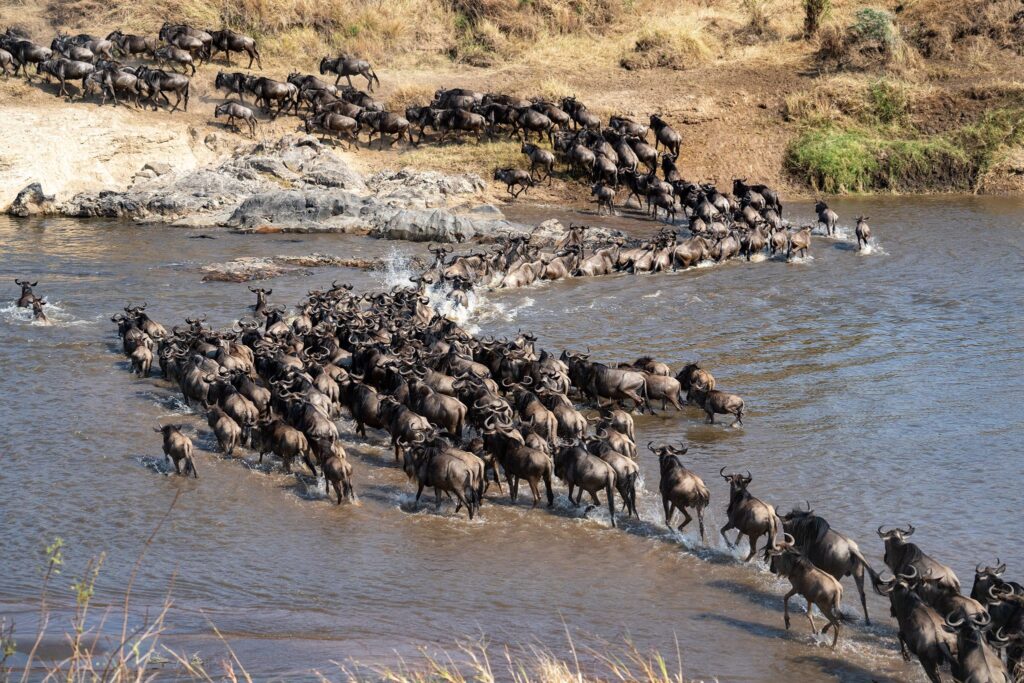
One of the biggest reasons travelers visit the Mara Triangle is to witness the Great Migration, often described as the greatest wildlife spectacle on Earth.
Mara River Crossings
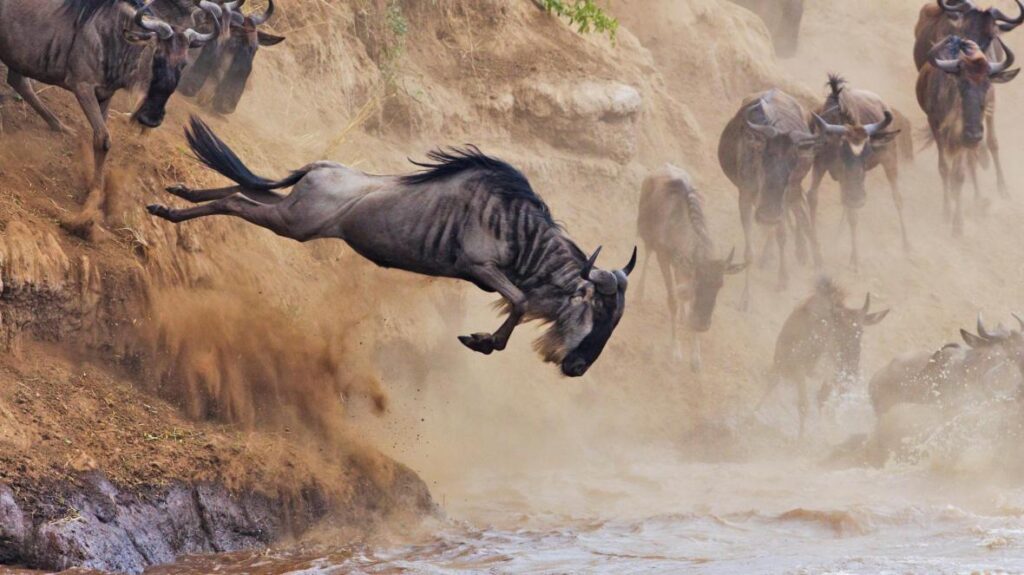
Between July and October, enormous herds of wildebeest move northward from the Serengeti into Kenya. The Mara River crossings within the Triangle are among the most dramatic moments of the migration season. Thousands of animals gather anxiously at steep riverbanks before making dangerous crossings filled with fast-moving currents and waiting crocodiles. Dust clouds rise across the plains while predators patrol nearby, creating intense and unforgettable wildlife scenes.
Unlike more crowded crossing points elsewhere in the reserve, many areas within the Mara Triangle provide quieter viewing opportunities due to controlled vehicle access.
Peak Season Dynamics
Peak migration season attracts photographers, wildlife filmmakers, and safari enthusiasts from around the world. During this period, predator activity also intensifies.
Lions, cheetahs, leopards, and hyenas closely follow the migrating herds, leading to extraordinary predator-prey interactions. Early morning game drives often reveal fresh hunting activity, while evening safaris showcase dramatic sunset scenes across the savannah. Travelers visiting during peak season should book accommodation several months in advance, especially luxury tented camps positioned near major migration routes.
Wildlife and Biodiversity in the Mara Triangle
While the migration receives global attention, the Mara Triangle offers exceptional wildlife viewing throughout the year.
Big Five Sightings
The region is one of Kenya’s premier destinations for spotting the Big Five:
- Lions
- Leopards
- Elephants
- Buffaloes
- Rhinos
Large lion prides frequently patrol the open plains, while elusive leopards prefer riverine forests and acacia woodlands. Elephant herds move seasonally across the reserve, often gathering near marshes and water sources during dry months.
Black rhinos, though critically endangered and difficult to spot, remain one of the Triangle’s most valuable conservation successes.
The low vehicle density in this part of the reserve significantly improves wildlife viewing quality. Visitors often enjoy extended sightings without large crowds surrounding animals.
Avian Species Diversity
Birdwatchers also consider the Mara Triangle a rewarding safari destination. Over 450 bird species have been recorded within the ecosystem.
Common sightings include:
- Secretary birds
- Martial eagles
- Lilac-breasted rollers
- Crowned cranes
- Vultures
- Ostriches
- African fish eagles
Seasonal wetlands and riverbanks attract migratory bird species, particularly between November and April.
The diversity of birdlife reflects the ecological health of the region and provides excellent opportunities for photography enthusiasts.
Anti-Poaching and Conservation Efforts
One of the defining characteristics of the Mara Triangle is its highly respected conservation model.
Mara Conservancy Management Model
The Mara Triangle is managed by the Mara Conservancy, a non-profit organization responsible for protecting wildlife, maintaining infrastructure, and regulating tourism activities.
This management approach differs from many traditional wildlife reserves because it emphasizes accountability, sustainability, and community involvement. Revenue generated from tourism supports conservation operations, ranger training, road maintenance, and habitat protection.
Strict rules governing vehicle movement, off-road driving, and waste management have helped preserve the area’s natural integrity.
As a result, the Triangle consistently ranks among the best-managed safari destinations in Africa.
Community Ranger Patrols
Local Maasai communities play a major role in conservation efforts within and around the reserve.
Community ranger patrols assist in anti-poaching operations, wildlife monitoring, and human-wildlife conflict prevention. These programs not only protect biodiversity but also create employment opportunities for local residents. Educational initiatives and conservation partnerships further strengthen the relationship between tourism and community development.
This eco-tourism model demonstrates how wildlife conservation can directly benefit local populations while protecting globally important ecosystems.
Visitor Information and Lodging
Planning a successful safari requires choosing the right accommodation and travel season.
Luxury Tented Camps
One of the highlights of this Mara Triangle safari guide is the exceptional collection of luxury tented camps available within and around the reserve.
These camps combine wilderness immersion with high-end comfort, offering features such as:
- Spacious canvas suites
- Private verandas overlooking wildlife areas
- Fine dining experiences
- Guided bush walks
- Sundowner excursions
- Eco-friendly operations
Many luxury camps are strategically located near migration crossing zones, allowing guests quick access to major wildlife viewing areas.
Eco-conscious travelers increasingly prefer camps that prioritize sustainability through solar energy, water conservation, and community partnerships. The exclusivity of these lodges also enhances the safari experience by limiting guest numbers and reducing environmental pressure.
Best Times to Visit the Mara Triangle
The Mara Triangle remains a year-round safari destination, though different seasons offer unique experiences.
July to October – Migration Season
This is the most popular time to visit due to the Great Migration and Mara River crossings. Wildlife concentrations are extremely high, and predator activity peaks during these months. Travelers seeking iconic safari photography and dramatic wildlife encounters should prioritize this season.
November to February – Green Season
Short rains transform the landscape into lush green plains filled with newborn animals and migratory birds. This period is ideal for birdwatching, scenic photography, and travelers seeking fewer crowds.
March to May – Low Season
Long rains arrive during these months, creating quieter safari conditions and lower accommodation rates. While some roads may become muddy, experienced safari travelers often appreciate the dramatic scenery and peaceful atmosphere.
Why the Mara Triangle Stands Out
The Mara Triangle offers more than traditional wildlife tourism. It represents a successful balance between luxury travel, conservation, and ecological responsibility. For travelers looking beyond crowded safari circuits, the region provides unmatched scenery, exceptional wildlife encounters, and meaningful conservation impact.
Whether you dream of witnessing wildebeest crossings, tracking big cats across open plains, or enjoying quiet sunsets beneath the Oloololo Escarpment, the Mara Triangle delivers one of Africa’s finest safari experiences. For eco-conscious adventurers planning a Kenyan safari in 2026, choosing the Mara Triangle means supporting one of the continent’s most effective wildlife conservation success stories while experiencing the wild beauty of the Serengeti-Mara ecosystem at its best.