

A Namibia photography tour for groups is a private, photographer-paced trip that puts your club at Deadvlei and the Sossusvlei dunes at first light, at Etosha’s waterholes through the dry season, and under some of Africa’s darkest skies at night. May to September suits most clubs, with groups of 6 to 16 working best.
Most club organisers come to us with the same worry: joining a scheduled photo tour means sharing vehicles with strangers who want lunch at the wrong hour, while self-planning means juggling gate times, permits and long gravel drives for a dozen people. This guide covers the route, the light, vehicles, rooming, costs and the rules that catch groups out, so you can brief your members with confidence. It builds on our club and society safaris and draws on how we run Namibia trips from Nairobi.
Quick Facts
- Best months: May to September for clear air, cold nights and busy Etosha waterholes
- Ideal group size: 6 to 16 photographers, one window seat each
- Trip length: 8 to 12 days covers the dunes, the coast, Damaraland and Etosha
- Park fees: N$280 per international adult per day at Etosha and Namib-Naukluft, from 1 April 2026 (checked November 2026)
- Dark skies: NamibRand Nature Reserve has been a Gold-tier International Dark Sky Reserve since 2012
- Drones: Banned inside Etosha; anywhere else needs prior aviation approval
- Group deal: One free place for every six paying travellers on our group bookings
Why Choose a Private Namibia Photography Tour for Your Club?
A private Namibia photography tour lets your club decide when to leave camp, how long to stay at a scene and who sits where, which a shared departure cannot offer. Namibia rewards patience: the best frames come from waiting at one waterhole for an hour or returning to a dune at the same time two days running.
On a scheduled tour you share the vehicle with travellers who may not shoot at all. On your own club trip, everyone has the same priorities, so a 05:00 start is not a negotiation. You also control the pace of critiques and evening editing sessions, which many camera clubs see as half the value of travelling together.
Ready to go? Book your customized safari instantly on WhatsApp — we'll take it from there.

Instantly on
The country itself suits groups: roads are good, lodges in the main areas take 12 to 20 guests, and ten days can move from red dunes to a foggy coast, granite mountains and a white salt pan. Our Africa group safaris page explains the other group formats we run.
Who This Kind of Trip Suits
The format works for camera clubs, photographic societies, university photo modules, alumni groups with a keen photographer core and friends who have shot together for years. Mixed groups work too, provided the non-photographers know the day starts before sunrise. If half your members want wildlife and half want landscapes, a Namibia photography tour can split vehicles rather than force a compromise. Start planning nine to twelve months ahead for a winter trip, and read how we organise a group safari before you poll members. For the full country range, see our Namibia safari packages.
Which Places Belong on a Club Photo Route in Namibia?
A strong Namibia photography tour usually combines four subjects: the Sossusvlei dunes and Deadvlei, the coast around Swakopmund and the Skeleton Coast, Damaraland’s rock and desert elephants, and the waterholes of Etosha. Add a dark-sky night in the NamibRand area or the far south for astrophotography and you have the core of a ten-day route.

Each stop asks for different kit and a different rhythm, which is why the order of a Namibia photography tour matters. Dunes want wide and short telephoto lenses at dawn; Etosha wants long glass all day; Damaraland and the coast reward a walk-around zoom. The table below is how we brief clubs before they decide on lenses.
| Location | What to shoot | Best light | Lens tip |
|---|---|---|---|
| Sossusvlei and Deadvlei | Red dunes, white clay pan, dead camel thorn trees | First hour after sunrise | 16-35mm and 70-200mm |
| Kolmanskop (near Luderitz) | Sand-filled rooms in an abandoned diamond town | Early morning with a photo permit | Wide zoom, tripod |
| Swakopmund and Skeleton Coast | Fog, shipwrecks, seals, Walvis Bay flamingos | Morning fog and late afternoon | 24-105mm, 100-400mm |
| Spitzkoppe and Damaraland | Granite arches, rock engravings, desert elephants | Sunset and night | Wide zoom, 100-400mm |
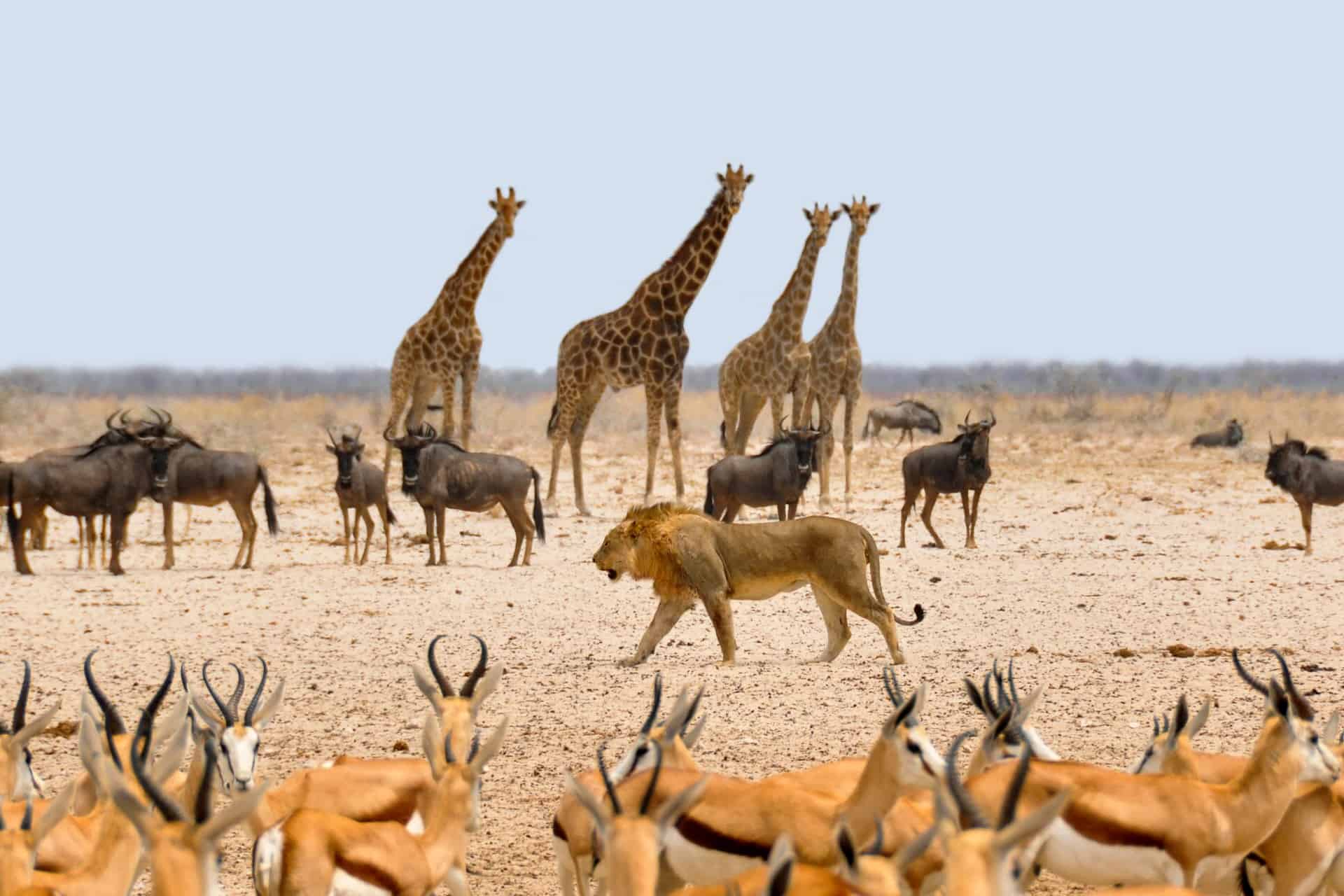
| Etosha National Park | Lions, elephants, rhino and zebra at waterholes | Early, late and floodlit waterholes after dark | 100-400mm or 150-600mm |
| NamibRand and the far south | Star trails and the Milky Way over dunes | Moonless nights | Fast wide prime, f/2.8 or faster |
Kolmanskop Is Worth the Detour for Some Clubs
Kolmanskop sits near Luderitz, a long drive south of the dunes, so it only suits routes of ten days or more. The site sells a photography permit that allows entry from sunrise to sunset, reported at N$230 per person and including a guided tour; general visiting hours are mornings only. Commercial shooters need a separate, more expensive permit, so confirm the rules for your club before booking.
How Do Sossusvlei Gate Times Shape Your Shooting Day?
Sossusvlei gate times decide where your group sleeps. The main gate at Sesriem opens at sunrise, and Deadvlei sits roughly an hour’s drive beyond it, so groups staying outside the park often reach the pan after the best light. Staying inside the park gate lets you be at the dunes before sunrise and stay after sunset.
Ordinary vehicles can drive from Sesriem past Dune 45, about 45 km in, to the car park near the end of the road. The final stretch to Sossusvlei and Deadvlei is deep sand: only 4×4 vehicles with experienced drivers should attempt it, and a park shuttle runs for everyone else. On a Namibia photography tour we use our own 4x4s, so the shuttle queue never eats into the light.
According to Namibia Wildlife Resorts’ Sossus Dune Lodge, guests at that lodge can reach Sossusvlei before sunrise and stay until after sunset, which is the advantage photographers pay for. Rooms inside the gate are limited, so a club of 14 needs to book many months ahead or accept a lodge outside the park with a very early departure.
A Sample Dune Day for a Club
On a Namibia photography tour we start in the dark, shoot Deadvlei through the first hour of light while the pan is still in shadow, and walk out as contrast hardens. Midday is for rest, backups and a short critique; late afternoon suits Sesriem Canyon or a sundowner on Elim Dune.
When Is the Best Time for a Namibia Photography Tour?
The best time for a Namibia photography tour is May to September, the dry winter. Days are clear and comfortable, dust and haze are low early in the season, Etosha’s animals crowd the waterholes, and the long nights give plenty of time for astrophotography. October is hotter and hazier but excellent for wildlife.

Inland Namibia has its rainy season from November to March, peaking in January to March. That brings dramatic storm clouds, green grass at Etosha and newborn animals, but also lost days, heat and animals that disperse away from the waterholes. Along the coast, morning fog and low cloud are common all year, which photographers either love for mood or plan around. Our month-by-month guide to Namibia’s seasons has the detail by month, and our Etosha safari guide covers the park itself.
| Months | What photographers get | Watch out for |
|---|---|---|
| May to July | Clean air, soft golden light, cold clear nights, Milky Way core in the evening sky | Night temperatures near freezing inland; pack warm layers |
| August to October | Peak Etosha waterhole action, dry landscapes, strong sunsets | Rising heat, dust and haze later in the season; busier lodges |
| November to December | First storms, building clouds, fewer visitors | Very hot days in the desert; unpredictable rain |
| January to April | Green Etosha, dramatic skies, calving season | Rain, flooded tracks in places, animals spread out |
For astrophotography, plan the dates around the moon first. A week either side of the new moon gives the darkest skies, and in Namibia’s winter the bright centre of the Milky Way sits high in the evening. For star trails, choose a moonless week in June or July.
Vehicles, Rooming and Group Size for a Photo Club
Vehicles matter more than lodges on a Namibia photography tour. We plan one window seat per photographer, which usually means five or six people in each 4×4 rather than the full seat count, plus space for camera bags and tripods. Two or three vehicles also let the group work different angles at the same scene.

Rooming on a Namibia photography tour is simple to arrange but worth deciding early. Most clubs mix twin rooms for friends with a handful of single rooms, and single supplements are the line item that surprises members most. Lodges in Etosha and the Sossusvlei area hold a limited number of rooms, so a group of 16 may need to split between two neighbouring lodges on one or two nights. We tell you before you commit.
Why Guided Rather Than a Self-Drive Convoy?
Some clubs ask whether to rent cars and drive themselves. A self-drive convoy can work for confident drivers, but photographers who drive cannot shoot from the road, and gravel driving is tiring. A guide who knows where the light falls and which waterhole is busy that week turns a long transfer into a shooting day. Our comparison of guided versus self-drive sets out the trade-offs in more detail.
Safety on the Road
Windhoek to the Sesriem gate is roughly 320 km, around five hours. We never drive after dark, plan fuel stops ahead and carry two spare tyres per vehicle in remote areas.
How Much Does a Group Photo Tour in Namibia Cost?
A group photo tour in Namibia is priced on four things: park fees, vehicles and guides, lodges, and trip length. Park fees are fixed and public; the rest depends on your group’s size and comfort level, so we build a quote around your numbers rather than publishing one rate for every club.
The fixed part is easy to estimate. From 1 April 2026, international adults pay N$280 per person per day at Etosha and the Namib-Naukluft Park, which includes Sossusvlei, and international children aged 8 to 16 pay N$180; under-8s enter free (checked November 2026). Vehicle entry fees are charged on top and rise with the vehicle size. Confirm fees before you budget, as Namibia revised them sharply this year.
| Cost item | How it is charged | What changes it |
|---|---|---|
| Park entry | Per person per day, plus a vehicle fee | Number of park days; nationality |
| Vehicles and guides | Per vehicle per day, shared across its passengers | Photographers per vehicle; route length |
| Lodges and camps | Per room per night, usually with meals | Comfort level; inside or outside park gates; single rooms |
| Permits and extras | Per person | Kolmanskop photo permit, scenic flights, dark-sky sessions |
Group size has the biggest effect on the per-person price of a Namibia photography tour, because vehicle and guide costs divide across more people. We also give clubs one free place for every six paying travellers, which many organisers use for themselves or a club leader. Each traveller can pay separately, so the treasurer does not need to collect money.
For ready-made starting points, our 5-Day Sossusvlei and Etosha Tour combines the dunes and Etosha, and the 6 Day Namibia Culture Tour for Clubs covers Erongo, Damaraland and Kaokoland with rock engravings at Twyfelfontein. Either can grow into a longer Namibia photography tour.
Bring your camera club to Namibia
See how we plan private trips for clubs and societies: window seats, photographer-paced days, and one free place for every six paying travellers.
Night Skies, Drones and Other Rules Photographers Ask About
Namibia’s rules for photographers are straightforward once you know them: no drones in Etosha, permits for commercial work, and respect for the dark-sky areas that make night shooting so good. Brief members on them before any Namibia photography tour departs.

The NamibRand Nature Reserve, south of Sossusvlei, became Africa’s first International Dark Sky Reserve in May 2012 and holds Gold tier, the strictest category. The NamibRand Nature Reserve’s dark sky page explains the lighting controls and sky-quality readings. Lodges in and around the reserve keep outdoor lights low, which makes them ideal bases for the night-sky leg of a Namibia photography tour.
Drones on a Namibia Photography Tour
Leave the drone at home unless we have written approval. The environment ministry has banned drones inside Etosha, and visitors who arrive with one must leave it at the gate. Elsewhere, the Namibia Civil Aviation Authority requires authorisation, and unauthorised flights are illegal.
Photographing People
Portraits of Himba, Herero or San communities happen only with consent, through a guide who knows the community, never as a quick stop from the vehicle. Clubs adding an Okavango extension can compare our Botswana photography safari for clubs, and first-timers will find our Namibia safari guide useful background.
Insider Tips
- Seat rotation: Swap vehicle seats daily so everyone gets the best side for the light
- Dust control: Bring a blower, sealable bags and a rain cover; change lenses inside the vehicle
- Power: Lodges in remote areas may run generators at set hours; pack spare batteries and a multi-port charger
- Warm layers: Winter dawns and night shoots are cold; gloves that work with camera dials help
- Book early: Rooms inside the Sossusvlei gate and at Etosha camps go months ahead in winter
- Back up twice: Carry two drives and back up every evening during the editing session
Let us plan your club photo tour
Tell us your dates, member numbers, budget and must-shoot scenes, and our Nairobi team will send a free tailor-made itinerary and group quote.
Frequently Asked Questions
How many people should join a Namibia photography tour?
A Namibia photography tour works best with 6 to 16 photographers. About six fit one 4×4 with a window seat each, and 12 to 16 split into two or three vehicles working different angles at the same scene. Larger clubs can run as two parallel groups on staggered routes.
When is the best month for a Namibia photography tour?
May to September is the most reliable window for a Namibia photography tour: cool clear days, dry air, animals gathering at Etosha’s waterholes and long, cold nights for star work. October adds heat and haze but strong wildlife. November to March brings storm clouds and green Etosha, though some days are lost to rain and heat.
Can we fly drones on a Namibia photography tour?
Plan a Namibia photography tour without drones. The Ministry of Environment, Forestry and Tourism has banned drones inside Etosha, so visitors must leave them at the gate, and the Namibia Civil Aviation Authority treats unauthorised flights as illegal. Private reserves occasionally allow flights with permission, but we only include drone time once written approval is in hand.
How much does a Namibia photography tour cost per person?
The cost of a Namibia photography tour depends on group size, lodge level and route length, so we quote each club separately. Fixed costs include park fees of N$280 per international adult per day at Etosha and Namib-Naukluft (checked November 2026), vehicles, guides and lodges. On our group bookings, one place is free for every six paying travellers.
Do we need special permits to photograph at Sossusvlei or Kolmanskop?
Amateur photographers need no special permit at Sossusvlei beyond the daily park entry fee. Kolmanskop sells a separate photography permit for sunrise-to-sunset access, reported at N$230 per person in 2026 and including a guided tour. Anyone shooting for commercial use needs a commercial permit at both places, so tell us early if images will be sold.
Final Thoughts
Namibia gives a camera club more variety in ten days than almost anywhere in Africa, provided the trip is built around light, gate times and window seats rather than a standard safari schedule. A private Namibia photography tour in the dry winter months, with a moonless week for the stars, is the strongest starting point for most groups.
Send us your club’s numbers and preferred dates, and we will come back with a route, a rooming plan and a group quote you can share with members. You can also browse our wildlife photography safaris for other destinations.
Wondering whether your club can get inside the Sossusvlei gate for sunrise?
Chat with a Divulge Adventures safari consultant on WhatsApp for honest advice, a quick answer and a quote built around you.
