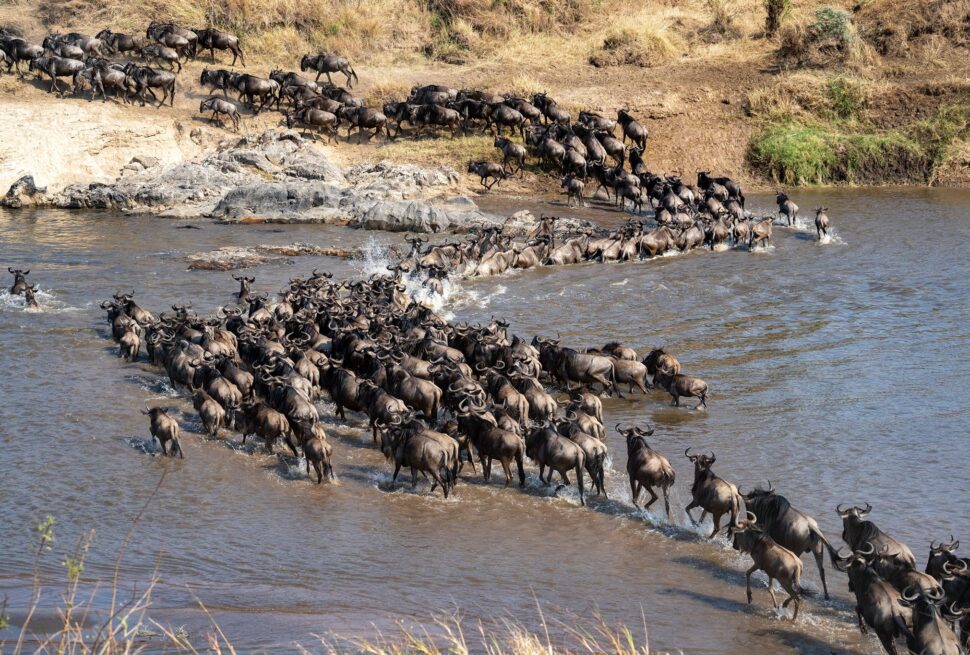
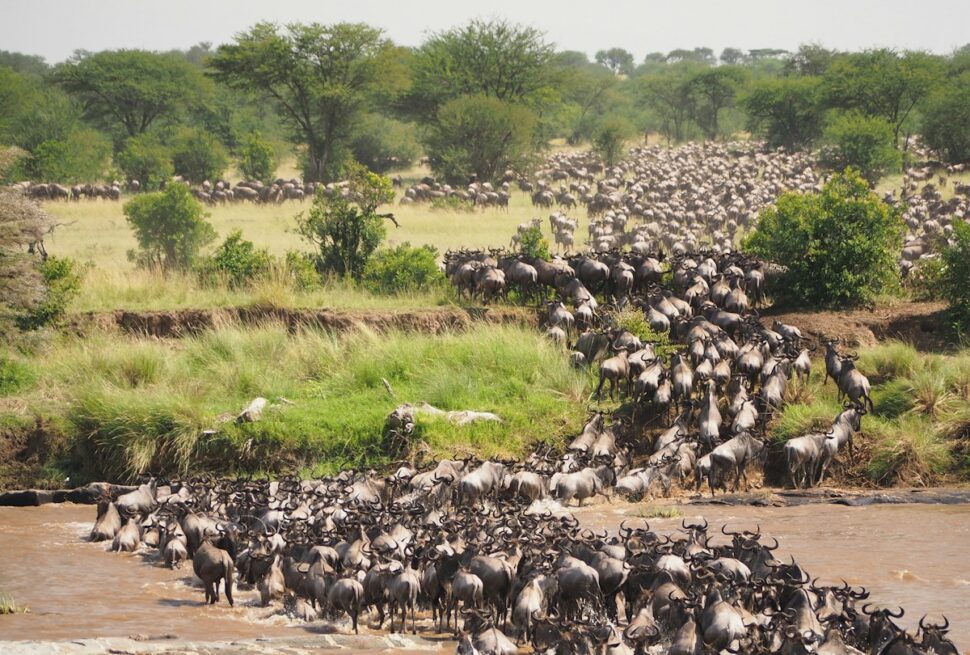
The Serengeti in February is peak calving season: the migration herds usually gather on the green short-grass plains around Ndutu in the south, thousands of wildebeest calves can be born in a day, and lions, cheetahs and hyenas hunt close to the herds. It is warm, often sunny in the morning, with afternoon storms.
What makes February tricky is not whether to go but how to go. The herds follow the rain, the camps near them fill early, and the fees change depending on which side of a park boundary you sleep. Below you will find where the wildlife usually is week by week, real weather expectations, the bases worth booking, checked fees, cost estimates and a sample route from Arusha.

Quick Facts
- Main event: the Serengeti in February means peak wildebeest calving on the southern plains, usually from late January through February
- Where the herds are: Ndutu, Lake Masek and the Kusini area, across the Serengeti National Park and Ngorongoro Conservation Area boundary
- Weather: warm days with highs of up to about 29°C, clear mornings and short afternoon storms
- Park entry: Serengeti US$82.60 and Ngorongoro Conservation Area US$70.80 per adult per 24 hours (checked November 2026)
- Getting there: about 200 km and roughly 5 hours by road from Arusha, or about an hour by light aircraft to the Ndutu airstrip
- Ideal stay: 3 nights on the southern plains within a 7-8 day northern Tanzania safari
Is the Serengeti in February Worth It?
The Serengeti in February is worth it for anyone who wants big herds, newborn animals and predators in the same day. It is the month most likely to put you on the calving plains at their busiest, and the green landscape photographs beautifully. The catch is price and demand, not wildlife.
Compared with the river crossings of July to October, the Serengeti in February is calmer and more intimate. Instead of a short burst of drama at a riverbank, you get hours with herds spread to the horizon, calves taking their first steps and cheetahs working the open grass. Many guides rate it as the most rewarding month for photographers, and it suits first-time visitors who want a lot to happen without long waits.
Ready to go? Book your customized safari instantly on WhatsApp — we'll take it from there.

Instantly on
Who February suits, and who should pick another month
The Serengeti in February suits couples, families with children old enough for long game drives, and photographers who want action in soft light. It is a harder sell if you want river crossings, which happen in the north from about July, or if your budget is tight, because southern plains camps charge peak rates. Travellers who dislike any rain may prefer the dry months of June to October.
If you are weighing the two winter months, our guide to the Serengeti in January covers the start of the calving, while the Great Migration month-by-month calendar shows where the herds are the rest of the year.
Where Are the Wildebeest in February?
In February the wildebeest are usually on the short-grass plains in the far south of the ecosystem, centred on Ndutu, Lake Masek and the Kusini area. The grass there grows on volcanic soils rich in minerals, which nursing cows need, so the herds stay as long as the rain keeps it green.

Ndutu lies on the north-western edge of the Ngorongoro Conservation Area where it meets Serengeti National Park, so a single game drive can cross between two protected areas. Zebra herds mix with the wildebeest, and Thomson’s and Grant’s gazelles drop their young on the same plains. If the rains are patchy, the herds can spread west or north for a few days before returning, which is why flexible guiding matters more than a fixed plan.
Week by week through the month
The table below shows the usual pattern for the Serengeti in February. Treat it as a guide, not a promise: the herds react to rain, not to the calendar, and a late or early season can move everything by a week or two.
| Week | Where the herds usually are | What to expect |
|---|---|---|
| 1-7 February | Ndutu and the plains around Lake Masek | Calving well under way, herds dense and settled |
| 8-14 February | Ndutu, Kusini and the southern Serengeti plains | Usually the heart of the birthing peak, intense predator activity |
| 15-21 February | Southern plains, sometimes drifting towards Naabi Hill | Still many births, calves growing fast and running with the herd |
| 22-28 February | Southern plains, edging west or north after dry spells | Fewer new births, big mixed herds of wildebeest and zebra |
For more on why the timing works this way, our Serengeti calving season guide explains the biology and the weeks either side of February.
What Is the Weather Like in February?
February is warm and green in the southern Serengeti, with daytime highs of up to about 29°C. Mornings are often clear and still, clouds build after midday, and storms roll through on some afternoons. Averages suggest rain on roughly half the days of the month, but rarely for the whole day.
On a trip to the Serengeti in February, the rain matters more for driving than for sightings. The southern plains sit on black-cotton soil that turns sticky after a downpour, so a track can close for a few hours and a route may change at short notice. A good 4×4 Land Cruiser and a guide who knows the area handle this easily, and the storms often make the best light of the trip.
Packing for the Serengeti in February
Pack light layers for warm days, a fleece for early drives and a compact waterproof jacket for afternoon showers. Photographers should bring a rain cover and a lens cloth. If your route includes the Ngorongoro Crater rim at around 2,300 metres, evenings there are cold. Our Tanzania safari packing checklist covers the rest.
Which Predators Can You See on the Southern Plains?
Lions, spotted hyenas, cheetahs and jackals all follow the herds onto the southern plains during the Serengeti in February. With so many young animals around, hunts are frequent, and the short grass lets you watch them unfold from start to finish.

Cheetahs are the stars of the Serengeti in February. They prefer open ground where they can see prey and sprint, and the Ndutu plains give them exactly that. Lions tend to rest in the woodland around Lake Ndutu and Lake Masek between hunts, while hyena clans are most active at dawn and dusk. Serval and caracal are sometimes seen in longer grass near the woodland edges.
Beyond the big herds
Giraffes browse the acacia woodland around the lakes, elephants pass through the wooded areas, and migrant birds from Europe and Asia add colour to the green season. On quieter days of the Serengeti in February, when the herds move out of range, these smaller sightings keep game drives busy.
Ndutu or Central Serengeti: Where Should You Stay?
For the Serengeti in February, stay on the southern plains, ideally in the Ndutu area or at a seasonal camp in the southern Serengeti. These bases put you within a short drive of the herds each morning. Central Serengeti around Seronera is a good second base, but it is usually a few hours’ drive from the calving action.

Where you sleep also changes your fees and rules. Ndutu falls under the Ngorongoro Conservation Area Authority, so you pay its conservation fee rather than the Serengeti park fee, and guides in this area are generally allowed to drive off-track to reach a sighting, which is not permitted in the national park itself. Rules can change, and a good guide still keeps a respectful distance from herds and hunting cats.
Seasonal camps and permanent lodges
Seasonal tented camps move onto the southern plains for the calving months and offer the closest access to the herds, while a few permanent lodges stay open year-round. Both fill early for the Serengeti in February, often months ahead. Our list of the best Serengeti camps compares bases by budget, and if you plan a crater night on the way, see our Ngorongoro Crater lodges guide.
Central Serengeti is worth one or two nights at the end of a trip. Its rocky kopjes and river valleys hold resident lions and leopards all year, so it balances a calving-heavy itinerary with different scenery and wildlife.
How Many Days and Which Route Work Best?
Seven or eight days is the sweet spot for the Serengeti in February and northern Tanzania, with three nights on the southern plains. That leaves time for Tarangire and the Ngorongoro Crater on the way in and a final stop in central Serengeti before flying back to Arusha.

By road, Ndutu is about 200 km from Arusha, roughly five hours of driving before game viewing and gate stops, so most itineraries break the journey near Karatu or on the crater rim. Light aircraft are quicker: scheduled flights from Arusha to the Ndutu airstrip take about an hour with a stop at Manyara on current timetables (checked November 2026). Many travellers drive in and fly out.
| Day | Where | Highlights |
|---|---|---|
| 1 | Arusha | Arrive at Kilimanjaro International Airport and rest |
| 2 | Tarangire National Park | Elephants and baobabs on the drive west |
| 3 | Ngorongoro Crater | Full day on the crater floor, night near the rim or Karatu |
| 4-6 | Ndutu and the southern plains | Three days with the calving herds and predators |
| 7 | Central Serengeti | Kopjes, big cats and the Seronera valley |
| 8 | Serengeti to Arusha | Short flight back for onward travel or Zanzibar |
This is the shape of our 8 day Tanzania calving season photo safari, which spends three nights at Ndutu. If you would rather keep the route broader, our 8-day Tarangire, Ngorongoro and Serengeti safari starts from USD 6,180 per adult and can be timed for February. A Zanzibar beach extension fits neatly at the end.
How Much Does a Serengeti Safari in February Cost?
A Serengeti safari in February usually costs about US$250-400 per person per day on a camping budget, US$400-700 at mid-range camps and US$800 or more at luxury camps, sharing a room. These are our estimates. February sits in the high season, so expect the upper end of each range.
Fees are a large share of the bill for the Serengeti in February. On current figures, Serengeti National Park charges US$82.60 per adult per 24 hours in high season, plus a concession fee of about US$70.80 per adult per night if you sleep inside the park. The Ngorongoro Conservation Area charges US$70.80 per adult per 24 hours, and a descent into the crater adds a service fee of US$295 per vehicle (all checked November 2026, including 18% VAT). Fees change, so confirm on the Tanzania National Parks website and the Ngorongoro Conservation Area Authority site before you book.
| Budget tier | Estimated cost per person per day | What you get |
|---|---|---|
| Budget camping | US$250-400 | Public campsites or simple tented camps, shared vehicle possible, park fees included |
| Mid-range | US$400-700 | Comfortable lodges or seasonal tented camps, private vehicle, full board |
| Luxury | US$800+ | Small seasonal camps close to the herds, fine dining, fly-in options |
For the full breakdown of fees, see our Tanzania park fees guide and our Serengeti safari cost breakdown. Remember to budget for flights, the Tanzania visa, tips and travel insurance.
Be on the Ndutu plains for the February calving
Our calving season safari gives you three nights with the herds, a full day in the Ngorongoro Crater and a private 4×4 with an experienced local guide, timed to your February dates.
Insider Tips
- Book early: camps near Ndutu for the Serengeti in February often fill six months or more ahead, so lock in dates first
- Choose mid-month: if you can only travel for one week, 8-21 February is usually the safest bet for births
- Sleep near the herds: a seasonal camp on the southern plains saves hours of driving every day
- Start at dawn: births and cheetah hunts often happen in the cool early hours
- Stay flexible: let your guide change the plan after a storm or a herd movement
- Mix bases: end with a night or two in central Serengeti for leopards and kopjes
Let us plan your safari
Tell us your dates, budget and dream sightings, and our Nairobi team will send you a free tailor-made itinerary and quote.
Frequently Asked Questions
Is February a good time to visit the Serengeti?
Yes. The Serengeti in February is one of the strongest months of the year, because the herds are usually on the short-grass plains around Ndutu and the calving peak normally falls now. Predators are busy, the plains are green and rain mostly comes as short afternoon storms. The catch is that the best camps book up early.
Where is the Great Migration in February?
In February the Great Migration is usually in the far south of the ecosystem, on the short-grass plains around Ndutu, Lake Masek and the Kusini area. This straddles the boundary between Serengeti National Park and the Ngorongoro Conservation Area. Exact positions shift with the rain, so guides plan each morning from the latest sightings rather than fixed dates.
Does it rain in the Serengeti in February?
It does rain in the Serengeti in February, but usually not all day. Averages suggest some rain on roughly half the days, mostly as storms that build after midday and clear by evening. Mornings are often bright and calm. Tracks on black-cotton soil can turn slippery for a few hours, so a good 4×4 and a flexible driver-guide matter.
How much does a Serengeti safari in February cost?
A Serengeti safari in February typically costs about US$250-400 per person per day on a camping budget, US$400-700 at mid-range camps and US$800 or more at luxury camps, sharing a room. These are estimates. Park fees alone run to roughly US$70-83 per adult per 24 hours depending on which side of the boundary you are on (checked November 2026).
How many days do you need for the Serengeti in February?
Plan at least three nights on the southern plains for the Serengeti in February, because the herds can move overnight and births and hunts reward patience. Most travellers build those nights into a seven or eight day northern Tanzania safari with Tarangire and the Ngorongoro Crater. If time is short, flying from Arusha to the Ndutu airstrip saves most of a day.
Final Thoughts
February gives you the southern plains at their liveliest: newborn calves, huge herds and predators that rarely rest. Base yourself near Ndutu for at least three nights, accept a few afternoon storms and the Serengeti in February can be the highlight of a lifetime of safaris.
The camps that matter book up early, so if the Serengeti in February is your month, start planning now. Send us your dates and we will build a route around where the herds are likely to be. You can also browse our Tanzania safari packages for ideas.
Wondering which February week gives you the best shot at the calving?
Chat with a Divulge Adventures safari consultant on WhatsApp for honest advice, a quick answer and a quote built around you.