The Serengeti in January is one of the best times of year to see the Great Migration: the wildebeest and zebra are usually gathered on the green southern plains around Ndutu, calving begins, and big cats hunt in open country. Days are warm, roughly 25-30°C, with occasional showers and generally good game-viewing conditions.
The challenge is that January is peak season in the south. The best-placed camps fill months ahead, the herds shift with every shower, and park fees work differently in Ndutu than in the Serengeti itself. This guide covers where the herds usually are week by week, what you will see, the weather, where to stay, what it costs and how to build a January trip that works.
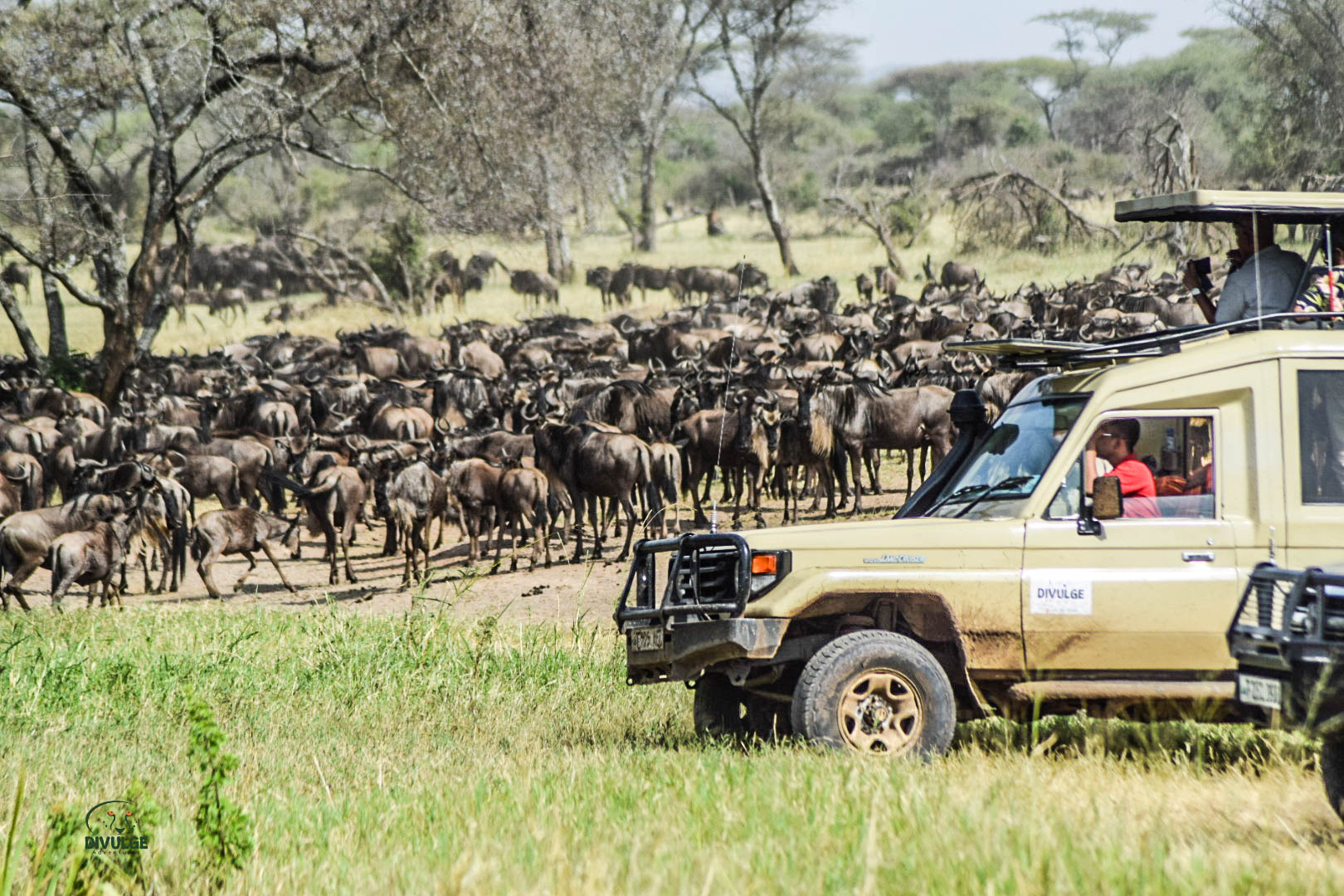
Photo: Divulge Adventures
Quick Facts
- Where the herds are: usually the southern Serengeti short-grass plains and the Ndutu area of the Ngorongoro Conservation Area
- Calving: starts in January and usually peaks in February
- Weather: warm and mostly dry between the short and long rains, highs of roughly 25-30°C, occasional showers
- Park entry: Serengeti US$82.60 and Ngorongoro Conservation Area US$70.80 per non-resident adult per 24 hours, including VAT (checked October 2026)
- Getting to Ndutu: about 6 hours by road from Arusha, or roughly 50 minutes by light aircraft to Ndutu airstrip
- Season: high season: book southern camps 6-9 months ahead
- Nights needed: three to four nights in the south, ideally with one night near the Ngorongoro Crater
Is the Serengeti in January Worth Visiting?
The Serengeti in January is worth visiting for almost any traveller who wants big herds and predator action. The migration is usually concentrated on the open southern plains, where wildlife is easy to see, the first calves arrive and lions, cheetahs and hyenas follow closely.
Ready to go? Book your customized safari instantly on WhatsApp — we'll take it from there.
 Book
BookInstantly on
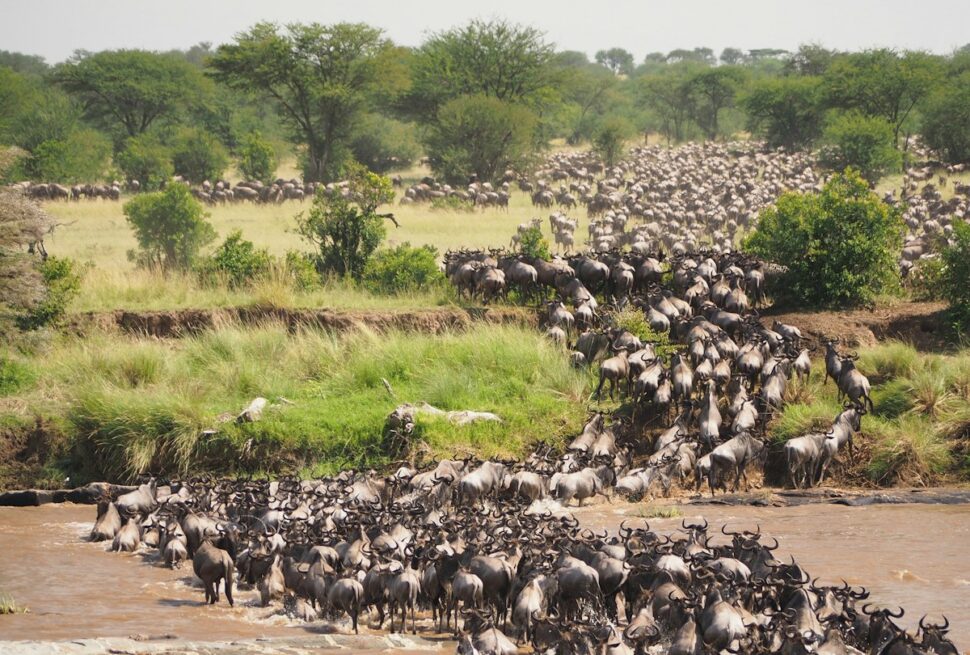
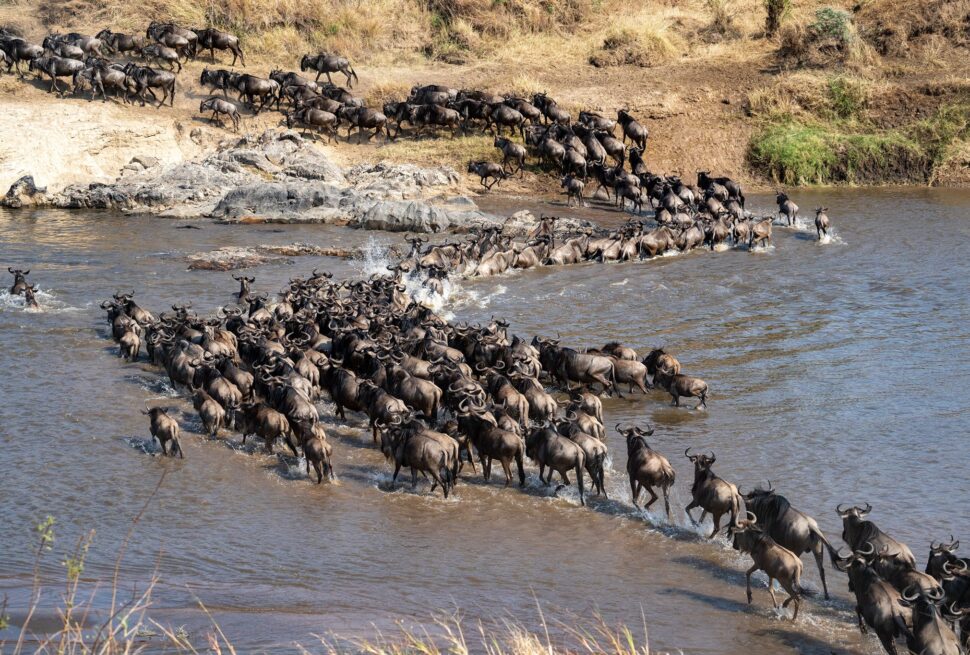
The Serengeti in January is when the migration slows down. After the restless movement of November and December, the herds settle on the mineral-rich short grass of the south, which grows on volcanic soil and gives nursing mothers the nutrients they need. With hundreds of thousands of animals grazing in a relatively small area, game drives can feel like driving through a living sea of wildebeest.
The Serengeti in January is also a very different experience from the Mara River crossings of July to October. There are no crossings in January; instead you get calving, open-country hunts and wide green horizons. Many repeat visitors who have already seen a crossing say the southern plains are the more rewarding half of the migration story.
Who the Serengeti in January suits
January suits photographers who want predators in open light, first-time visitors who want a near-guaranteed big-herd experience, and families or couples pairing a safari with a beach week in Zanzibar. It is less ideal if your budget is tight and you cannot book early, because the best-placed southern camps sell out first.
Where Is the Great Migration in January?
The Great Migration in January is usually on the southern Serengeti short-grass plains and the neighbouring Ndutu area, which sits inside the Ngorongoro Conservation Area around Lake Ndutu and Lake Masek. Rain decides where the grass is freshest, so the herds drift between these plains rather than staying in one spot.
This matters for planning because Ndutu is not technically in Serengeti National Park. The southern plains continue across the boundary with no fence, and the herds cross it freely. A well-planned January safari covers both sides: the Ndutu woodlands and lakes, and the open plains of the southern Serengeti around Kusini and the Gol area.
For the full twelve-month cycle, our Great Migration month-by-month guide follows the herds from the calving grounds to the Mara and back, and our guide to the Serengeti in December explains how they reach the south in the first place.
Week by week: the Serengeti in January
| Period | Where the herds usually are | What to expect |
|---|---|---|
| 1-10 January | Arriving on and spreading across the southern plains and Ndutu | Large herds settling, a few early calves, busy New Year period at the start |
| 11-20 January | Concentrated around Ndutu, Lake Masek and the southern Serengeti | Calving picks up, cheetah and lion activity increases, mostly fine weather |
| 21-31 January | Mostly on the short-grass plains of the south | Calving building towards the February peak, strong predator action |
Treat these as patterns rather than promises. In a dry year, the Serengeti in January can see the herds scatter or move towards the edge of the woodlands in search of water; after good rain they spread far across the open plains. A guide with fresh reports is worth more than any calendar.
What Can You See on a Serengeti Safari in January?
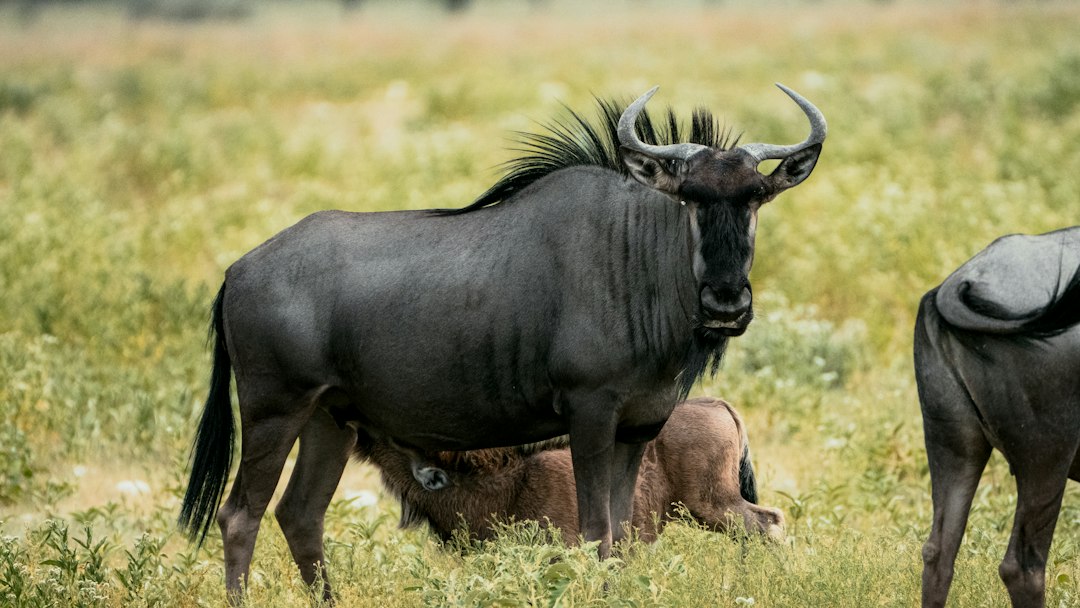
On a Serengeti safari in January you can expect huge herds of wildebeest and zebra, the start of the calving season and some of the most reliable predator sightings in Africa. Lions, cheetahs, spotted hyenas and jackals all follow the herds onto the open plains, where hunts happen in full view.

Photo by Dmitrii Zhodzishskii on Unsplash
The calving season
Wildebeest calving usually starts in January and peaks in February, when most calves are born within a few weeks. Newborns stand within minutes and run with the herd soon after, a survival strategy that floods the plains with more young than predators can catch. For the Serengeti in January, the second half of the month gives you the better chance of seeing births.
Predators on the open plains
The short grass of the south gives predators little cover, which is why cheetah sightings in the Serengeti in January are especially good. Lion prides hold territories around the Ndutu marshes and woodland edges, and hyena clans patrol the herds day and night. Leopards are harder to find but do use the acacia woodland around the lakes.
Birds and smaller wildlife
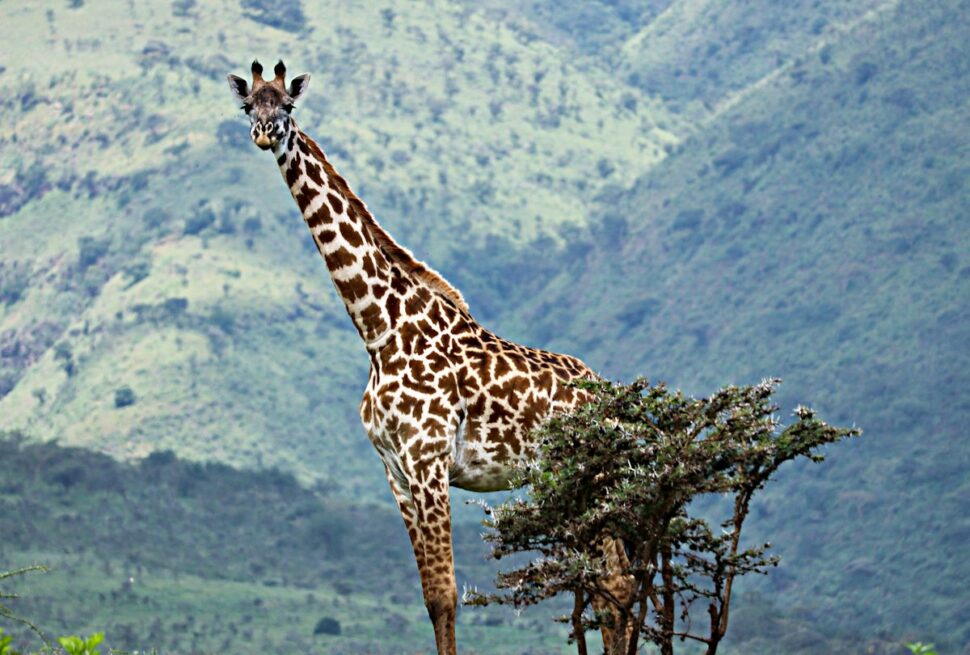
The Serengeti in January is also excellent for birdwatching. Migrant birds from Europe and Asia are still present, and the green plains attract large numbers of storks and raptors. Look out for bat-eared foxes near their dens, golden jackals, and giraffes and elephants around the Ndutu woodland, which remain there even when the herds move.
What Is the Weather Like in the Serengeti in January?
The weather in the Serengeti in January is usually warm and fairly dry, with daytime highs of roughly 25-30°C and occasional afternoon or evening showers. January falls between the short rains of November and December and the long rains that begin around March, so many days are sunny.
Mornings in the Serengeti in January are pleasant and can feel cool in an open vehicle at dawn, while the middle of the day is hot under a strong equatorial sun. Short, heavy storms can still roll in, especially later in the afternoon, and they bring spectacular skies for photography.
Rain has a practical effect too. The black cotton soil of the southern plains becomes slippery after a downpour, and some tracks close for a day. This is one reason we always recommend a proper 4×4 with a driver-guide who knows the area rather than self-driving.
What to pack for the Serengeti in January
Bring light, neutral-coloured layers, a fleece for early drives, a compact rain jacket, a wide-brimmed hat and high-factor sun cream. If your route includes the Ngorongoro Crater rim at around 2,300 metres, nights there are cold all year. Our Tanzania safari packing checklist has the full list.
Where to Stay in the Serengeti in January
The best place to stay in the Serengeti in January is in or near the southern plains, either in the Ndutu area or at a seasonal camp in the southern Serengeti. Staying close to the herds saves hours of driving each day and puts you on the plains at first light.
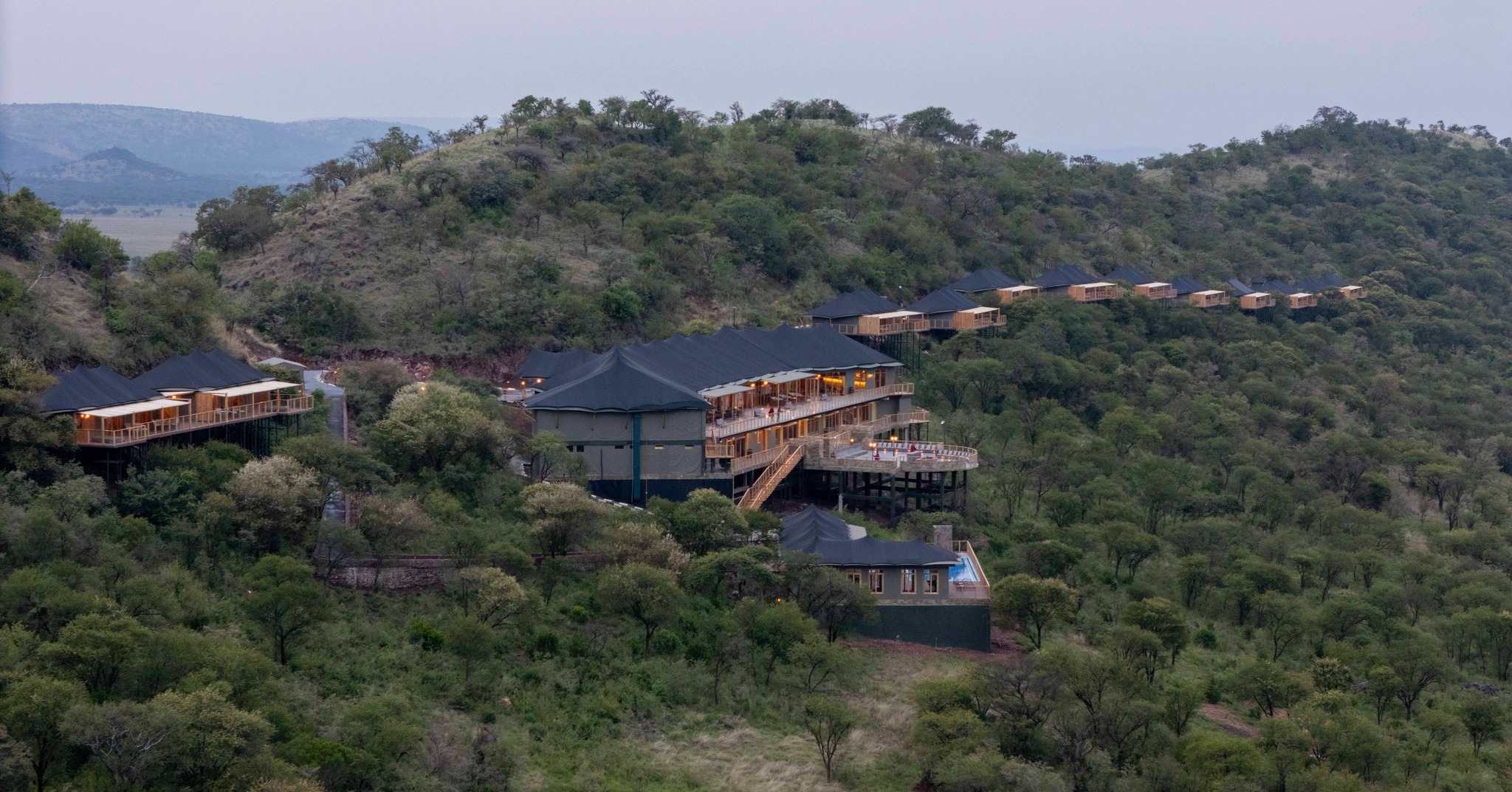
Photo: Divulge Adventures
Ndutu area (Ngorongoro Conservation Area)
The Ndutu area has a small number of permanent lodges and tented camps around Lake Ndutu and Lake Masek, plus seasonal mobile camps that set up for the calving season. It is the classic base for the Serengeti in January. Remember that nights here fall under Ngorongoro Conservation Area fees rather than Serengeti fees.
Southern Serengeti seasonal camps
Several mobile and seasonal camps move into the southern Serengeti from around December to March to follow the herds. They offer a more remote feel and easy access to the open plains, but you pay Serengeti entry and concession fees, and most book out early for late January and February.
Central Serengeti (Seronera)
The Seronera area in the central Serengeti has the widest choice of lodges and excellent resident wildlife, but it is a long drive each way to the calving grounds. It works well as a second base. Our guide to the best Serengeti camps by area and budget compares the options.
How Much Does a Serengeti Safari in January Cost?
A Serengeti safari in January typically costs about US$250-400 per person per day on a camping budget, US$400-700 mid-range and US$800 or more in luxury camps. These are estimates per person sharing, and January rates sit at the high end because the calving season is in demand.

Photo: Divulge Adventures
Park fees are a fixed part of every quote. The Serengeti in January falls in the park’s high fee season, which runs from 16 May to 14 March. The Ngorongoro Conservation Area charges one rate all year. Our full guide to Tanzania park fees explains child rates, VAT and the 24-hour rule.
| Fee or cost | Amount | Notes |
|---|---|---|
| Serengeti entry (adult, January) | US$82.60 per 24 hours | High season rate including VAT, checked October 2026 |
| Serengeti concession fee | US$59 per adult per night | October to June rate if you sleep inside the park, usually collected by your camp |
| Ngorongoro Conservation Area entry | US$70.80 per 24 hours | Applies in Ndutu and on the way through to the Serengeti |
| Ngorongoro Crater descent | US$295 per vehicle | Shared between everyone in the vehicle |
| Budget camping safari | US$250-400 per person per day | Estimate, includes vehicle, guide, park fees and basic camping |
| Mid-range lodge or tented camp | US$400-700 per person per day | Estimate, varies by camp and dates |
| Luxury camp | US$800+ per person per day | Estimate, often includes drinks and some activities |
Fees are set by Tanzania National Parks and the Ngorongoro Conservation Area Authority and can change at short notice, so always confirm the current figures before you pay a deposit. Your Divulge quote lists every fee separately so you can see exactly what you are paying for.
See our Tanzania safaris for the calving season
Browse tailor-made Tanzania itineraries with private 4×4 vehicles and expert local guides, and we will route your days to the southern plains in January.
How Many Days Do You Need for the Serengeti in January?
Plan at least three nights on the southern plains for the Serengeti in January, and ideally six to eight days in total so you can add the Ngorongoro Crater and Tarangire. Three nights give you several full days to follow the herds and wait for calving or a hunt.
A classic January route starts in Arusha, spends a night in Tarangire, continues to the Ngorongoro highlands for a crater descent, and then drops down to Ndutu and the southern Serengeti. Our 8-day Tarangire, Ngorongoro and Serengeti safari follows this circuit and can be adjusted to focus on the south in January.
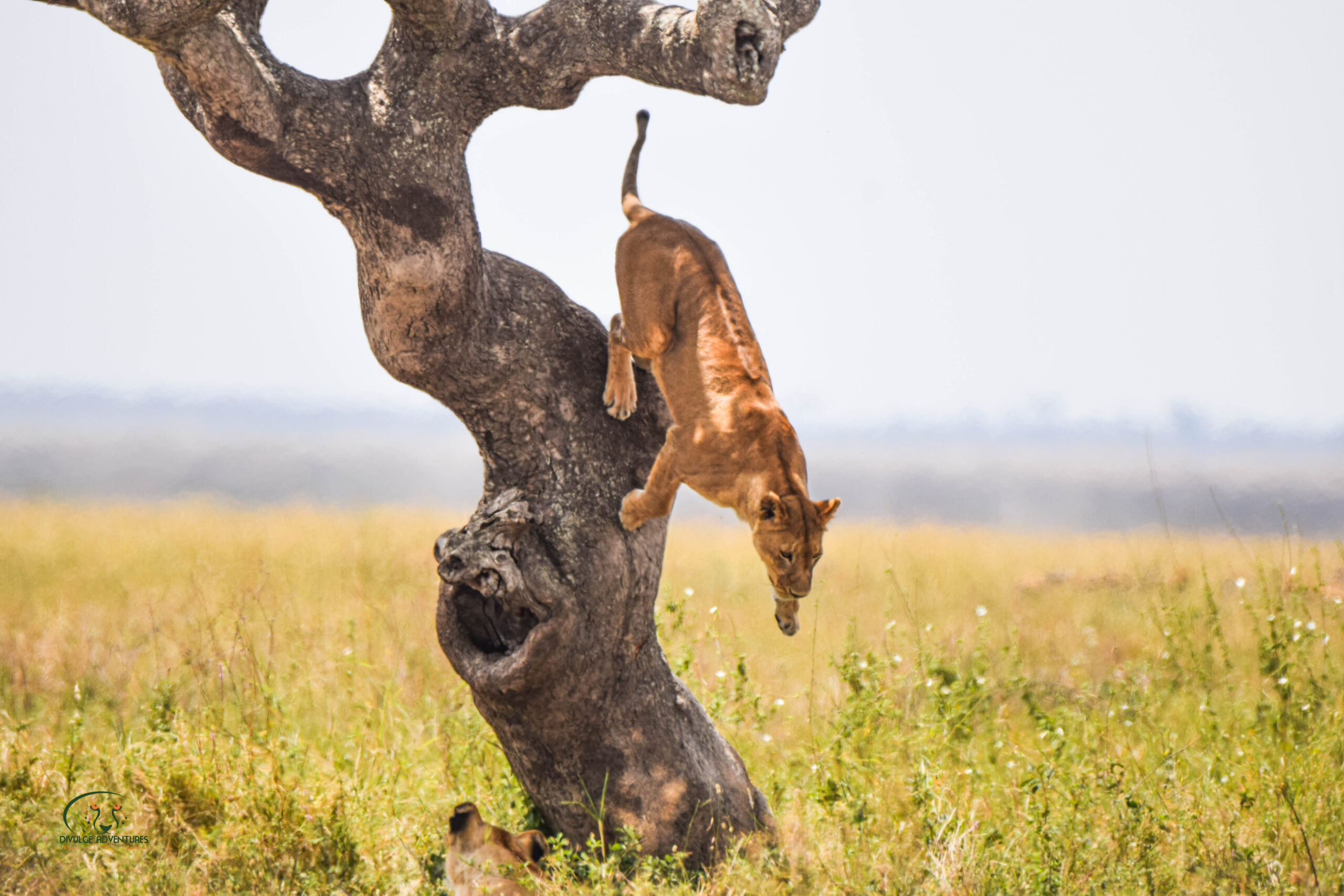
Photo: Divulge Adventures
| Day | Where | Highlights |
|---|---|---|
| 1 | Arusha to Tarangire | Elephants and baobabs, about 120 km from Arusha |
| 2 | Ngorongoro highlands | Drive up to the crater rim, cool evening |
| 3 | Ngorongoro Crater to Ndutu | Morning crater descent, afternoon drive to the plains |
| 4-5 | Ndutu and the southern Serengeti | Full days with the herds, calving and predators |
| 6 | Southern plains or central Serengeti | Final game drives, fly or drive back to Arusha |
Adding Zanzibar after the Serengeti in January
January is also dry season on the Zanzibar coast, which makes it a natural beach add-on. A short flight from the Serengeti airstrips or Arusha links the two. Our 10-day Tanzania safari and Zanzibar beach trip shows how the combination works, and you will need a valid Tanzania visa before you fly.
Insider Tips
- Book early: the best Ndutu and southern Serengeti camps fill 6-9 months ahead for late January and February
- Go late in the month: the second half of January gives a better chance of seeing calving
- Stay close: sleeping in the south saves hours of daily driving compared with a central base
- Start at dawn: predators are most active in the cool first hours after sunrise
- Fly one way: driving in and flying out of Ndutu saves a long return drive
- Check fees: confirm Serengeti and Ngorongoro fees before paying a deposit
Let us plan your safari
Tell us your dates, budget and dream sightings, and our Nairobi team will send you a free tailor-made itinerary and quote.
Frequently Asked Questions
Is January a good time to visit the Serengeti?
Yes, January is one of the best times to visit the Serengeti, especially the southern plains around Ndutu. The migration herds are usually settled on fresh short grass, calving begins, and lions, cheetahs and hyenas hunt in the open. The weather is warm with occasional showers, but camps in the south book up early, so plan several months ahead.
Where is the Great Migration in January?
In January the Great Migration is usually spread across the southern Serengeti short-grass plains and the Ndutu area of the Ngorongoro Conservation Area, around Lake Ndutu and Lake Masek. The herds move between these plains as local showers bring up new grass, so a guide checks recent sightings each morning before choosing a route.
Can you see the wildebeest calving in January?
You can often see wildebeest calving in January, particularly in the second half of the month. Births usually build through late January and peak in February, when hundreds of thousands of calves arrive within a few weeks. The exact timing follows the rains, so a late January trip to Ndutu gives you a good chance of newborns.
How much does a Serengeti safari in January cost?
A Serengeti safari in January costs roughly US$250-400 per person per day on a camping budget, US$400-700 mid-range and US$800 or more in luxury camps. These are estimates. Serengeti entry is US$82.60 per adult per 24 hours in January and Ngorongoro Conservation Area entry is US$70.80 (both checked October 2026).
Does it rain in the Serengeti in January?
January in the Serengeti usually brings occasional showers rather than heavy, all-day rain. It falls between the short rains and the long rains, so many days are sunny and warm, with highs of roughly 25-30°C. Afternoon storms can still turn black cotton soil muddy, so a 4×4 and an experienced driver-guide matter.
Final Thoughts
The Serengeti in January offers settled herds on green southern plains, the start of calving and outstanding predator viewing, with warm weather and only occasional showers. Base yourself in Ndutu or the southern Serengeti, allow at least three nights and book early.
If you want to see the Serengeti in January next season, now is the time to secure the camps. Send us your dates and we will design a calving-season route that fits your budget.
Wondering if late January is right for the calving season?
Chat with a Divulge Adventures safari consultant on WhatsApp for honest advice, a quick answer and a quote built around you.