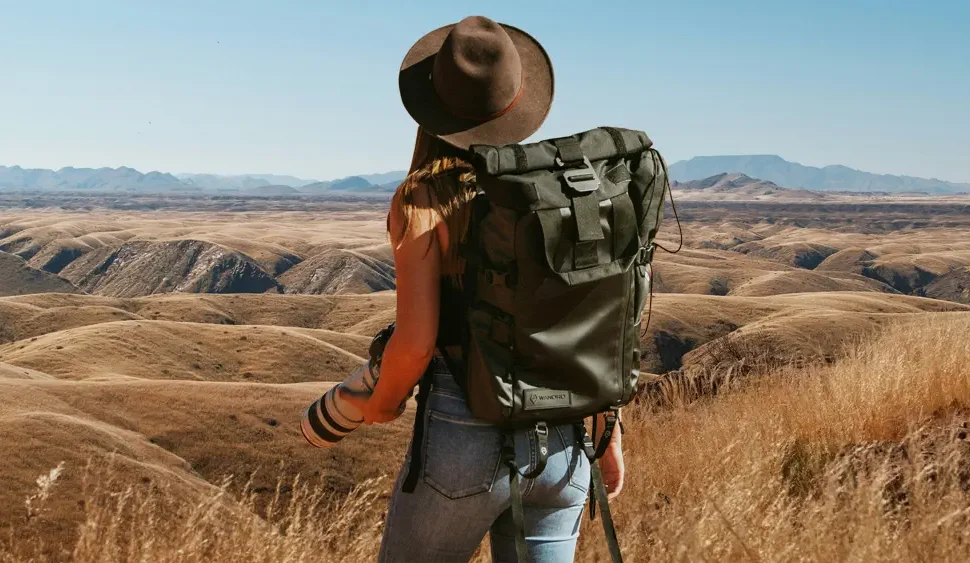
A Tanzania school trip to the northern circuit gives pupils three subjects in one week: human evolution at Olduvai Gorge, volcanic geology in the Ngorongoro Crater and living ecology on the Serengeti plains. Seven to ten days from Arusha is ideal, with child park rates for pupils aged 5 to 15 keeping fees lower.
The hard part for a teacher is fitting learning, safety paperwork and a fixed budget into one trip that parents will sign off. This guide sets out what each site teaches, a sample route, real park fees per pupil and how we run a school group safely.

Quick Facts
- Best length: 7 to 10 days on the ground, starting and ending in Arusha
- Main sites: Tarangire, the Ngorongoro Crater, Olduvai Gorge and the Serengeti
- Arrival airport: Kilimanjaro International Airport, about an hour from Arusha
- Child park rates: Ages 5 to 15; pupils of 16 and over pay adult rates
- Driest months: June to October, with a shorter dry spell in January and February
- Paperwork: Passports, visas, yellow fever certificates and parental consent letters
Why Does Northern Tanzania Work So Well for a School Trip?
Northern Tanzania works for a school trip because its main sites sit on one road, a few hours apart, and each one teaches something different. In a single week pupils can move from fossil beds to a volcanic caldera to the world’s best-known grassland ecosystem, all with a guide who explains what they are seeing.
That makes it easy to tie a Tanzania school trip to the curriculum. Biology groups get food webs and predator-prey behaviour, geographers get rift valley tectonics and a collapsed volcano, and history or anthropology students get the story of early humans told where much of it was discovered. A respectful Maasai village visit adds a cultural lesson.
Ready to go? Book your customized safari instantly on WhatsApp — we'll take it from there.

Instantly on
Which school holidays suit a trip to Tanzania?
The school holidays that suit a Tanzania school trip best are the summer break and October half term, because both fall in the dry season. Easter is cheaper but lands in the long rains.
| School break | Conditions in northern Tanzania | What it means for a group |
|---|---|---|
| February half term | Short dry spell; wildebeest calving on the southern Serengeti plains | Superb wildlife, but the calving area is a longer drive and lodges there fill early |
| Easter holidays | Long rains, usually heaviest in April | Lower Serengeti and Tarangire fees from 15 March to 15 May and quieter lodges; expect muddy roads and wet afternoons |
| Summer holidays | Dry and cool; herds in the northern Serengeti | Easiest conditions for game viewing; book lodges 9 to 12 months ahead |
| October half term | End of the dry season | Good game viewing, fewer crowds than August and comfortable for pupils |
International schools in East Africa have more freedom, as a short Tanzania school trip by road fits a long weekend. For every month in detail, see our guide to the best time of year for a Tanzania safari.
What Can Students Learn at Olduvai Gorge?
At Olduvai Gorge students learn how scientists reconstruct human evolution from fossils, stone tools and dated rock layers. The gorge, properly called Oldupai, runs for nearly 50 km through the eastern Serengeti plains and cuts down around 90 metres, exposing about two million years of deposits.
Mary and Louis Leakey worked here for decades. In 1959 Mary Leakey found the skull of the early hominid nicknamed Nutcracker Man,, and the gorge later produced fossils of the early human species Homo habilis. For pupils who know these names only from a textbook, standing above the site makes the lesson real.
The museum and the gorge viewpoint
The Olduvai Gorge Museum sits on the rim, about 5 km off the main road between the Ngorongoro Crater and the Serengeti. The museum building, opened in 2018, shows replica fossils, stone tools and a hall on the Laetoli footprints, left by early human ancestors about 3.6 million years ago. A covered platform overlooks the gorge, and staff give short talks, a highlight of any Tanzania school trip.
Shifting Sands and what the stop costs
Close by are the Shifting Sands, a black volcanic dune that slowly moves across the plain, which makes a neat physical geography add-on. The Ngorongoro Conservation Area Authority charges US$35.40 per adult and US$11.80 per child aged 5 to 15 for Olduvai Gorge and the Shifting Sands, and East African citizens pay TZS 5,900 per adult (checked November 2026 on the official NCAA tariff page). Allow two to three hours on a Tanzania school trip so the visit is not rushed.
How Does the Ngorongoro Crater Teach Geography?
The Ngorongoro Crater teaches geography by showing a collapsed volcano that pupils can drive into. It is a caldera roughly 610 metres deep, formed when a large volcano collapsed on itself, and its floor holds lakes, swamps and grassland.

The crater floor has around 120 km of game-drive tracks and is one of East Africa’s best places for black rhino, alongside lion, hyena, elephant and big zebra herds, which suits a lesson on isolated populations.
Fees are the main thing to plan for. Non-resident adults pay US$70.80 and children aged 5 to 15 pay US$23.60 for each 24 hours in the conservation area, and each vehicle pays a crater service fee of US$295 per descent (checked November 2026). Shared by six pupils in one Land Cruiser, the crater fee on a Tanzania school trip is about US$49 each. Our comparison of the Serengeti and Ngorongoro explains how the two fit together on one route.
The Maasai and conservation in one landscape
The Ngorongoro Conservation Area was set up in 1959 and listed by UNESCO in 1979. Maasai herders still graze livestock here, so a guided homestead visit lets pupils ask how families live alongside lions and elephants, turning a conservation debate into a real conversation.
Tarangire and the Serengeti: Ecology From the Vehicle
Tarangire and the Serengeti give pupils two contrasting ecosystems for fieldwork. Tarangire, about 120 km south-west of Arusha, is dry woodland known for elephant herds and huge baobab trees, while the Serengeti is open grassland where predators, grazers and the migration can be watched on a large scale.

Safari vehicles make good mobile classrooms on a Tanzania school trip. Guides can stop for simple exercises such as counting animals along a set stretch of track or comparing vegetation between riverbanks and open plains, and pupils pool their field notes each evening.
What students see in the Serengeti
The Serengeti holds resident lion, cheetah, leopard, giraffe, elephant and hippo all year, while the wildebeest and zebra herds move in a loop: calving in the south around January to March and river crossings in the north from about July to October. Our post on the Serengeti calving season shows how this cycle teaches population ecology in real time. Park fees are US$82.60 per adult and US$23.60 per child aged 5 to 15 per 24 hours in high season (checked November 2026).
A Sample 7-Day Tanzania School Trip Itinerary
A sample 7-day Tanzania school trip starts and ends in Arusha and keeps drives to about four hours or less on most days. It gives each site a clear teaching focus, and every evening includes time for notes, a short debrief and an early night.

| Day | Route and drive time | Learning focus |
|---|---|---|
| Day 1 | Arrive at Kilimanjaro International Airport, transfer about an hour to Arusha | Safety briefing, field notebook set-up, Swahili greetings |
| Day 2 | Arusha to Tarangire, usually under two hours; night near Karatu | Elephant behaviour, baobabs, dry-season water |
| Day 3 | Ngorongoro Crater descent, then a Maasai homestead visit | Caldera geology, black rhino, pastoral land use |
| Day 4 | Olduvai Gorge and Shifting Sands en route to the central Serengeti | Human evolution, dating rock layers, dune movement |
| Day 5 | Full day in the Serengeti | Predator-prey ecology, animal counts, kopje habitats |
| Day 6 | Morning drive, then about four hours back to Karatu | Data review and group presentations |
| Day 7 | Karatu to Arusha, about three hours, then flights home | Reflection and trip write-up |
Older pupils can add a night, a flight from the Serengeti to Arusha to save the seven-hour drive, or a few days on the coast to round off the Tanzania school trip. Our Tanzania northern circuit itinerary explains the route. Ready-made bases we can adapt are our 6-day Tarangire, Serengeti and Ngorongoro safari, which includes an Olduvai Gorge stop, or the 8-day Tarangire, Ngorongoro and Serengeti safari with cycling and a canoe ride at Mto wa Mbu.
How Much Does a Tanzania School Trip Cost Per Student?
A Tanzania school trip usually costs roughly US$220 to US$320 per student per day on a camping basis and US$350 to US$550 per day with mid-range lodges, excluding international flights. These are our estimates for a group sharing vehicles and rooms; park fees are the fixed part.
Group size changes the cost of a Tanzania school trip more than anything else. Vehicles, guides and the crater fee are shared, so 24 pupils in four vehicles pay less each than a group of eight, and triple or quad rooms cut lodge costs further.
Park fees per pupil on a 7-day Tanzania school trip
The table shows non-resident park fees for the sample route in high season, with six people sharing each vehicle. Camp concession fees for nights inside the Serengeti are extra, at US$59 to US$70.80 per adult per night depending on the month.
| Fee | Pupil aged 5-15 | Pupil or teacher aged 16+ |
|---|---|---|
| Tarangire, 1 day | US$17.70 | US$59.00 |
| Ngorongoro Conservation Area, 3 entries | US$70.80 | US$212.40 |
| Crater service fee (US$295 shared by 6) | US$49.17 | US$49.17 |
| Olduvai Gorge and Shifting Sands | US$11.80 | US$35.40 |
| Serengeti, 2 x 24 hours | US$47.20 | US$165.20 |
| Total park fees | About US$197 | About US$521 |
The road route enters the Ngorongoro Conservation Area three times: for the crater and twice in transit. The jump at 16 is worth flagging early, since a sixth-form Tanzania school trip pays over two and a half times the child park fees. Our post on Tanzania park fees lists every rate, and the parks change them from time to time, so always confirm before you set a price for parents.
Planning a study tour for your school?
See how we build student and study tour safaris: private vehicles for your group only, learning goals built into each day and costs broken down per pupil.
Keeping a School Group Safe in Tanzania
Keeping a Tanzania school trip safe comes down to private vehicles, experienced guides, a clear health plan and complete paperwork. Most safari incidents are minor, such as dehydration or sunburn, and good planning prevents nearly all of them.
Vehicles, rooming and supervision
On a private Tanzania school trip your pupils never share a vehicle with strangers. We place a teacher in each vehicle, keep the same driver-guide with the same pupils all week, and plan rooming around your safeguarding policy. Pupils stay inside vehicles in the parks unless the guide says otherwise. Our Africa group safaris page explains how we set up vehicles and rooms for larger parties, and the guide to organising a group safari walks you through deposits, names lists and deadlines.
Health, visas and documents
Every pupil needs a passport valid for at least six months and a Tanzania visa, which most nationalities apply for online before travel; our Tanzania visa guide covers the current process and fees. A yellow fever certificate is needed if you arrive from a country with yellow fever risk, which includes Kenya, so read our yellow fever requirements for Kenya and Tanzania.
Malaria is present in the parks, so pupils should see a travel nurse or doctor six to eight weeks before departure; the CDC’s Tanzania travel health page is a useful starting point. Carry signed parental consent letters for every minor, collect medical forms in advance, and make sure the Tanzania school trip travel insurance covers emergency evacuation.
Insider Tips
- Check ages early: List each pupil’s age on the travel dates, since 16-year-olds pay adult park fees
- Keep six to a vehicle: Six pupils per Land Cruiser gives everyone a window seat and splits the crater fee well
- Book Olduvai talks ahead: Tell us your syllabus so the museum stop matches what pupils are studying
- Give pupils a job: Assign roles such as spotter, recorder and photographer in each vehicle
Let us plan your safari
Tell us your dates, budget and dream sightings, and our Nairobi team will send you a free tailor-made itinerary and quote.
Frequently Asked Questions
How long should a Tanzania school trip be?
A Tanzania school trip works best at seven to ten days on the ground. Seven days covers Tarangire, the Ngorongoro Crater, Olduvai Gorge and two Serengeti nights, while ten days adds a lighter community or beach day and fewer long drives. Anything shorter than six days spends too much of the trip in the vehicle for younger pupils.
Do students pay less in Tanzania’s parks?
Students pay child rates in Tanzania’s parks only if they are aged 5 to 15. Non-resident children pay US$23.60 a day in the Serengeti and the Ngorongoro Conservation Area against US$82.60 and US$70.80 for adults (checked November 2026). Pupils of 16 and over pay the full adult rate, so sixth-form groups should budget accordingly.
Is Olduvai Gorge worth visiting with students?
Olduvai Gorge is worth visiting with students because it is one of the few places where a human evolution lesson happens on the ground where the fossils were found. The museum on the rim explains the Leakey family’s discoveries, and the gorge viewpoint lets pupils see the rock layers. Allow two to three hours, including the Shifting Sands if time allows.
What vaccinations do students need for Tanzania?
Students need a yellow fever certificate for Tanzania if they arrive from, or transit for long enough through, a country with yellow fever risk, which includes Kenya. Malaria is present on safari routes, so every pupil should see a travel health professional six to eight weeks ahead about antimalarials and routine vaccines. Check the current rules before booking.
Final Thoughts
A well-planned Tanzania school trip gives pupils fossils, volcanoes and the Serengeti in one week, and it can be priced fairly once you know which pupils pay child rates. Start with the learning goals, fix your dates around the dry season and let the route follow.
Our Rwanda study tour guide covers a different option for older students. When you are ready, send us your group size, ages and dates for a day-by-day Tanzania school trip plan with a per-pupil cost for parents.
Wondering what your pupils’ park fees would come to?
Chat with a Divulge Adventures safari consultant on WhatsApp for honest advice, a quick answer and a quote built around you.