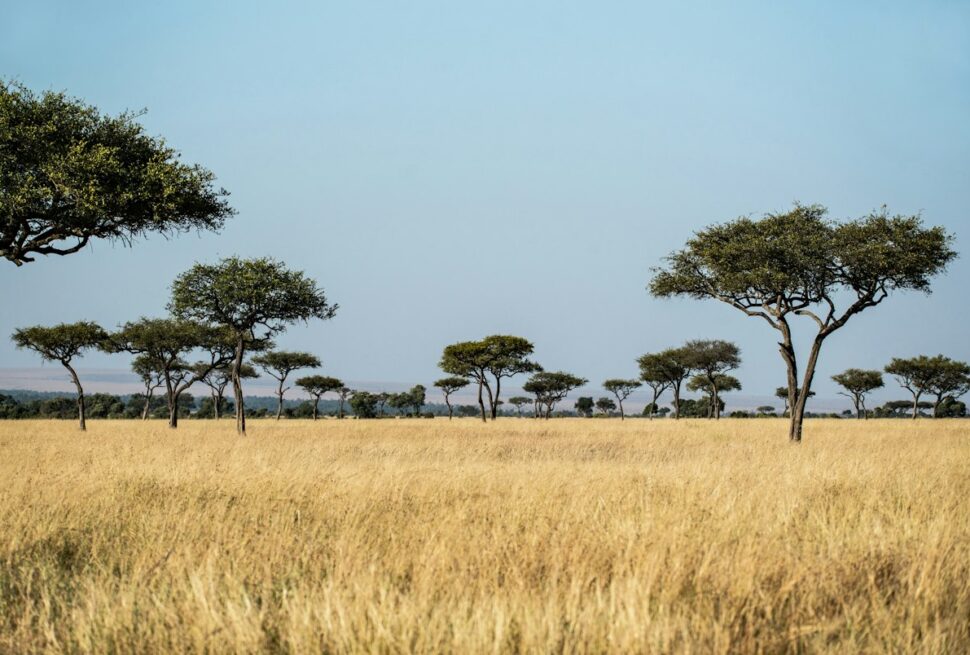
The best Samburu lodges sit on or near the Ewaso Ng’iro River, which divides Samburu National Reserve from Buffalo Springs and runs past Shaba. Choose a riverbank tented camp for elephants at your deck, a larger lodge for families, or a small conservancy hideaway with a private plunge pool.
Most lists of Samburu lodges rank properties by star rating and stop there. That hides what changes your trip: which bank of the river you sleep on, how many rooms share the game drive loops, and whether the camp is inside a reserve or on community land. This guide sorts the main Samburu lodges by location, shows what each one is built for, and explains how many nights to plan.

Photo: Divulge Adventures
Quick Facts
- Where: Samburu, Buffalo Springs and Shaba national reserves along the Ewaso Ng’iro River, about 314-350 km north of Nairobi
- Getting there: roughly 5-6 hours by road from Nairobi, or a 45-50 minute flight from Wilson Airport to the Samburu or Shaba airstrips
- Inside Samburu reserve: Samburu Sopa Lodge (60 rooms) and Samburu Intrepids (28 riverside tents)
- Buffalo Springs side: Ashnil Samburu Camp (19 tents) and Surana Buffalo Springs (17 suites with plunge pools)
- Shaba and conservancies: Sarova Shaba Game Lodge in Shaba, and Sasaab (9 rooms) just outside Samburu reserve
- Ideal stay: 2-3 nights, best in the dry months of June to October and late December to March
Where Are the Samburu Lodges, and Does the Location Matter?
Samburu lodges are spread across three neighbouring reserves and the conservancies around them, all tied to the Ewaso Ng’iro River. Location matters because the river is where wildlife gathers in the dry months, so a camp on the bank puts you minutes from the best game drives.
Ready to go? Book your customized safari instantly on WhatsApp — we'll take it from there.

Instantly on

Photo: Divulge Adventures
Samburu National Reserve covers about 165 square kilometres on the north bank of the river, at 800 to 1,230 metres above sea level. Buffalo Springs National Reserve faces it on the south bank, and Shaba National Reserve lies further east. The three are county-run, so they charge their own entry fees rather than Kenya Wildlife Service rates, and game drives from lodges on either bank often cover both Samburu and Buffalo Springs.
Beyond the reserves, community conservancies such as Westgate and Kalama add space, and Samburu lodges there limit numbers. For a wider picture of the landscape and wildlife, our Samburu National Game Reserve guide covers the reserve itself, while this post focuses on where to sleep.
Riverbank, hillside or conservancy?
Riverbank Samburu lodges give you elephants, crocodiles and hippos within sight of breakfast. Hillside lodges trade that closeness for views and breezes. Conservancy camps are quieter still, though you may drive further to reach the river loops.
Samburu Lodges Inside Samburu National Reserve
Two well-known Samburu lodges sit inside Samburu National Reserve itself: Samburu Sopa Lodge on higher ground around a waterhole, and Samburu Intrepids on the riverbank. Sleeping inside the reserve means you start game drives at first light without a gate to pass.

Photo: Divulge Adventures
Samburu Sopa Lodge
Samburu Sopa Lodge stands on high ground with views over the shrubland and hills, built around a waterhole rather than the river. Its 60 rooms are arranged in 15 two-bedroom cottages set in an arc, with gaps left between them so animals can walk through to drink.
The lodge has a swimming pool and two interconnecting rooms adapted for wheelchair users, which makes it one of the more practical Samburu lodges for families and travellers with limited mobility. Samburu Oryx airstrip is about ten minutes away, and the lodge is roughly 350 km, or six hours by road, from Nairobi. It is one of the options on our 7 day Ol Pejeta, Meru and Samburu safari.
Samburu Intrepids
Samburu Intrepids is a tented camp on the banks of the Ewaso Ng’iro inside the reserve, and elephants and crocodiles are sometimes seen from camp. It has 28 tents of about 26 square metres each, raised on decks under palm-thatched roofs, with en-suite bathrooms and doubles, twins, singles and triples. Rates are full board.
The camp is known for its kids’ club, which makes it one of the Samburu lodges best suited to families who want a tented feel. Game drives cover both Samburu and Buffalo Springs.
Which Camps Are on the Buffalo Springs Side of the River?
Ashnil Samburu Camp and Surana Buffalo Springs are the two main camps on the Buffalo Springs bank, both run by Ashnil Hotels. They look across the Ewaso Ng’iro towards Samburu reserve, and guests usually game drive on both sides of the river.

Photo by Photos By Beks on Unsplash
Ashnil Samburu Camp
Ashnil Samburu Camp has 19 deluxe tents along the riverbank, each with river views, ceiling fans, a tea and coffee station and an en-suite bathroom. The river forms the boundary with Samburu reserve, so the view from your verandah is effectively across into the reserve. Some tents and the main areas are wheelchair accessible.
Facilities go further than most mid-range Samburu lodges: a wellness centre with spa treatments and yoga, a swimming pool overlooking the river, WiFi, and an on-site clinic with a resident nurse. It is about 345 km north of Nairobi. Ashnil Samburu Camp is the camp we name on our 3 day Samburu fly-in safari and our Samburu and Masai Mara fly-in safari, always with similar alternatives if dates are full.
Surana Buffalo Springs
Surana Buffalo Springs sits on raised ground above the meeting point of the Ewaso Ng’iro and Isiolo rivers. It has 17 tented suites, each with its own plunge pool and a river-facing deck, plus a shared infinity pool. Among Samburu lodges, its finish is one of the most polished.
Surana’s rates are all-inclusive, covering meals, house wines, local beers, selected spirits, soft drinks, WiFi and a small laundry allowance. That makes it a strong choice for honeymooners or anyone who prefers one clear bill to a running bar tab, and it sits a step up in price from the classic riverbank camps.
Is Shaba Worth Staying In?
Shaba is worth staying in if you want a large lodge with a pool and space for children, or a quieter base away from the busier Samburu river loops. Shaba National Reserve lies east of Samburu and Buffalo Springs, and is often called Born Free country after Joy Adamson’s time there.
Sarova Shaba Game Lodge is the main option. It overlooks the Ewaso Ng’iro and is built around natural springs, with a small indigenous forest and a large free-form swimming pool in the grounds. There are 80 chalet-style rooms over two storeys, four executive suites and the Born Free presidential suite, so it handles groups and families comfortably.
Activities include walking safaris, bird walks, village visits and a children’s programme called the Ozone Rangers Club. The lodge is about 314 km from Nairobi, roughly a five-hour drive around Mount Kenya or a 45-minute flight. The trade-off is distance: game drives into Samburu reserve itself take longer from here than from the riverbank camps.
What Do Conservancy Lodges Add to a Samburu Safari?
Conservancy lodges add privacy, fewer vehicles and a closer link with the Samburu people whose land they share. They are smaller than reserve lodges, and their fees go partly to the communities that set the land aside for wildlife.
Sasaab
Sasaab, run by The Safari Collection, sits on the edge of a river valley just outside Samburu National Reserve, in an area where Samburu herders still bring their livestock and elephants come down to bathe. It has just nine rooms, each over 100 square metres with its own plunge pool, in a design that blends Swahili and Moroccan influences. Views stretch across the Laikipia Plateau towards Mount Kenya.
Days at Sasaab can include bird walks, bush breakfasts, sundowners on a rocky outcrop and visits with Samburu herders. For travellers comparing it with Kenya’s other high-end camps, our guide to luxury safari lodges in Kenya shows how Sasaab fits alongside options in Laikipia and the Mara.
Why conservancy camps feel different
In Kenya, activities such as night drives and off-road tracking are generally a conservancy experience rather than a reserve one, because reserve rules are stricter. If walking or after-dark game viewing matters to you, ask what each camp offers before you book; our post on night game drives in Kenya explains where they are allowed.
How the Main Samburu Lodges Compare
The main Samburu lodges differ most in size, setting and who they are built for. Use the table as a shortlist, then check availability, since small Samburu lodges fill early in the dry season.
| Lodge | Location | Rooms | Best for |
|---|---|---|---|
| Samburu Sopa Lodge | Samburu NR, high ground by a waterhole | 60 rooms in 15 cottages | Families, wheelchair users, value |
| Samburu Intrepids | Samburu NR, Ewaso Ng’iro riverbank | 28 tents | Families wanting a tented camp with a kids’ club |
| Ashnil Samburu Camp | Buffalo Springs NR, riverbank | 19 tents | First safaris, couples, spa and pool lovers |
| Surana Buffalo Springs | Buffalo Springs NR, above the river confluence | 17 suites with plunge pools | Honeymoons, all-inclusive comfort |
| Sarova Shaba Game Lodge | Shaba NR, by the river and natural springs | 80 rooms plus 5 suites | Groups, families, walking and birding |
| Sasaab | Just outside Samburu NR, river valley edge | 9 rooms with plunge pools | Privacy, special occasions, culture |
Samburu lodges for families, couples and photographers
Families do best at Samburu Sopa Lodge, Samburu Intrepids or Sarova Shaba, which have pools, larger rooms or children’s programmes. Couples and honeymooners tend to prefer Surana Buffalo Springs or Sasaab for the private plunge pools. Photographers should prioritise riverbank Samburu lodges, since the river loops in the early morning give the best light on elephants, Grevy’s zebra and reticulated giraffe.
What do Samburu lodges cost?
Samburu lodges range from mid-range full-board lodges to all-inclusive luxury suites, and published rates change by season, so we quote them for your exact dates rather than guessing here. On top of the lodge rate you pay the county reserve fee for each day in Samburu, Buffalo Springs or Shaba, which we confirm in your quote. Our Kenya park fees guide explains how reserve, park and conservancy fees work.
Fly into Samburu and stay on the river
Our Samburu fly-in safari puts you at a riverbank camp in about an hour from Nairobi, with game drives for the Special Five, leopards and elephants.
How Many Nights and Which Months Work Best?
Two to three nights at one of the Samburu lodges is the right length for most trips, and the dry months of June to October and late December to March give the most reliable game viewing along the river. Samburu is dry for much of the year, so it works in every season.

Photo by Tucker Tangeman on Unsplash
Two nights at Samburu lodges give you one full day and two half days of drives, enough for the Special Five: reticulated giraffe, Grevy’s zebra, beisa oryx, gerenuk and Somali ostrich. A third night gives you a better chance of a leopard along the river, or time for a conservancy walk or a cultural visit. The rains of November and April to May turn the red earth green.
Samburu pairs naturally with Ol Pejeta, Lewa or Meru for a northern circuit, or with the Masai Mara for big cats and the migration. If you are weighing the two, our Samburu vs Masai Mara comparison sets out which suits which animals and months, and the 7 day Kenya safari itinerary shows how a northern stop fits into a week.
Road or air?
Driving from Nairobi to the Samburu lodges takes around five to six hours and works well when combined with Ol Pejeta or Meru. Flying from Wilson Airport takes about 45 to 50 minutes and saves most of a day. Light aircraft have tight luggage limits, so pack soft bags.
Insider Tips
- Pick your bank: camps on the Ewaso Ng’iro give the closest dry-season wildlife; hillside and Shaba lodges give space and views
- Book small camps early: Sasaab has nine rooms and Surana seventeen suites, so they fill first in July to October
- Ask about activities: walks, night drives and cultural visits vary by camp and are easier on conservancy land
- Respect the river: crocodiles live in the Ewaso Ng’iro, so never wander to the bank alone after dark
- Learn the elephants: the research charity Save the Elephants has studied Samburu’s elephant families for decades, and guides often know individual herds
Let us plan your safari
Tell us your dates, budget and dream sightings, and our Nairobi team will send you a free tailor-made itinerary and quote.
Frequently Asked Questions
Which is the best lodge in Samburu?
The best of the Samburu lodges depends on your trip. Samburu Intrepids and Ashnil Samburu Camp sit on the riverbank, Samburu Sopa Lodge suits families and wheelchair users, Surana Buffalo Springs gives every suite a plunge pool, and Sasaab is a small conservancy hideaway. Match the lodge to your budget and group.
How many nights should I spend in Samburu?
Two nights in Samburu is the minimum we suggest, giving you one full day plus two half days of game drives. Three nights is better if you want the whole Special Five, a leopard or a conservancy walk. Samburu lodges are around five to six hours from Nairobi by road, so a one-night stay spends too much of the trip driving.
Is Buffalo Springs the same as Samburu?
Buffalo Springs is a separate national reserve on the south bank of the Ewaso Ng’iro River, directly across from Samburu National Reserve. The two share the same river, wildlife and dry northern scenery, and lodges such as Ashnil Samburu Camp and Surana Buffalo Springs sit on the Buffalo Springs side while guests game drive in both reserves.
Can you fly to Samburu lodges from Nairobi?
Yes, you can fly to Samburu lodges from Wilson Airport in Nairobi in about 45 to 50 minutes on a scheduled light-aircraft flight. Samburu Oryx airstrip is roughly ten minutes from Samburu Sopa Lodge, and there is also an airstrip for Shaba. Lodges or your guide collect you at the strip, and luggage limits on these flights are tighter than on international airlines.
When is the best time to stay at Samburu lodges?
The best time to stay at Samburu lodges is the dry season, roughly June to October and again from late December to March, when animals gather along the Ewaso Ng’iro. Samburu is dry for most of the year, so it works in every season, and the short rains of November and the long rains of April and May turn the scenery green.
Final Thoughts
Choosing between Samburu lodges comes down to three questions: do you want the riverbank, a pool and space for the family, or a small conservancy camp with privacy? Riverbank tents give you the closest wildlife, Sopa and Shaba give room and value, and Surana and Sasaab give the most comfort.
Northern Kenya rewards anyone who makes the trip, and the right camp makes those two or three days count. Send us your dates and we will check which Samburu lodges have space, then build them into a Kenya safari that fits your budget.
Riverbank tent or conservancy hideaway: which Samburu stay fits you?
Chat with a Divulge Adventures safari consultant on WhatsApp for honest advice, a quick answer and a quote built around you.