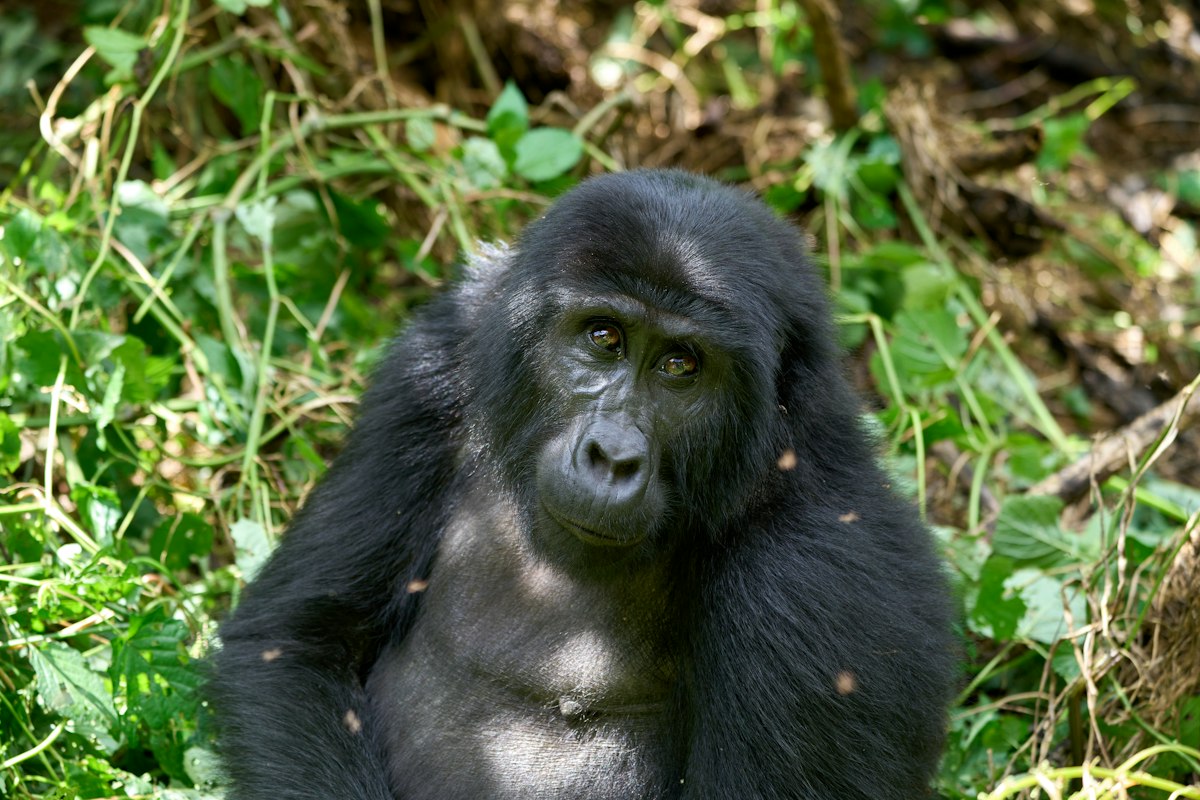
Bwindi gorilla trekking is a guided walk through Uganda’s Bwindi Impenetrable National Park to spend one hour with a habituated mountain gorilla family. A permit costs US$800 for foreign non-residents (checked October 2026), groups are capped at eight visitors per family, trekkers must be 15 or older, and treks run year-round.
The hard part is not the walk but the planning. Bwindi has four trekking sectors hours apart, permits sell out months ahead in busy seasons, and the wrong lodge can mean a pre-dawn drive on mountain roads. This guide explains how Bwindi gorilla trekking works, which sector suits you, what it costs, when to go and how to get there from Entebbe or Kigali.

Quick Facts
- Where: Bwindi Impenetrable National Park, southwest Uganda, a UNESCO World Heritage Site since 1994 covering about 321 km²
- Gorillas: 459 mountain gorillas counted in the Bwindi-Sarambwe ecosystem in the 2018 census, out of 1,063 worldwide
- Permit: US$800 per foreign non-resident; gorilla habituation experience US$1,500 in 2026, rising to US$1,800 from 1 January 2027 (checked October 2026)
- Rules: minimum age 15, maximum eight visitors per family per day, one hour with the gorillas
- Altitude: roughly 1,160-2,607 m, with steep, often muddy trails
- Sectors: Buhoma (north), Ruhija (east), Rushaga and Nkuringo (south)
- Best months: June to August and December to February are the drier months, but treks run all year
What Is Bwindi Gorilla Trekking Like?
Bwindi gorilla trekking starts with an early briefing at your sector’s park office, then a ranger-led hike into dense montane forest until trackers locate your assigned family. Once you reach them, you have one hour to watch the gorillas feed, rest and play before walking back out.
A typical trekking day, step by step
On a Bwindi gorilla trekking day, most visitors arrive at the sector headquarters for a briefing usually held between 07:00 and 08:00. Rangers check permits and passports, explain the rules and divide visitors into groups of up to eight, matching fitter walkers with families that are further away where they can. Advance trackers have usually set out earlier to find where the family nested overnight.
Ready to go? Book your customized safari instantly on WhatsApp — we'll take it from there.
 Book
BookInstantly on
The walk itself is the unpredictable part of Bwindi gorilla trekking. Some groups reach their gorillas within an hour; others climb and descend ridges for three or four hours before the trackers radio that the family is close. The vegetation is thick, so rangers sometimes cut a path with machetes, and the final approach can be off-trail through vines and nettles.
The hour with the gorillas
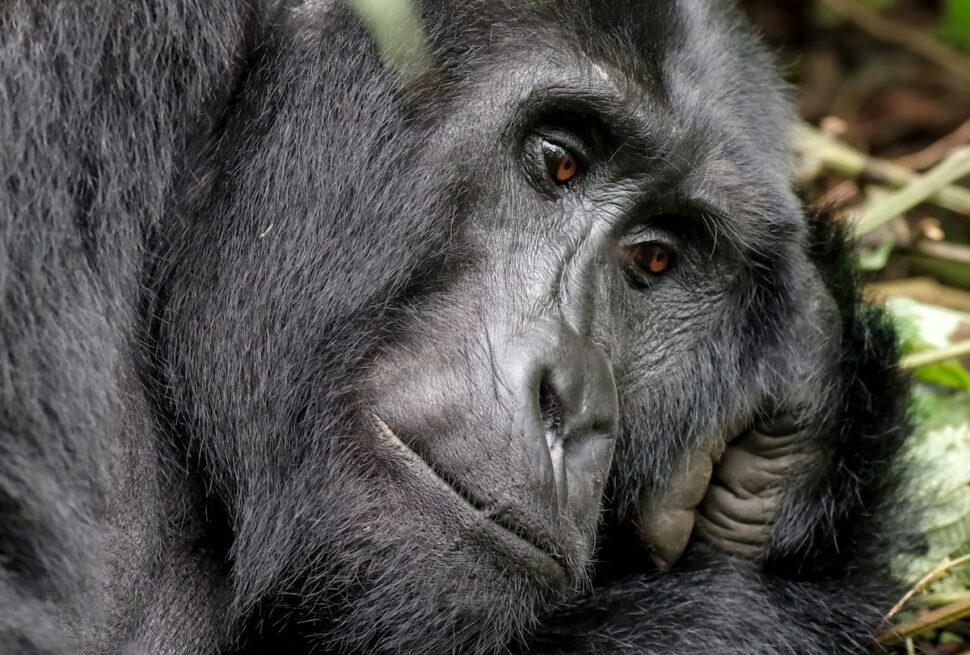
The hour with the family is the reason people travel for Bwindi gorilla trekking from across the world, and you may see a silverback feeding on leaves a few metres away, mothers grooming infants and juveniles tumbling through branches. The hour starts when you reach the group, and rangers keep strict time. Afterwards you walk back to the trailhead, usually tired, muddy and elated.

Bwindi Gorilla Trekking Sectors Compared
Bwindi gorilla trekking happens in four sectors: Buhoma in the north, Ruhija in the east, and Rushaga and Nkuringo in the south. Your permit is issued for one sector, and they are several hours apart by road, so choosing the right one decides where you stay and how you travel.
| Sector | Best for | Terrain and access |
|---|---|---|
| Buhoma (north) | First-timers, fly-ins via Kihihi, combining with Queen Elizabeth National Park | Moderate trails; the original trekking sector with a good spread of lodges |
| Ruhija (east) | Quiet treks and Albertine Rift birding | The highest sector at around 2,300 m and above; cool, with steep sections |
| Rushaga (south) | The widest choice of families, trips from Kigali, the habituation experience | Varied trails; close to Kisoro airstrip and the Cyanika border with Rwanda |
| Nkuringo (south) | Strong walkers and views of the Virunga volcanoes | Steep descents from the ridge into the forest and a hard climb back |
How to choose your sector
For Bwindi gorilla trekking at short notice, Rushaga is usually the answer: it has the largest number of habituated families, so permits there are often easier to find at short notice, and it is the natural choice if you start in Kigali. Buhoma is the classic option if you are coming from Queen Elizabeth or flying to Kihihi. Ruhija works well if you are a keen birder, while Nkuringo is best saved for confident hikers. Across the park there are around 20 habituated families available for tourism.
The key rule for Bwindi gorilla trekking logistics is simple: book your lodge in the same sector as your permit. A permit in Rushaga with a lodge in Buhoma means a drive of several hours before dawn on winding mountain roads, which is uncomfortable and risks missing the briefing.
How Much Does Bwindi Gorilla Trekking Cost?
Bwindi gorilla trekking costs US$800 per person for a standard permit for foreign non-residents, set by the Uganda Wildlife Authority (checked October 2026). On top of that you pay for lodging near the park, transport, guiding and optional extras, so a complete short trip usually costs far more than the permit alone.
Rates published for the Uganda Wildlife Authority tariff period from July 2026 include a reduced US$600 permit for treks in April, May and November, the wettest months, while the gorilla habituation experience costs US$1,500 until 31 December 2026 and US$1,800 from 1 January 2027. Recent summaries of the tariff say the reduced permits are tied to fixed dates, so check the conditions and confirm every rate before you book, because Uganda’s fees change regularly.
| Item | Typical cost per person | Notes |
|---|---|---|
| Gorilla trekking permit | US$800 (US$600 in April, May and November) | Foreign non-resident rate, checked October 2026 |
| Gorilla habituation experience | US$1,500 in 2026; US$1,800 from 1 January 2027 | Rushaga sector; about four hours with a family |
| Lodge, 2 nights (estimate) | US$150-1,200+ per night | Budget guesthouses to luxury lodges; usually full board |
| Transport (estimate) | US$300-1,200+ | Private 4×4 from Kigali or Entebbe, or scheduled flights to Kihihi or Kisoro |
| Porter and tips | Ask at the briefing; carry small notes | Porters are hired at the trailhead; tipping rangers and trackers is customary |
As a rough guide, a three-day Bwindi gorilla trekking trip from Kigali works out at about US$1,800-2,500 per person in a mid-range lodge when two people share a vehicle, and US$3,500-4,000 or more with luxury lodges or flights. These are estimates, not package prices; your actual quote depends on dates, group size and lodge choice.
Many travellers compare Uganda with Rwanda at this point. Rwanda’s permit is US$1,500, almost double Uganda’s, and our guide to gorilla trekking in Rwanda explains what you get for the extra money: shorter drives from Kigali and a more polished visitor set-up. Uganda wins on value and on the chance to add chimpanzees and savannah parks.
See our Bwindi gorilla trekking safari
We secure your gorilla permit, match your lodge to your trekking sector and handle every transfer, with a private vehicle and an experienced driver-guide.
When Is the Best Time for Bwindi Gorilla Trekking?
The best time for Bwindi gorilla trekking is during the drier months from June to August and from December to February, when trails are firmer and hikes are less slippery. Gorillas do not migrate, though, so treks run every day of the year and your chances of finding the family stay very high in any month.
| Months | Conditions | Who it suits |
|---|---|---|
| June to August | Drier, cooler mornings, peak demand | First-timers who want the easiest trails; book 4-6 months ahead |
| September to November | Rains build, especially in October and November | Travellers happy with mud in return for more permit availability |
| December to February | Mostly dry, warm days, busy around Christmas | Holiday trips; combine with savannah parks at their best |
| March to May | Wettest period, heaviest rain in April and May | Budget-minded trekkers who can use the reduced April and May permit |
Bwindi gorilla trekking happens in a rainforest, so a shower is possible on any day, even in the dry season. Pack a rain jacket whatever the month. If you are heading out over the festive season, our guide to a Uganda safari in December covers weather and permit demand around Christmas in more detail.

How Do You Get to Bwindi?
Bwindi is reached by road from Kigali or Entebbe, or by scheduled light aircraft from Entebbe to Kihihi (for Buhoma and Ruhija) or Kisoro (for Rushaga and Nkuringo). From Kigali the southern sectors are about four to five hours by road; from Entebbe the drive takes roughly eight to ten hours.
From Kigali
Kigali is the closest international airport for Bwindi gorilla trekking in the southern sectors. You cross into Uganda at the Cyanika border near Kisoro for Rushaga and Nkuringo, or at Katuna for Buhoma and Ruhija, which takes longer. This route suits travellers who want a short gorilla trip of two or three nights, and it often combines well with Rwanda’s own parks.
From Entebbe or Kampala
The road journey from Entebbe is long but scenic, and most itineraries break it with stops in Lake Mburo, Queen Elizabeth or the terraced hills around Lake Bunyonyi. Flying is faster: scheduled flights from Entebbe to Kihihi or Kisoro take about one to two hours depending on stops, followed by a road transfer to your lodge. Our fly-in safari packages pair flights with private ground transfers.
For entry, most visitors need a visa applied for online in advance, and the East Africa Tourist Visa costs US$100, covering Uganda, Kenya and Rwanda for 90 days according to the GOV.UK entry requirements for Uganda (checked October 2026). A yellow fever vaccination certificate is required for entry to Uganda, so check the latest rules before you fly.

Bwindi Gorilla Trekking Rules and Fitness
Bwindi gorilla trekking rules exist to protect a small, endangered population from human disease and stress. You must be at least 15, stay home from the trek if you are unwell, keep your distance and follow the ranger at all times. Fitness matters too, because the terrain is steep and slippery.
The main rules on a Bwindi gorilla trekking day
Keep at least 7 metres from the gorillas, and step back if one approaches; some rangers ask for 10 metres. Do not eat, drink or smoke near the family, and turn away to cough or sneeze. Flash photography is not allowed, voices stay low, and the one-hour limit is firm. Rangers may ask you to wear a face mask during the visit, so carry one.
How fit do you need to be?
You do not need to be an athlete for Bwindi gorilla trekking, but you should be comfortable walking for several hours on steep, uneven ground at altitude. Rangers try to give slower walkers a family closer to the trailhead, though nothing is guaranteed because gorillas move. Hiring a porter helps enormously: they carry your daypack, steady you on slippery sections and earn an income from the park, which supports local communities living next to the forest.
The gorilla habituation experience is a longer alternative in Rushaga, where a small group spends about four hours with a family that researchers are still getting used to people. It suits photographers and wildlife enthusiasts who want more than one hour, as long as they are fit for a longer day in the forest. Bwindi’s wider value is explained in the UNESCO World Heritage listing for Bwindi, which highlights its exceptional biodiversity.

How Many Days Do You Need for Bwindi?
Bwindi gorilla trekking needs at least two nights near the park: one to arrive, then the trek day and a second night to rest. Three days is the minimum from Kigali, while seven to ten days lets you combine gorillas with chimpanzees in Kibale and game drives in Queen Elizabeth National Park.
| Trip length | Route | Best for |
|---|---|---|
| 3 days | Kigali to Rushaga or Nkuringo and back | Gorillas only, short on time |
| 5-6 days | Entebbe, Lake Mburo, Bwindi, Lake Bunyonyi | Gorillas plus a relaxed road trip |
| 9-10 days | Kibale, Queen Elizabeth, Bwindi, Lake Mburo | Gorillas, chimpanzees and classic savannah game drives |
The longer circuits follow the same shape as our 9 Days Gorilla and Chimpanzee Trekking Safari and the 10 Days Primate and Wildlife Safari. If you want to see how Bwindi fits among Uganda’s other reserves, our guide to the best national parks to visit in Uganda compares them side by side.
Insider Tips
- Book the permit first: secure your trekking date and sector, then build flights, lodges and the rest of the route around it
- Match lodge to sector: stay in the same sector as your permit to avoid a pre-dawn mountain drive
- Wear the right kit: waterproof hiking boots, long trousers tucked into socks, gardening gloves for nettles and vines, a rain jacket
- Hire a porter: a porter makes steep climbs easier and supports families living next to the forest
- Bring cash: carry small US dollar or Uganda shilling notes for porters and tips
- Allow a spare day: a buffer day protects your trek from delayed flights or slow border crossings
One more Bwindi gorilla trekking tip: if you have a choice, take an extra night near the park after your trek. The forest walks, birding and community visits around Bwindi are worthwhile in their own right, and you will be glad of a slower evening after a long day on the trails.
Gorillas are not the only primates worth planning for in the region. Over the border in the Virungas, golden monkey trekking in Rwanda makes a lively half-day add-on if your route starts or ends in Kigali.
Let us plan your safari
Tell us your dates, budget and dream sightings, and our Nairobi team will send you a free tailor-made itinerary and quote.
Frequently Asked Questions
How much does Bwindi gorilla trekking cost?
Bwindi gorilla trekking costs US$800 per person for the permit if you are a foreign non-resident (checked October 2026), plus park entry, guiding, lodging and transport. A three-day trip usually costs about US$1,800 to US$4,000 per person, depending on lodge level. Confirm current rates before you book.
Which Bwindi sector is best for gorilla trekking?
No single Bwindi sector is best for gorilla trekking: Buhoma suits travellers flying into Kihihi or combining with Queen Elizabeth, Rushaga has the most habituated families and is closest to Kigali, Ruhija is high and quiet, and Nkuringo has the steepest trails and best views. Match the sector to your lodge and your route.
How hard is gorilla trekking in Bwindi?
Gorilla trekking in Bwindi is moderately hard for most people. Trails are steep, muddy and at altitude, between about 1,160 and 2,600 metres, and a trek can take from one to six hours or more in total. Reasonable walking fitness, good boots, a walking stick and a porter make the day far easier for most trekkers.
What is the minimum age for gorilla trekking in Uganda?
The minimum age for gorilla trekking in Uganda is 15, and this applies in Bwindi and Mgahinga for both standard treks and the gorilla habituation experience. Rangers may ask for proof of age at the briefing. Families with younger children can stay at a lodge near the forest and enjoy guided nature walks or community visits instead.
Can I do Bwindi gorilla trekking from Kigali?
Yes, Bwindi gorilla trekking from Kigali is popular because the southern Rushaga and Nkuringo sectors are roughly four to five hours by road via the Cyanika border. Many travellers fly into Kigali, cross into Uganda, trek in Bwindi and return, saving money compared with Rwanda permits. Allow at least two nights near the park.
Final Thoughts
Bwindi gorilla trekking is one of the great wildlife experiences on earth, and Uganda offers it at a far lower permit price than Rwanda. Choose your sector carefully, book the permit early and allow enough time on the ground. Browse our Uganda safaris or send us your dates, and we will build the trip around your gorilla day.
Not sure which Bwindi sector or month suits you?
Chat with a Divulge Adventures safari consultant on WhatsApp for honest advice, a quick answer and a quote built around you.