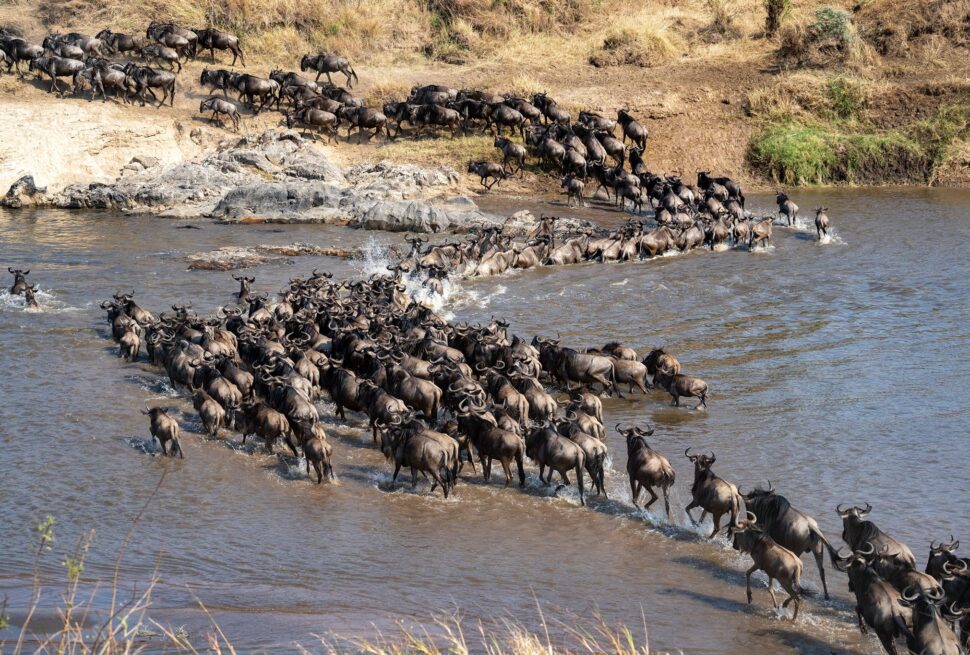
The Serengeti Migration is one of the world’s most extraordinary wildlife events. Every year, more than two million wildebeest, accompanied by hundreds of thousands of zebras and gazelles, embark on an epic journey across the vast plains of northern Tanzania and southern Kenya in search of fresh grazing and water. This incredible cycle of life has earned its place as one of the Seven Natural Wonders of Africa, attracting wildlife enthusiasts, photographers, and adventure travelers from across the globe.
If you’ve ever wondered about the best time to see the Serengeti wildebeest migration, this comprehensive guide will help you plan the perfect safari. From understanding the migration’s monthly movements to choosing the best Serengeti safari camps, witnessing the dramatic Mara River crossing, and packing the right photography gear, this guide covers everything you need to know.
What Is the Serengeti Great Migration?
The Great Migration is a continuous, year-round movement of wildlife across the Serengeti ecosystem. Contrary to popular belief, it isn’t a single event but a never-ending journey driven by seasonal rainfall.
Approximately:
- 1.5 million wildebeest
- 250,000 zebra
- 500,000 Thomson’s gazelles
Thousands of elands, impalas, and topis travel across nearly 1,000 kilometers in search of greener pastures.
Ready to go? Book your customized safari instantly on WhatsApp — we'll take it from there.

Instantly on
This migration supports one of Africa’s richest predator populations, including lions, leopards, cheetahs, hyenas, crocodiles, and wild dogs, making every safari an unforgettable experience.
Best Time to See Serengeti Wildebeest Migration
The answer depends on the wildlife experience you’re looking for. Every month offers something unique.
January – March: Calving Season
The southern Serengeti and Ndutu plains become the birthplace of nearly 500,000 wildebeest calves within just a few weeks.
This period offers:
- Thousands of newborn animals
- Excellent predator action
- Green landscapes
- Amazing wildlife photography
Lions, cheetahs, and hyenas closely follow the herds, creating dramatic wildlife encounters.
Perfect for:
- Families
- Wildlife photographers
- First-time safari visitors
April – May: Green Season Migration
As the rains continue, the herds begin moving northwest.
Although these months are considered the low season, visitors enjoy:
- Fewer safari vehicles
- Beautiful green scenery
- Lower accommodation prices
- Exceptional birdwatching
This is a fantastic time for travelers seeking a quieter safari experience.
June: Migration Begins Moving North
By June, the herds gather in the western corridor.
Highlights include:
- Long migration columns
- Grumeti River crossings
- Large crocodiles
- Increased predator sightings
Game viewing becomes increasingly exciting as animals prepare for the most dangerous stage of their journey.
July – October: Mara River Crossing
This is the period most travelers dream about.
The famous Mara River crossing sees thousands of wildebeest attempting to cross crocodile-filled waters while avoiding predators waiting on the opposite bank.
Expect:
- Dramatic river crossings
- Massive wildebeest herds
- Excellent lion sightings
- Incredible photography opportunities
Because this is peak safari season, early booking is essential.
November – December: Journey South
As the short rains begin, the migration gradually heads back toward the southern Serengeti.
Travelers can enjoy:
Fresh green plains
Active wildlife
Excellent game viewing
Fewer crowds
The migration cycle then prepares to begin once again with calving season.
Monthly Serengeti Migration Tracker
Month Location Highlights
January – Southern Serengeti Calving season begins
February -Ndutu Plains Peak calving and predators
March -Southern Serengeti Herds begin moving
April -Central Serengeti Green season migration
May -Western Corridor Long migration columns
June- Grumeti Area River crossings begin
July -Northern Serengeti Mara River crossings
August -Northern Serengeti Peak migration action
September -Northern Serengeti Excellent wildlife viewing
October -Northern Serengeti Late river crossings
November -Central Serengeti Southward movement
December -Southern Serengeti Arrival for calving season
Remember that nature doesn’t follow a strict calendar. Rainfall patterns can shift migration timing by several weeks.
Mara River Crossing vs. Calving Season
Many travelers struggle to decide which migration experience is best.
Mara River Crossing
This experience is all about adrenaline.
You’ll witness:
- Massive herds gathering at riverbanks
- Crocodile attacks
- Wildebeest leaping into rushing waters
- Dramatic survival stories
Ideal for:
Adventure seekers
Wildlife photographers
Returning safari visitors
Calving Season
Calving season offers a completely different experience.
Instead of dramatic crossings, you’ll enjoy:
- Thousands of newborn calves
- Predator hunts
- Endless green plains
- Beautiful landscapes
This is often considered the best season for photographers because the lighting and scenery are spectacular.
Best Serengeti Safari Camps
Choosing the right accommodation significantly enhances your migration experience.
Luxury Mobile Camps
Luxury mobile camps move throughout the year, following the migration.
Benefits include:
Staying close to wildlife
Comfortable en-suite tents
Gourmet dining
Personalized service
Exclusive game drives
These camps offer an authentic safari atmosphere without sacrificing comfort.
Permanent Safari Lodges
Permanent lodges provide year-round luxury with amenities such as:
Swimming pools
Spa facilities
Family-friendly accommodations
Panoramic views
Fine dining
They’re ideal for travelers seeking comfort and convenience.
Budget camps provide excellent value while keeping guests close to nature.
Expect:
Comfortable safari tents
Shared or private bathrooms
Guided game drives
Campfire evenings
Affordable pricing
Perfect for adventurous travelers looking to maximize their safari experience.

Photography Gear Essentials
The Serengeti offers endless photographic opportunities, so bringing the right equipment is essential.
Camera Body
A DSLR or mirrorless camera with fast autofocus performs best for wildlife photography.
Telephoto Lens
A 100–400mm or 200–600mm lens helps capture distant animals without disturbing them.
Wide-Angle Lens
Perfect for photographing:
African sunsets
Landscapes
Safari camps
Dramatic skies
Extra Batteries
Safari days often begin before sunrise and end after sunset, making spare batteries a necessity.
Memory Cards
Wildlife photography generates thousands of images. Carry multiple high-capacity memory cards to avoid running out of storage.
Bean Bag
A bean bag provides excellent camera support while shooting from safari vehicles.
Lens Cleaning Kit
Dust is common during game drives, especially in the dry season. Regular lens cleaning helps maintain image quality.
Wildlife Beyond the Migration
While the migration is the main attraction, the Serengeti is home to incredible wildlife throughout the year.
You may encounter:
- African elephants
- Lions
- Leopards
- Cheetahs
- African buffalo
- Black rhinos
- Giraffes
- Hippos
- Crocodiles
- Hyenas
- Jackals
- More than 500 bird species
No matter when you visit, exceptional wildlife viewing is almost guaranteed.
Tips for Planning Your Tanzania Migration Tour
To make the most of your safari:
- Book six to twelve months in advance for peak migration months.
- Choose accommodations based on the migration’s expected location.
- Combine the Serengeti with the Ngorongoro Crater, Tarangire National Park, or Zanzibar for a complete Tanzania adventure.
- Pack lightweight, neutral-colored clothing suitable for varying temperatures.
- Carry binoculars to enhance wildlife viewing.
- Purchase comprehensive travel insurance before your trip.
- Travel with an experienced safari guide who understands animal behavior and migration patterns.
See our Tanzania safari packages
Tailor-made itineraries, private vehicles and expert local guides.
View Tanzania SafarisSerengeti Migration Month by Month
The Serengeti migration is a year-round loop of about 1.5 million wildebeest, with hundreds of thousands of zebra and gazelle, following the rains across Tanzania and into Kenya’s Masai Mara. Here is where the Serengeti migration usually is through the year. Timing shifts with the rain, so we always check recent movements before we book your camps.
January to March: Calving in the Southern Serengeti
From January the Serengeti migration gathers on the short-grass plains of the southern Serengeti and the Ndutu area of the Ngorongoro Conservation Area. February is the peak of the calving season, when thousands of calves are born each day. Predators follow closely, so this is one of the best times of year for lion, cheetah and hyena action.
April and May: The Long Rains and Central Serengeti
As the long rains arrive, the herds begin moving north-west through the central Serengeti around Seronera. Prices drop, some camps close, and the landscape turns brilliant green. It is a quiet, good-value time to see the Serengeti migration on the move.

June: The Western Corridor and Grumeti River
In June the Serengeti migration usually reaches the Western Corridor, where the herds cross the Grumeti River. Crossings here are smaller than those on the Mara River, but large crocodiles make them dramatic, and there are fewer vehicles.
July to October: Mara River Crossings in the North
This is the most famous stage of the Serengeti migration. The herds reach the northern Serengeti around Kogatende and spill into Kenya’s Masai Mara. Mara River crossings can happen at any time from July to October, and many travellers combine both countries on one trip.
November and December: Heading South Again
With the short rains, the herds turn south through the eastern Serengeti and Loliondo, returning to the southern plains by December to begin the cycle again.
Where to Stay for the Serengeti Migration
The best way to experience the Serengeti migration is to stay in a camp close to the herds for your month of travel. Many Serengeti camps are seasonal mobile camps that move with the migration, so they stay near the action:
- December to March: camps in Ndutu and the southern Serengeti
- April to June: central Serengeti around Seronera, or the Western Corridor for the Grumeti crossings
- July to October: northern Serengeti camps near Kogatende and the Mara River
Compare options in our guide to the best Serengeti camps.
7 Tips for Seeing the Serengeti Migration
- Pick your moment. Decide whether you want calving (February) or river crossings (July to October), then plan around it.
- Book early. Northern Serengeti camps fill up a year ahead for July to September.
- Stay at least three nights. River crossings need patience, so give yourself time near the herds.
- Go with an experienced guide. Guides share sightings and know where the herds are likely to cross.
- Consider flying. Light aircraft link Arusha with the Serengeti airstrips and save long drives.
- Add the Ngorongoro Crater. It sits on the way to the Serengeti and is excellent for the Big Five.
- Combine with Kenya. From July to October you can follow the Serengeti migration into the Masai Mara.

A Typical Day on a Serengeti Migration Safari
Days on a Serengeti migration safari start early. You leave camp at first light with coffee and a packed breakfast, when predators are most active and the light is soft for photography. Your guide heads for the herds, reading the direction of travel and listening for news of a crossing or a hunt on the radio.
In the crossing season, a Serengeti migration day can mean hours of waiting near the Mara River while thousands of wildebeest gather on the bank. When the first animal jumps, the rest follow in a rush of dust, water and crocodiles. In the calving season, mornings are spent among newborn calves on the southern plains, often with lion or cheetah close by.
Lunch is usually back at camp or a picnic under an acacia tree, followed by a rest during the hottest hours. The afternoon game drive runs until sunset, and evenings end around the campfire, sharing the day’s Serengeti migration sightings.
Serengeti Migration vs the Masai Mara Migration
The Serengeti migration and the Masai Mara migration are the same herds at different times of year. The Serengeti hosts the wildebeest for about nine months, including the calving season, while the Masai Mara hosts them for around three months from about August to October.
- Choose the Serengeti migration for the calving season, mobile camps that follow the herds, and huge open plains.
- Choose the Masai Mara for easier access from Nairobi, shorter trips and conservancies with fewer vehicles.
- Combine both on a Kenya and Tanzania safari from July to October to follow the herds across the border.
How Much Does a Serengeti Migration Safari Cost?
The cost of a Serengeti migration safari depends on the season, the camps and how you travel. July to October is peak season for the northern Serengeti, so camps near the Mara River cost the most and book out early. The calving season from January to March is also popular, while April and May offer the lowest rates.
Flying between Arusha and the Serengeti airstrips adds to the price but saves long drives, while a road safari through Tarangire and the Ngorongoro Crater keeps costs lower. Park fees for the Serengeti are paid per person per day. For a clear quote on your dates, we compare mid-range and luxury Serengeti migration options side by side.
Serengeti Migration FAQs
When is the best time to see the Serengeti migration?
February for the calving season in the south, and July to October for the Mara River crossings in the north. The Serengeti migration can be seen in some form in every month of the year.
Is the Serengeti migration better in Tanzania or Kenya?
The herds spend most of the year in Tanzania’s Serengeti and around three months in Kenya’s Masai Mara. Both offer river crossings from July to October. See our great migration month by month guide for the full calendar.
How many animals take part?
Roughly 1.5 million wildebeest, along with large numbers of zebra and gazelle, according to Tanzania National Parks and most research estimates.
How do I book a Serengeti migration safari?
Choose a trip such as our 8-day great migration safari in northern Tanzania, or ask us to plan one around your dates.
Let us plan your safari
Tell us your dates, budget and dream sightings, and our Nairobi team will send you a free tailor-made itinerary and quote.
Get My Free Safari Quote★ 4.9/5 on TripAdvisor (74+ reviews)·★ 5.0/5 on SafariBookings (66+ reviews)·★ 5.0/5 on Google (47+ reviews)
Why the Serengeti Migration Is a Once-in-a-Lifetime Experience
The Serengeti Great Migration is far more than a safari—it is a front-row seat to one of nature’s greatest survival stories. Every river crossing, every newborn calf, and every predator encounter highlights the delicate balance of the natural world. Whether you’re witnessing the thrill of the Mara River crossing or the wonder of calving season, each moment is unforgettable.
Planning your trip around the best time to see the Serengeti wildebeest migration ensures you’ll experience the spectacle you’re most excited about. From luxurious Serengeti safari camps to expert-guided game drives and unforgettable photography opportunities, a Tanzania migration tour promises memories that will last a lifetime.
If you’re ready to experience nature at its most spectacular, the Serengeti awaits with breathtaking landscapes, abundant wildlife, and one of the greatest journeys on Earth.
Ready to plan your trip? See our 8 Days Great Migration Northern Tanzania or 8-Day Tarangire, Ngorongoro & Serengeti Safari itinerary, or ask us to tailor one for you.
Have a question about your safari?
Chat with a Divulge Adventures consultant on WhatsApp for honest advice, a quick answer and a quote built around you.
Chat on WhatsApp