
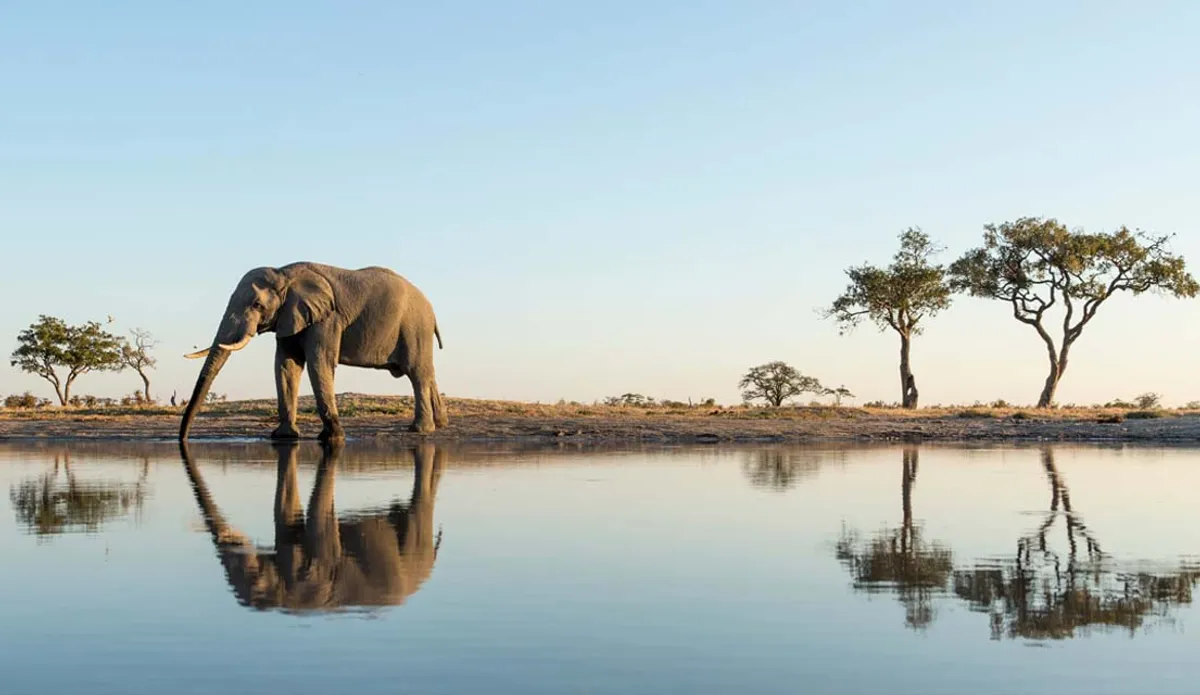
A Chobe safari is Botswana’s easiest big-game trip: you fly into Kasane, drive minutes to the park and watch elephants cross the Chobe River from a boat the same afternoon. The riverfront is best from June to October, when herds of hundreds gather to drink, while Savuti and Linyanti add lions, wild dogs and far fewer vehicles.
The hard part is choosing between four very different parts of one park, then fitting in fees, seasons and onward travel to Victoria Falls or the Okavango Delta. This guide, from our Nairobi safari team, explains each area, how a typical day runs, which month suits which goal, what a Chobe safari costs and how to link it into a longer Botswana route.

Quick Facts
- Where: Northern Botswana; Kasane town sits on the park’s north-east edge
- Size: About 11,700 km², Botswana’s third-largest park
- Famous for: Over 50,000 elephants, Chobe River boat cruises, Savuti lions
- Best months: June to October for the riverfront; November to March for green season and birds
- Gateway: Kasane International Airport, or roughly 80 km by road from Victoria Falls
- Park fee: P270 per non-resident adult per day (checked November 2026)
- Ideal stay: 2-3 nights on the riverfront, plus 2-3 in Savuti or Linyanti
What Is a Chobe Safari Like?
A Chobe safari is built around water in a dry country. Chobe National Park covers roughly 11,700 km² of woodland, marsh and floodplain, and in the dry months most of its wildlife funnels toward the Chobe and Linyanti rivers. You watch that daily movement by boat and by open vehicle, usually from a lodge in or near Kasane.
Ready to go? Book your customized safari instantly on WhatsApp — we'll take it from there.

Instantly on
Elephants are the headline. UNESCO, which lists the Chobe-Linyanti system on its tentative World Heritage list, describes an elephant population of more than 50,000 and one of the largest game concentrations on the continent. On an October afternoon it is normal to see several family herds wading across to the Namibian side, trunks raised like snorkels.
Beyond the elephants, the riverfront has buffalo, hippo, crocodile, giraffe, kudu, sable and roan, plus the puku, an antelope that in Botswana lives only on this stretch of river. Lion and leopard are seen regularly, though predators are more reliable in Savuti and Linyanti. The birding is excellent all year, with fish eagles, skimmers and kingfishers along the banks.
If you are still deciding between this park and the delta, our Okavango Delta vs Chobe comparison sets the two side by side. This post goes deeper into Chobe itself.
Which Part of Chobe National Park Should You Visit?
Chobe has four distinct areas: the busy riverfront near Kasane, the Savuti marsh in the west, the Linyanti swamps in the far north-west, and the dry Nogatsaa woodland in between. Most first visits use the riverfront; Savuti and Linyanti suit travellers who want predators and a wilder feel.

Photo by Emily Dalamangas on Unsplash
The Chobe Riverfront (Serondela)
The riverfront strip runs west from Sedudu Gate near Kasane along floodplains and riverine woodland. It is where most Chobe safari itineraries begin because it is so easy to reach, and it can feel busy at popular sightings in high season. The trade-off is reliability: in September you are almost guaranteed big elephant herds within an hour of leaving your lodge.
Savuti
Savuti lies in the park’s western interior, roughly 140 km from Kasane, about four hours on deep sand that needs a high-clearance 4×4. Savuti is the classic second stop on a Chobe safari. Its marsh is fed by the Savuti Channel, which has dried up and flowed again over the decades, leaving dead trees along its banks. The area is known for big lion prides, hyena, cheetah on the open plains and zebra arriving with the summer rains.
Linyanti
Linyanti sits in the north-west corner, along the Linyanti River with its lagoons, papyrus and riverine forest. This is the premium end of a Chobe safari: large lion prides, African wild dogs, leopard and hippo are the draw, and most visitors stay in remote camps reached by light aircraft. Expect far fewer vehicles than on the riverfront and a higher price to match.
Nogatsaa and the dry interior
Nogatsaa is a hot grass-and-woodland area between the riverfront and Savuti, with pans that hold water after rain. It is little visited and best for self-drivers wanting solitude and a chance of eland. Roads can become waterlogged in the wet season, so it is rarely part of a guided first trip.
| Area | Best for | Access | Best months |
|---|---|---|---|
| Riverfront (Serondela) | Elephant herds, boat cruises, short stays, families | Minutes from Kasane by road | June to October |
| Savuti | Lions, hyena, cheetah, summer zebra | About 4 hours by 4×4 from Kasane, or light aircraft | May to October; November to March for zebra |
| Linyanti | Wild dogs, lion, leopard, few vehicles | Mostly light aircraft | June to October |
| Nogatsaa | Solitude, eland, self-drive explorers | 4×4 only, rough tracks | Dry months only |
Boat Cruise or Game Drive on the Chobe River?
You do not have to choose: the classic Chobe safari day pairs an early game drive on the floodplain roads with an afternoon boat cruise. The boat is the experience most people remember, while the vehicle finds lions, buffalo and antelope that stay back from the water.

Photo by Ida Kymmer on Unsplash
Flat-bottomed boats sit low in the water, so elephants drinking, swimming and feeding on the grassy islands are at eye level. Hippos, crocodiles and buffalo on the islands are almost certain, and photographers love the soft light reflecting off the river. Many lodges also run smaller photographic boats with swivel seats, which are worth asking about if you carry a long lens on your Chobe safari.
How a typical Chobe safari day runs
Days start early. A morning drive leaves around sunrise, when lions are still active and the air is cool, and returns for a late breakfast. Midday is for resting at the lodge or watching the river from the deck. The afternoon cruise usually lasts around three hours and ends at sunset, when the elephants are at their busiest.
National park rules keep game drives on the roads and end them before dark, so night drives and guided walks are not part of a standard visit to Chobe National Park. If they matter to you, add a private concession such as Khwai or Linyanti, where camps can offer them.
When Is the Best Time for a Chobe Safari?
The best time for a Chobe safari on the riverfront is June to October, with September and October the peak, because pans inland dry up and wildlife has to come to the river. November to March is the green season: hotter, wetter and quieter, with superb birding and newborn animals, but game spreads out.

Photo by Emily Dalamangas on Unsplash
Savuti runs on a slightly different calendar from a riverfront Chobe safari. Its dry-season predator action is strong from May to October, and the rains from around November to March bring zebra and other plains game back onto the marsh. Our month-by-month guide to the best time to visit Botswana covers the whole country if you are combining areas.
| Months | Chobe riverfront | Savuti and the interior |
|---|---|---|
| January to March | Green, lush and quiet; great birding, scattered elephants | Rains bring zebra and plains game; some tracks muddy |
| April and May | Drying out, cooler nights, good value | Water pans still full, game starting to gather |
| June to August | Cool, dry, herds building along the river | Strong predator viewing, clear skies |
| September and October | Peak elephant numbers; October is the hottest month | Hot and dusty, predators around the last water |
| November and December | First rains, fewer visitors, lower lodge rates | Rains return, zebra arrive, roads harder going |
Thinking about the green season? Our guides to Botswana in December and Botswana in January explain what changes when the rains arrive.
How Do You Get to Chobe, and Can You Day-Trip From Victoria Falls?
Most travellers reach Chobe through Kasane International Airport, usually with a flight from Johannesburg of roughly one and a half to two hours. Others come by road from Victoria Falls, about 80 km away, which makes a Chobe safari the natural partner to the falls.
From Victoria Falls town the drive to Kasane takes about an hour, plus the Kazungula border; from Livingstone in Zambia you cross the Kazungula Bridge. Allow around 90 minutes each way in total, and leave early, as border queues build up through the morning. The border generally opens from 06:00 to 20:00 for Botswana and Zimbabwe traffic.
A Chobe safari day trip from Victoria Falls is possible and popular, typically six to eight hours door to door with a cruise, a game drive and lunch in Kasane. It is a taster, though. You miss the dawn and sunset hours that make a Chobe safari special, so we suggest at least two nights on the river if your schedule allows.
For the interior, Savuti and Linyanti camps are usually reached by light aircraft from Kasane or Maun, which keeps transfer times short. Scheduled flights between Kasane and Maun take under an hour, which is how most routes link Chobe with the Okavango Delta. Through-traffic between Kasane and Namibia uses the Sedudu-Ngoma transit road, open 24 hours since April 2025.
How Much Does a Chobe Safari Cost?
A Chobe safari typically costs about US$150-300 per person per night on a budget Kasane trip, US$300-700 mid-range and US$1,000 or more in Savuti or Linyanti fly-in camps, sharing a room. These are our estimates; dates, room type and transfers change the total.
Park fees are modest by African standards. Chobe National Park charges non-resident adults P270 per person per day, children aged 8 to 15 pay half and under-8s enter free (checked November 2026). A higher fee schedule planned for 1 April 2026 was postponed on 31 March 2026 with no new date, so always confirm the current rate before booking. Self-drivers also pay a daily vehicle fee.
| Style | Estimated cost per person per night | What you get |
|---|---|---|
| Budget | US$150-300 | Simple Kasane lodge or campsite, shared boat cruises and game drives |
| Mid-range | US$300-700 | Riverfront lodge or tented camp, most activities included, park fees often included |
| Luxury riverfront | US$700-1,500 | Small lodges on the river, private boats, all meals and drinks |
| Savuti or Linyanti fly-in | US$1,000 and up | Remote camps, light aircraft transfers, few vehicles at sightings |
Light aircraft seats, international flights, visas and gratuities sit on top. For a full country picture, our Botswana safari guide for first-timers breaks down the main regions and their typical costs.
Start your Botswana trip on the Chobe River
Our 7-day Botswana safari opens with riverfront boat cruises and game drives in Chobe, then flies you on to Moremi and Khwai. Every date and lodge can be tailored.
Insider Tips
- Book the afternoon cruise every day: on a Chobe safari the river changes daily, and two or three cruises beat one long one
- Sit low on the boat: eye-level angles make the best elephant photos, so ask about photographic boats
- Pack for heat and cold: June and July mornings are chilly on an open vehicle, while October afternoons are scorching
- Carry your passport on day trips: you cross an international border to reach Kasane from Victoria Falls
- Plan malaria protection: northern Botswana is a malaria area, so check the NHS Fit for Travel Botswana page and see a travel clinic early
- Book dry-season dates early: riverfront lodges and Savuti camps fill many months ahead for August to October
Where Chobe Fits Into a Longer Botswana Route
Chobe works best as either the first or last stop on a Botswana trip, because Kasane connects so easily to Victoria Falls, Maun and the Okavango Delta. Two nights on the river, then three or four in Khwai, Moremi or the delta, is the most popular shape.

Photo: Divulge Adventures
Our 7-day Botswana safari through Chobe, Khwai and the Okavango follows exactly that pattern, starting with two nights at Chobe Safari Lodge on the riverfront before a flight towards Moremi. If you want Savuti’s lions too, the 7-day Moremi, Khwai and Savuti special crosses from the delta’s floodplains to the dry Savuti country.
Families and first-time visitors often like a riverfront-heavy Chobe safari, since activities need no fitness and lodges are flexible on children’s ages. Photographers and repeat visitors tend to spend less time in Kasane and more in Savuti or Linyanti, where a single sighting may be yours alone for an hour.
Adding another country is simple too. Many travellers pair Botswana with Namibia’s Zambezi Region or Etosha, and our Botswana vs Namibia guide helps if you are weighing the two. You can browse all our Botswana safari packages for more routes.
Let us plan your safari
Tell us your dates, budget and dream sightings, and our Nairobi team will send you a free tailor-made itinerary and quote.
Frequently Asked Questions
How many days do you need for a Chobe safari?
Two or three nights on the riverfront is the sweet spot for a Chobe safari, giving you at least two boat cruises and three or four game drives. Add two or three nights for Savuti or Linyanti. A day trip from Victoria Falls works if time is short, but it misses the dawn and sunset hours.
What is the best month for a Chobe safari?
September and October are usually the best months for a Chobe safari on the riverfront, because the rest of the park has dried out and elephant herds crowd the Chobe River every afternoon. June to August is cooler and almost as good. November to March is greener, quieter and good for birds and Savuti’s zebra, but game spreads out.
Can you do a Chobe safari as a day trip from Victoria Falls?
Yes. Kasane is roughly 80 km from Victoria Falls town, about an hour’s drive plus the Kazungula border, so a day trip usually takes six to eight hours door to door. Most combine a river cruise and a riverfront game drive with lunch in Kasane. Bring your passport and allow for visa rules for both countries.
How much are Chobe National Park entry fees?
Chobe National Park charges non-resident adults P270 per person per day, with children aged 8 to 15 at half price and under-8s free (checked November 2026). A revised schedule due on 1 April 2026 was postponed with no new date announced, so confirm the rate before you travel. Lodge packages usually include these fees.
Is Chobe better by boat or by vehicle?
A good Chobe safari uses both. The boat gets you eye level with swimming elephants, hippos, crocodiles and water birds, and gives the best afternoon light. The vehicle covers the floodplain roads where lions, buffalo herds and antelope such as puku and sable are found. Most riverfront lodges offer a morning drive and an afternoon cruise each day.
Final Thoughts
Chobe rewards a little planning: the riverfront gives you Africa’s great elephant spectacle with almost no effort, and Savuti or Linyanti add the predators and solitude. Go between June and October for the densest herds, stay at least two nights, and pair your Chobe safari with Victoria Falls or the delta.
Dry-season rooms on the river go first, so if August to October is your window, send us your dates now and we will match the right area to your wish list.
Riverfront, Savuti or both for your Chobe trip?
Chat with a Divulge Adventures safari consultant on WhatsApp for honest advice, a quick answer and a quote built around you.


