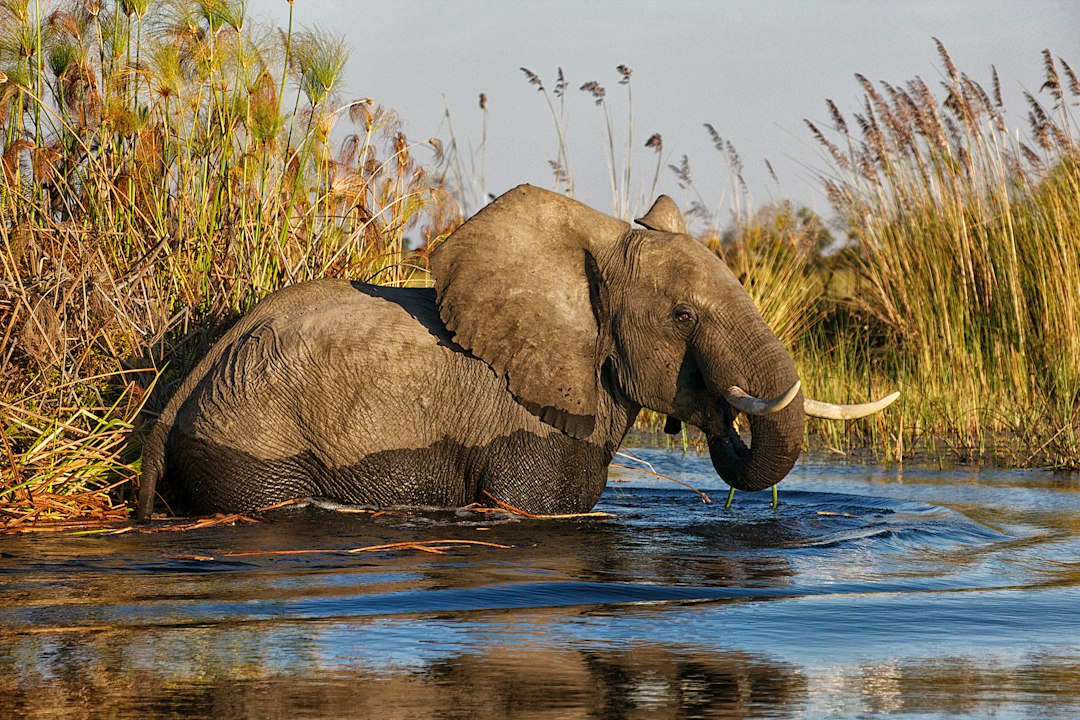
Okavango Delta vs Chobe comes down to how you want to see wildlife. Chobe National Park offers huge elephant herds, Chobe River boat cruises and easy access from Kasane at a lower cost. The Okavango Delta offers water channels, mokoro trips, fewer vehicles and remote fly-in camps for more money. Most travellers with a week do both.
Botswana is not cheap, and the two names come up on almost every itinerary, so the Okavango Delta vs Chobe question is a fair one. This guide compares access, wildlife, seasons, activities, crowds and costs side by side, then gives sample routes and clear advice on which suits honeymooners, families, photographers and first-timers.

Photo by Wynand Uys on Unsplash
Quick Facts
- Where: Both are in northern Botswana, roughly 300 km apart; Chobe sits by Kasane in the north-east, the delta north of Maun in the north-west
- Gateways: Kasane International Airport for Chobe; Maun airport, then light aircraft, for the Okavango Delta
- Size: Chobe National Park covers about 11,700 km²; the delta spreads over roughly 15,000 to 22,000 km² depending on the flood
- Okavango Delta vs Chobe in one line: Chobe for elephants, value and easy access; the delta for water, privacy and predators
- Best months: May to October for both; delta flood usually peaks June to August, Chobe riverfront busiest August to October
- Signature activity: Boat cruises on the Chobe River; mokoro (dugout canoe) trips in the delta
- Park fees: Botswana kept its existing park fees after postponing a planned 1 April 2026 increase (checked October 2026); confirm before booking
Okavango Delta vs Chobe: What Is the Main Difference?
The main difference between the Okavango Delta and Chobe is water. The delta is a vast inland wetland of channels, lagoons and islands that you explore by mokoro, boat and vehicle. Chobe is a dry-land national park whose wildlife crowds onto one river, the Chobe, which you explore by boat and road from Kasane.
Ready to go? Book your customized safari instantly on WhatsApp — we'll take it from there.
 Book
BookInstantly on
That single difference shapes everything else. Chobe is a park you can visit from a town, with lodges, a busy riverfront and good-value boat trips. The Okavango is mostly divided into private concessions reached by small plane, where camps are small and the pace is slower. According to Botswana Tourism, the delta grows from about 15,000 km² in dry years to around 22,000 km² in wet ones, fed by rain that falls far away in the Angolan Highlands.
In 2014 the Okavango Delta became the 1,000th site on UNESCO’s World Heritage List. Chobe has no such listing, which is one Okavango Delta vs Chobe difference that matters little on the ground: Chobe holds one of the densest concentrations of elephants you will see anywhere, especially along the riverfront late in the dry season.
The table below sets out the Okavango Delta vs Chobe comparison at a glance.
| Factor | Chobe National Park | Okavango Delta |
|---|---|---|
| Landscape | River frontage, floodplains, woodland, Savuti marsh | Channels, lagoons, reed beds, palm islands |
| Getting there | Fly into Kasane, then a short road transfer | Fly into Maun, then a light aircraft to camp |
| Main activities | River cruises, game drives, houseboats | Mokoro, motorboat, game drives, walks in concessions |
| Wildlife highlight | Elephant and buffalo herds at the river | Wild dog, leopard, lechwe, birdlife |
| Crowds | Busier, especially the Serondela riverfront | Few vehicles; small private concessions |
| Relative cost | Lower; many Kasane lodges | Higher; fly-in camps and light-aircraft transfers |
| Best for | First-timers, families, Victoria Falls combos | Honeymooners, photographers, repeat visitors |
What Is a Chobe Safari Like?
A Chobe safari is built around the Chobe River on Botswana’s northern border with Namibia. Most visitors stay in or near Kasane and split their days between morning game drives on the riverfront and an afternoon boat cruise, when elephants come down to drink and swim.

Photo by Colin Watts on Unsplash
The Chobe riverfront and Kasane
The riverfront, sometimes called the Serondela area, is the easiest part of Chobe to reach and the busiest. In the late dry season, from about August to October, herds of elephant and buffalo gather along the floodplain, with hippo, crocodile and the puku antelope that is rare elsewhere in Botswana. Boat cruises let you sit level with the animals, which is why photographers rate Chobe so highly.
Because Kasane is a real town, Chobe also suits travellers who want more choice of accommodation, from simple lodges to riverside hotels and houseboats. The trade-off is more vehicles at popular sightings, and national park rules mean drives stay on roads and end before dark.
Savuti and Linyanti
Savuti, in the park’s dry interior, and the Linyanti region further west feel much wilder than the riverfront, with predators around the Savuti marsh and private concessions in Linyanti. Both sit on the overland route to the delta, so they work well as a link on a longer trip.
What Is an Okavango Delta Safari Like?
An Okavango Delta safari usually means flying from Maun in a small plane to a remote camp on an island or the edge of a floodplain. Days mix game drives with water activities, and because most camps sit in private concessions, you rarely share a sighting with more than a vehicle or two.

Photo by Colin Watts on Unsplash
Water camps, land camps and Moremi
Not every Okavango camp offers the same thing. Water camps in the permanent swamp focus on mokoro and motorboat trips, with fewer game drives. Land camps on the drier eastern edge offer more driving and stronger predator viewing. Many of the best trips combine one of each.
Moremi Game Reserve protects the eastern side of the delta and is the area you can reach by road from Maun, including the popular Khwai region on its northern boundary. Moremi gives you delta scenery at a lower cost than the most remote fly-in concessions, though it is busier, which makes it a useful middle ground in the Okavango Delta vs Chobe decision.
How the flood works
The Okavango’s water comes from summer rain in Angola, not from Botswana’s own rainy season. The flood reaches the Panhandle in the north-west around April or May, spreads slowly south and usually peaks between June and August, during Botswana’s dry winter. That is why the delta is at its fullest just as the surrounding bush is driest, which pulls animals onto the islands and floodplain edges.
Which Has Better Wildlife, the Okavango Delta or Chobe?
Neither has better wildlife overall; they are strong at different things. Chobe wins on sheer numbers of elephant and buffalo at the river. The Okavango Delta wins on variety and quality of sightings, especially African wild dog, leopard, water-loving antelope and birds, with far fewer vehicles around you.
The Okavango Delta vs Chobe wildlife question also depends on season. In the dry months both are excellent. In the green season Chobe’s riverfront herds disperse inland, while the delta’s resident game stays fairly settled, so the delta is the steadier bet for a November to March trip.

Photo by Colin Watts on Unsplash
Birders do well in both. Botswana Tourism cites a survey of 444 bird species in the Okavango, and the Chobe River is excellent for kingfishers, fish eagles, skimmers and herons from a boat. If birds are the main goal, our birding safaris page explains how we plan around them.
Here is how the Okavango Delta vs Chobe wildlife picture compares, species by species.
| Wildlife | Chobe | Okavango Delta |
|---|---|---|
| Elephant | Outstanding at the river, August to October | Very good, especially on land-camp drives |
| Buffalo | Large herds on the riverfront | Good in concessions and Moremi |
| Lion and leopard | Good, particularly in Savuti | Very good in private concessions |
| African wild dog | Possible, especially Linyanti | One of the best areas in Africa |
| Hippo and crocodile | Excellent from boats | Common in channels and lagoons |
| Special antelope | Puku on the floodplain | Red lechwe and the shy sitatunga |
When Is the Best Time for the Okavango Delta vs Chobe?
The best time for both is the dry season, from about May to October. For the Okavango Delta vs Chobe in a single trip, June to September is the sweet spot: the flood is high for mokoro trips and the Chobe riverfront is filling with elephants as inland water dries up.
Month by month, the Okavango Delta vs Chobe pattern looks like this.
| Months | Chobe | Okavango Delta |
|---|---|---|
| May to June | Cool, dry, game starting to gather at the river | Flood rising; mokoro trips resume in many areas |
| July to August | Excellent; herds building on the riverfront | Peak flood; classic delta scenery |
| September to October | Peak elephant viewing; hot by October | Water receding; strong predator viewing on land |
| November to April | Green season; game disperses, birding is superb | Green season; lower rates at many camps, newborn animals |
If you are travelling over the festive season, our guide to Botswana in December covers the heat, the rains and where wildlife is at that time of year in more detail.
How Much Does Each Cost, and How Do You Get There?
On cost, the Okavango Delta vs Chobe gap is real. Chobe is usually cheaper because you can drive from Kasane airport to your lodge and choose from many properties. The Okavango Delta costs more because camps are small, remote and supplied by air, and most guests arrive by light aircraft from Maun or Kasane.
Getting between Chobe and the Okavango Delta
Kasane and Maun are linked by a scheduled flight of under an hour, and light aircraft also connect Kasane with many delta airstrips directly. The overland route via Savuti and Khwai is long and sandy and is best done on a guided mobile safari. Victoria Falls is about 90 km from Kasane by road, roughly an hour plus border formalities, which is why Chobe and the Falls are so often paired. Travel time is rarely the deciding factor in the Okavango Delta vs Chobe choice.
Park fees and budgeting
Botswana’s Department of Wildlife and National Parks charges daily conservation fees in Chobe and Moremi, while private concessions include their own fees in the camp rate. A planned fee increase due on 1 April 2026 was postponed and existing rates stayed in place (checked October 2026). Fees can change at short notice, so we confirm them in every quote. For a sense of how flights shape the total, see our fly-in safari packages.
A good rule of thumb: put more nights in Chobe and Moremi if you want to keep costs down, and save the remote delta camp for the part of the trip where you want privacy and water activities.
See our Chobe, Khwai and Okavango safari
One itinerary that settles the Okavango Delta vs Chobe question by including both, with expert local guides and flexible dates we tailor to your budget.
Should You Do Both? Sample Okavango Delta and Chobe Itineraries
Yes, if you have seven nights or more, doing both is the best answer to the Okavango Delta vs Chobe debate. The two areas complement each other: Chobe gives you elephants and the river from a boat, the delta gives you water channels, mokoro trips and solitude.

Photo by Ida Kymmer on Unsplash
These sample Okavango Delta vs Chobe routes show how the nights usually split.
| Trip length | Suggested route | Who it suits |
|---|---|---|
| 5 nights | Kasane and Chobe 2 nights, then an Okavango camp 3 nights | Short trips, add-on to Victoria Falls |
| 7 nights | Chobe 2 nights, Khwai or Moremi 2 nights, delta water camp 3 nights | First-timers wanting the full picture |
| 10 nights | Victoria Falls 2, Chobe 2, Savuti or Linyanti 2, delta 4 | Photographers and keen wildlife lovers |
If you prefer a road-based trip through Moremi and the north, our 8-day Moremi and northern Botswana safari shows how that works. Botswana also pairs naturally with Namibia’s Caprivi strip and Etosha; our Namibia safari guide covers that side of the border.
Insider Tips
- Pick the right Okavango Delta vs Chobe order: Start in Chobe and finish in the delta, so the quietest, most remote camp ends your trip
- Ask about water levels: Mokoro trips depend on the flood; we check each camp’s water before recommending it for your dates
- Pack soft bags: Light aircraft usually limit you to a soft-sided bag with a strict weight allowance
- Book Chobe boats early: Afternoon cruises on the Chobe River are the highlight and private boats fill up in peak season
- Plan for malaria: Both areas are in Botswana’s malaria-risk north; ask a travel clinic about prevention before you go
- Insure properly: Remote camps rely on air evacuation, so take comprehensive travel insurance
Who Should Choose Chobe, and Who Should Choose the Okavango Delta?
Choose Chobe if you want maximum elephant viewing, a lower budget, easy access or a Victoria Falls add-on. Choose the Okavango Delta if you want exclusivity, water activities, wild dog and leopard, and a remote camp. If you can only do one and it is your first trip, Chobe plus a short delta stay still beats either alone.
Okavango Delta vs Chobe for families, couples and photographers
Families with younger children often find Chobe easier, since boat cruises are short and Kasane lodges are more flexible; some delta camps set minimum ages for mokoro and walking activities. Our family safari planning guide explains what to check. Couples on honeymoon usually lean towards the delta for its privacy, and photographers do well in both, which is why our wildlife photography safaris often start on the Chobe River.
Let us plan your safari
Tell us your dates, budget and dream sightings, and our Nairobi team will send you a free tailor-made itinerary and quote.
Frequently Asked Questions
Is the Okavango Delta or Chobe better for a first safari?
For most first-timers, Chobe is the easier start: Kasane has an international airport, river cruises need no fitness, and lodges cost less. The Okavango Delta suits travellers who want water activities and a remote camp. In the Okavango Delta vs Chobe choice, many first-timers combine both on a 7 to 10-day trip.
How far is Chobe from the Okavango Delta?
Chobe and the Okavango Delta are roughly 300 km apart in northern Botswana. A scheduled flight between Kasane and Maun takes under an hour, and light aircraft link Kasane directly with many delta airstrips. Driving through Savuti and Khwai is possible, but it is a long, sandy 4×4 route that suits experienced self-drivers or a guided mobile safari.
Can you see the Big Five in the Okavango Delta and Chobe?
Lion, leopard, elephant and buffalo live in both the Okavango Delta and Chobe. Rhino are the hard one: Botswana Tourism notes a small reintroduced white and black rhino population in the delta, but sightings are never guaranteed and are not a reason to choose one area over the other. Plan Chobe around elephants and big cats rather than rhino.
When is the best time to visit the Okavango Delta and Chobe?
For the Okavango Delta vs Chobe, the best time is the dry season, roughly May to October. The delta’s flood usually peaks between June and August, which is ideal for mokoro trips, while the Chobe riverfront is busiest with elephants from about August to October. November to April is green season, with rain, birds, newborn animals and lower rates at many camps.
How many days do you need for Chobe and the Okavango Delta?
For the Okavango Delta vs Chobe split, plan two to three nights in Chobe and three to four in the delta, so seven nights covers both. With ten nights you can add Moremi or Khwai, or Victoria Falls, which is about 90 km by road from Kasane. Fewer than five nights usually means choosing one area rather than rushing both.
Final Thoughts on the Okavango Delta vs Chobe
In the Okavango Delta vs Chobe choice, Chobe offers the biggest elephant herds, easy access and better value, while the Okavango Delta offers water, privacy and some of Africa’s best predator viewing. With a week or more, combine them and let each do what it does best.
Tell us your dates and budget, and we will settle the Okavango Delta vs Chobe question for you, matching you with the right mix of Chobe, Moremi and delta camps on a tailor-made Botswana safari.
Still weighing up the Okavango Delta vs Chobe?
Chat with a Divulge Adventures safari consultant on WhatsApp for honest advice, a quick answer and a quote built around you.