
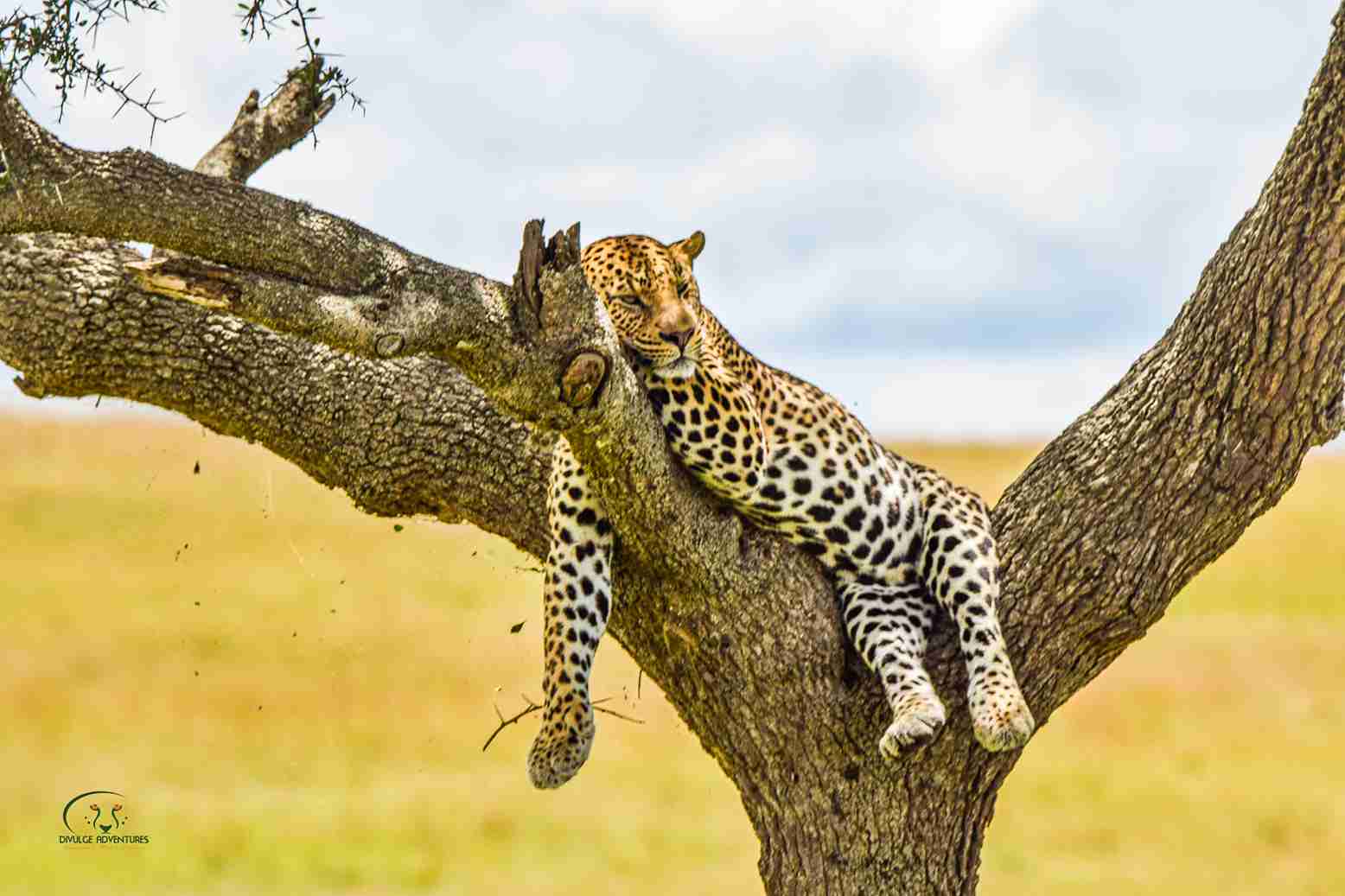
A first Kenya safari works best when you pick two or three parks, give each one at least two nights and travel between late June and October or in January and February. That pace gives you lions, elephants and big landscapes without spending half your holiday on the road between lodges.
The hard part for most first-timers is not the wildlife, which Kenya delivers generously, but the decisions before it: how many days, which parks, road or flight, and what the paperwork involves. This guide answers those questions in the order you will face them, with the fees, times and trade-offs our Nairobi team explains to every new traveller.

Photo: Divulge Adventures
Quick Facts
- Ideal length: 6-8 days for a first Kenya safari; 3-4 days if you only visit the Masai Mara
- Best months: Late June to October (dry season, migration) and January to February
- Classic route: Amboseli, Lake Naivasha or Nakuru, then the Masai Mara
- Masai Mara fee: US$200 per adult per day July-December, US$100 January-June (checked November 2026)
- Entry: Kenya eTA from US$30 plus mandatory inbound health insurance of US$44 (checked November 2026)
- Light aircraft luggage: About 15 kg per person in a soft bag, hand luggage included
- Health: Malaria tablets usually advised; yellow fever certificate if arriving from a risk country
How Many Days Do You Need for a First Kenya Safari?
Six to eight days is the sweet spot for a first Kenya safari. It covers the Masai Mara plus one or two contrasting parks, with two or three nights in each place so you are not packing every morning. Shorter trips work if you fly, and longer trips let you add the north or the coast.
Ready to go? Book your customized safari instantly on WhatsApp — we'll take it from there.

Instantly on
Kenya’s parks sit roughly four to six hours apart by road, so every extra park costs you most of a day. The commonest mistake we see on a first itinerary is five parks in seven days, which looks exciting on paper and feels like a road trip in practice. Two nights is the minimum we suggest anywhere on a first Kenya safari, and three nights in the Mara is worth the trade.
| Trip length | What fits | Who it suits |
|---|---|---|
| 3-4 days | Masai Mara only, ideally flying in and out of Wilson Airport | Add-on to a beach or business trip |
| 5-6 days | Amboseli and the Masai Mara, with a Rift Valley lake night between them | Most couples and families on a first trip |
| 7-8 days | Amboseli, Lake Naivasha or Nakuru, and three nights in the Mara | Travellers who want variety without rushing |
| 10+ days | Add Samburu or Ol Pejeta in the north, or fly to Diani beach | Keen wildlife watchers and honeymooners |
For sample routes, our one-week Kenya safari itineraries lay out four different weeks day by day, including drive times between each park.
Which Parks Should a First-Timer Choose?
The Masai Mara should anchor almost every first Kenya safari, because it offers the most reliable lion, cheetah and leopard viewing in the country. Pair it with Amboseli for elephants under Kilimanjaro, and a Rift Valley lake to break the drive. Samburu and Laikipia suit a second trip or a longer first one.

Photo: Divulge Adventures
Masai Mara for big cats and the migration
The Masai Mara National Reserve sits about five hours west of Nairobi by road, or around 40 to 60 minutes by light aircraft. It is open rolling grassland, which makes animals easy to spot, and from roughly July to October it hosts the wildebeest and zebra herds of the Great Migration. If you want to understand the reserve-versus-conservancy choice, read our guide to the Masai Mara reserve and its private conservancies.
Amboseli for elephants and Kilimanjaro views
Amboseli National Park lies about 240 km south-east of Nairobi, usually four to five hours by road. Its swamps draw large elephant families, and on clear mornings Kilimanjaro rises behind them across the border in Tanzania. There are no rhinos here, so do not plan a first Kenya safari around seeing all of the Big Five in one park.
Lake Nakuru and Naivasha to break the journey
Lake Nakuru National Park is the easiest place on the classic route to see rhinos, while Lake Naivasha adds a boat ride among hippos and a walk on Crescent Island. Either makes a relaxed night between Amboseli and the Mara on a first Kenya safari. Our Masai Mara vs Amboseli comparison helps if you can only fit one of the big two.
When Is the Best Time for a First Kenya Safari?
Late June to October is the best time for a first Kenya safari, with dry weather, short grass and the migration usually in the Masai Mara. January to early March is the best value window: still dry, greener and quieter, with the Mara reserve fee halved. April and May bring the long rains.
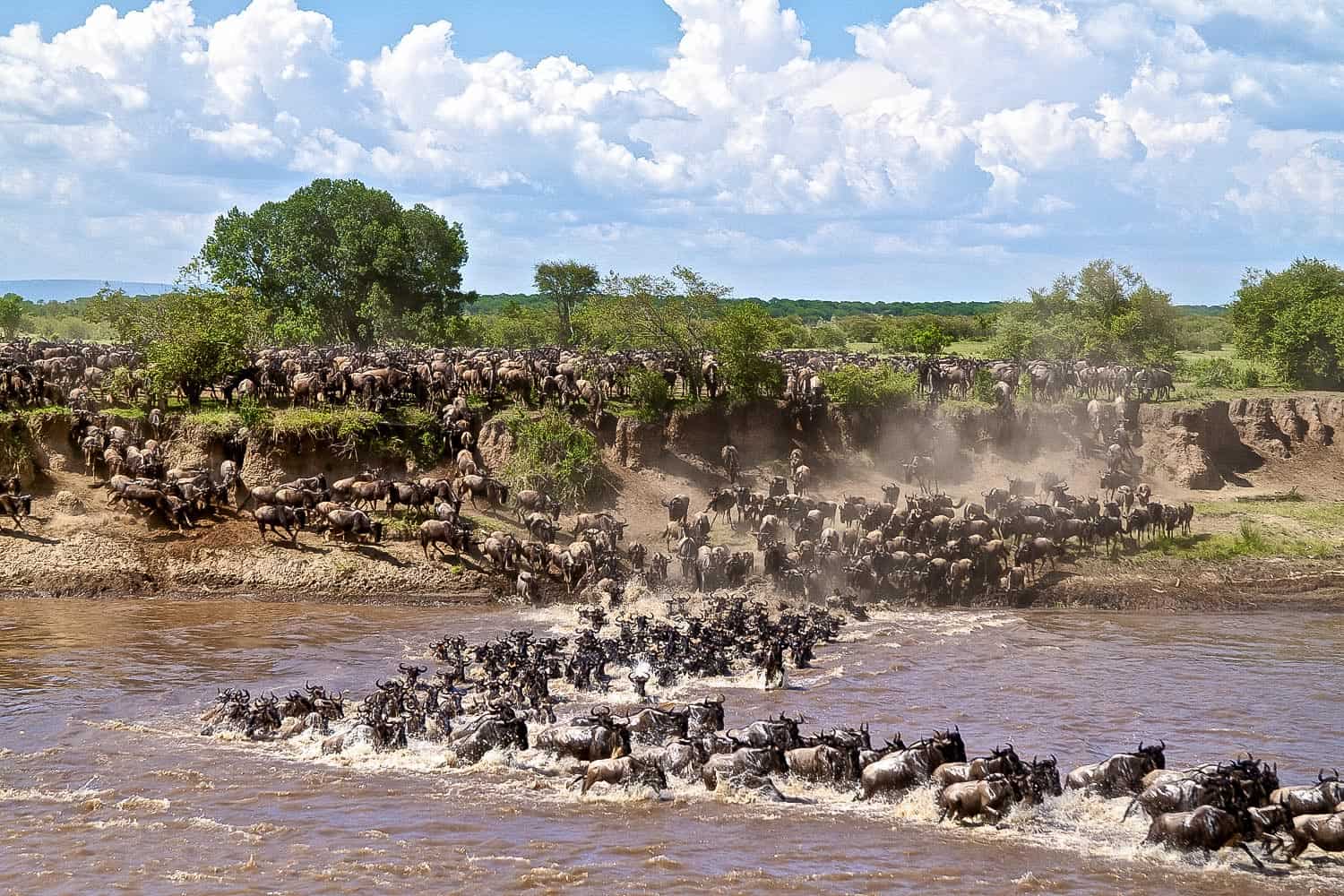
Photo: Divulge Adventures
| Months | What to expect | Verdict for first-timers |
|---|---|---|
| January-March | Hot and mostly dry, green plains, young animals, lower Mara fee | Excellent value, fewer vehicles |
| April-May | Long rains, muddy tracks, some camps closed, lowest lodge rates | Only if budget matters most |
| June | Rains ending, lush grass, Mara fee still at the low-season rate until 30 June | A smart shoulder month |
| July-October | Dry season, migration usually in the Mara, busiest and priciest | Best wildlife, book early |
| November-mid December | Short rains, mostly afternoon showers, quieter parks | Good if you are flexible |
The migration’s timing shifts every year with the rains in Tanzania, so nobody can promise a river crossing on a given date. Our month-by-month guide to the best time to visit Kenya goes deeper on each season, park by park.
What Does a Day on Safari Actually Look Like?
A typical safari day starts with coffee before sunrise and a morning game drive of three to four hours, when animals are most active. You return for brunch and a rest through the midday heat, then head out again around 4pm until sunset. Many first-timers are surprised how tiring, and how addictive, this rhythm is.

Photo: Divulge Adventures
Most private safaris in Kenya use a 4×4 Land Cruiser with a pop-up roof, so everyone gets a window seat and can stand to photograph. Your driver-guide reads tracks, listens to radio chatter from other guides and knows where particular lions or cheetahs have been seen. Ask questions freely on your first Kenya safari: guides enjoy curious guests, and you will learn far more than from any field guide.
Road safari or fly-in for a first Kenya safari?
A road safari is cheaper and shows you the Great Rift Valley and village life between parks, but the classic loop involves several drives of four to five hours. Flying from Wilson Airport into a Mara airstrip takes about 40 to 60 minutes and gives you extra game-drive time. Many travellers drive to Amboseli and fly back from the Mara, which balances cost and comfort.
How Much Should You Budget for a First Kenya Safari?
A first Kenya safari typically costs about US$300-600 per person per day on a comfortable mid-range private trip, including park fees, vehicle, guide and full board. Budget trips start around US$150-300, and luxury conservancy camps run from about US$700 to over US$1,500. All figures are estimates.

Photo by Meg von Haartman on Unsplash
Park fees are a big, fixed part of the bill for a first Kenya safari. The Masai Mara reserve charges non-resident adults US$200 per day from July to December and US$100 from January to June (checked November 2026). Kenya Wildlife Service charges US$90 per adult per 24 hours for Amboseli and Lake Nakuru (checked October 2026), and you can confirm current rates on the Kenya Wildlife Service website before you book. Our full breakdown of Kenya park fees lists every park.
| Estimated tier | Per person per day | What you get |
|---|---|---|
| Budget | About US$150-300 | Simple tented camps or lodges outside the parks, often a shared vehicle |
| Mid-range | About US$300-600 | Comfortable lodges or tented camps, private 4×4 and driver-guide |
| Luxury | About US$700-1,500+ | Small conservancy camps, fly-in transfers, walking and night drives |
As a real example, our 7-day Amboseli, Naivasha, Nakuru and Masai Mara road safari is listed from US$2,711 per adult on its trip page, so you can see how a mid-range week adds up. The Kenya safari cost guide explains where the rest of the money goes.
See a first-timer’s Kenya safari, day by day
Our 7-day route covers Amboseli, Lake Naivasha, Lake Nakuru and three nights in the Masai Mara in a private 4×4 with a driver-guide, and we can tailor every night to your dates and budget.
Paperwork, Health and Packing Before You Fly
Before a first Kenya safari you need an approved Kenya eTA, the new inbound travel health insurance, advice from a travel clinic on malaria and vaccines, and a soft bag if you are flying between parks. None of it is difficult, but leaving it until the last week causes avoidable stress.
Kenya eTA and the new health insurance rule
Most visitors apply online for a Kenya Electronic Travel Authorisation, which costs from US$30 for standard processing and usually takes about three working days (checked October 2026). Since 6 October 2026 the eTA portal also requires inbound travel health insurance, with a US$44 premium for travellers without recognised cover (checked November 2026). Apply through the official Kenya eTA website, and see our step-by-step Kenya eTA guide.
Malaria, vaccines and yellow fever
The CDC malaria guidance for Kenya says malaria is present throughout the country below 2,500 metres, including Nairobi and the game parks (checked November 2026). Book a travel clinic six to eight weeks before your first Kenya safari. If you arrive from a country with yellow fever risk, you will need a certificate, so check our yellow fever requirements for Kenya and Tanzania.
Packing for light aircraft and the bush
Airkenya allows about 15 kg per person in soft-sided bags, and that figure includes hand luggage (checked October 2026), so pack light if any leg is a flight. Choose neutral colours, layers for cold early mornings, and leave plastic carrier bags at home, as Kenya has banned them since 2017. Our Kenya safari packing list covers the rest.
Insider Tips
- Fewer parks, more nights: Two or three nights per stop beats a new lodge every morning
- Use the fee switch: Late June gives dry-season viewing at the lower Mara fee, which doubles on 1 July
- Book August early: Popular Mara camps for migration season fill six to twelve months ahead
- Bring binoculars: One pair per person saves a lot of passing back and forth in the vehicle
- Carry small dollar notes: Tips for guides and lodge staff are easiest in US$5, US$10 and US$20 notes
- Ask before photographing people: Always check first in villages and towns, and respect a no
Let us plan your safari
Tell us your dates, budget and dream sightings, and our Nairobi team will send you a free tailor-made itinerary and quote.
What Mistakes Do First-Timers Make on Safari?
The mistakes that most often spoil a first Kenya safari are rushing between too many parks, chasing a checklist of animals, and arriving without the right documents. Each is easy to avoid with a little planning, and avoiding them makes a bigger difference than an upgrade to a fancier lodge.
Chasing the Big Five can turn a first Kenya safari into a scavenger hunt. Leopards and rhinos are shy, and some of the best moments come from waiting at a lion pride or watching elephants at a waterhole. Tell your guide what matters most to you, then let them read the day. Our guide to the Big Five explains where each animal is most likely.
Other common slips include wearing bright white or camouflage clothing, standing up or shouting near animals, and expecting reliable Wi-Fi in remote camps. Follow the guide’s instructions in the vehicle, keep your voice low at sightings, and treat the slower moments as part of the trip rather than wasted time. When you are ready to shape your first Kenya safari, browse our Kenya safari packages.
Frequently Asked Questions
How many days do I need for a first Kenya safari?
Most travellers need six to eight days for a first Kenya safari. That gives two nights in Amboseli, a night at Lake Naivasha or Lake Nakuru and three nights in the Masai Mara, with road transfers of four to five hours. With only four days, focus on the Masai Mara alone, ideally flying in from Nairobi’s Wilson Airport.
What is the best month for a first Kenya safari?
The best months for a first Kenya safari are late June to October, when the long dry season brings easy game viewing and the Great Migration herds are usually in the Masai Mara. January and February are a strong second choice, with dry weather and a lower Mara fee of US$100 per adult per day instead of US$200 (checked November 2026).
Is a Kenya safari good for beginners?
Yes, Kenya is one of the easiest countries in Africa for a beginner safari. Flights into Nairobi are frequent, English is widely spoken, the main parks are reachable by road or short flights, and the Masai Mara gives some of the most reliable big cat viewing on the continent. A private vehicle with a driver-guide removes most of the logistics.
Do I need malaria tablets for a Kenya safari?
Most travellers on a Kenya safari are advised to take malaria tablets. The CDC says malaria is present throughout Kenya below 2,500 metres, including Nairobi and the game parks (checked November 2026). Speak to a travel clinic or your doctor six to eight weeks before you fly, and use repellent and long sleeves at dusk.
How much spending money should I take on a Kenya safari?
Take enough for tips, drinks and optional extras, since most safari packages include park fees, meals and game drives. Tipping alone usually comes to about US$10-20 per person per day for your driver-guide and US$5-15 per person per night for lodge staff. Bring clean US dollar notes in small denominations, plus a card for lodge bars and shops.
Final Thoughts
A first Kenya safari comes together easily once you choose a realistic route: the Masai Mara plus one or two contrasting parks, two or three nights each, in the dry months if you can. Sort the eTA, insurance and travel clinic visit early, pack light, and leave space in each day to simply watch.
If you would like a second opinion on your dates or route, send us your plans and we will suggest a pace that fits.
Planning your first Kenya safari and not sure where to start?
Chat with a Divulge Adventures safari consultant on WhatsApp for honest advice, a quick answer and a quote built around you.


